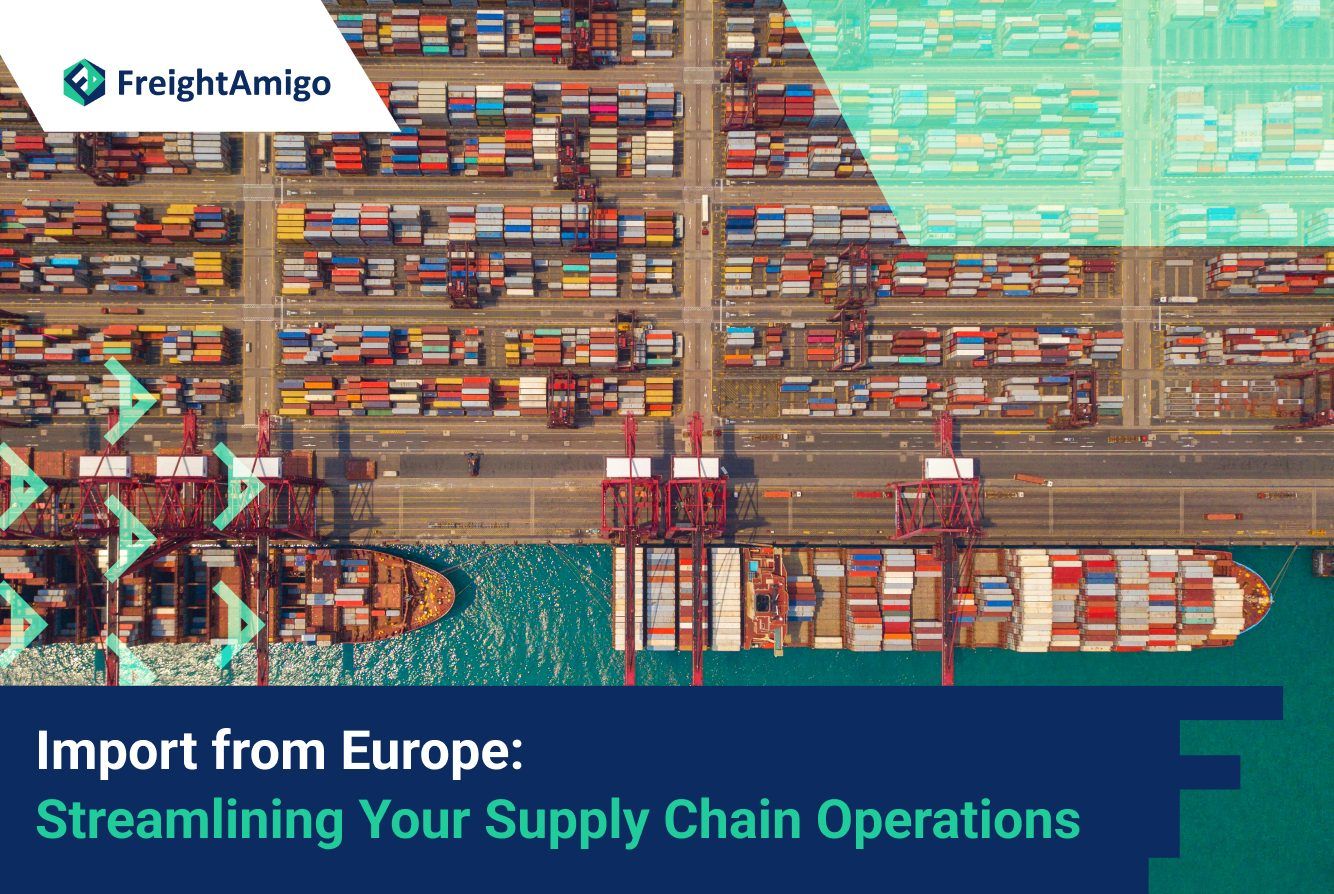
Understanding Import from Europe Supply Chain Basics
Importing from Europe demands a well-structured supply chain to handle cross-border complexities efficiently. In 2025, with EU regulatory updates on sustainability and digital customs, businesses must adapt quickly.
- Key stages: Sourcing, transportation, customs clearance, and distribution.
- Europe's major hubs: Rotterdam, Hamburg, Antwerp for sea freight.
- 2025 trend: Increased use of rail for eco-friendly routes.
Streamlining import from Europe supply chain operations reduces lead times by up to 30%.
Step-by-Step Import Process from Europe in 2025
The import process from Europe follows a clear sequence to ensure compliance and speed. Here's a how-to guide for seamless execution.
- Source Suppliers: Identify EU vendors via platforms like Europages.
- Prepare Documentation: Commercial invoice, packing list, certificate of origin.
- Select Freight Mode: Sea for bulk, air for urgency.
- Customs Clearance: Submit via EU's ICS2 system by 2025 deadlines.
- Last-Mile Delivery: Coordinate with local logistics partners.
This structured approach minimizes delays in your supply chain operations.
Material and Information Flows in Europe Imports
Efficient flows are the backbone of successful import from Europe supply chain operations. Material flow moves goods; information flow synchronizes data.
| Flow Type | Description | 2025 Tools |
|---|
| Material | Goods from EU ports to destination | IoT tracking |
| Information | Demand forecasts, shipment status | EDI systems |
- Integrate blockchain for transparent information flow.
- Real-time data sharing cuts inventory costs by 20%.
Key Challenges in 2025 Europe Import Supply Chains
Navigating 2025 challenges is crucial for streamlining import from Europe supply chain operations. National changes like UK's post-Brexit digital borders amplify issues.
- Customs delays due to new EU CBAM carbon rules.
- Port congestion in Mediterranean hubs.
- Rising fuel costs impacting sea and air freight.
- Supply disruptions from geopolitical tensions.
- Compliance with WCO digital standards (no major revision until 2027).
Optimization Strategies for Supply Chain Efficiency
Implement these strategies to enhance import from Europe supply chain operations.
- Adopt multi-modal transport: Sea + rail hybrids.
- Use AI for demand forecasting.
- Leverage free trade agreements like EU-Asia pacts.
- Invest in sustainable packaging to meet 2025 green mandates.
- Automate documentation with e-signatures.
Case Study 2025: A Hong Kong importer reduced costs 25% sea routes from Germany.
Freight Options: Sea, Air, Rail for Europe Imports
Choosing the right freight mode streamlines your import from Europe supply chain operations.
| Mode | Transit Time | Cost (per 20ft) | Best For |
|---|
| Sea Freight | 30-45 days | $2,500-$4,000 | Bulk goods |
| Air Freight | 3-7 days | $5-10/kg | High-value |
| Rail Freight | 15-25 days | $3,000-$5,000 | Eco routes |
2025 Case Study: Successful Europe Import Optimization
Real-world examples highlight effective import from Europe supply chain streamlining. A 2025 electronics firm from Asia integrated digital twins for visibility, cutting delays by 40%.
- Pre-shipment inspections via EU partners.
- Dynamic routing avoided Red Sea disruptions.
- Result: 15% cost savings, on-time delivery 98%.
FAQ: Import from Europe Supply Chain Questions
Quick answers to common queries on streamlining import from Europe supply chain operations.
What documents are needed for 2025 Europe imports? Invoice, packing list, origin certificate, and ICS2 entry summary.
How long does sea freight from Europe take? Typically 30-45 days to Asia, depending on ports.
What are 2025 EU customs changes? Enhanced digital reporting and CBAM for carbon emissions.
Is rail freight viable from Europe? Yes, China-Europe rail takes 15-25 days with lower emissions.
How to reduce import costs from Europe? Use FTAs, consolidate shipments, and negotiate rates.
What is supply chain visibility? Real-time tracking of goods and data across the network.
Impact of Brexit on 2025 imports? UK's digital border requires separate EORI numbers.
Best ports for Europe imports? Rotterdam, Hamburg for efficiency and volume.
How does AI help supply chains? Predicts demand and optimizes routes automatically.
What sustainability rules apply in 2025? EU CBAM taxes high-carbon imports starting 2026 phase-in.
Conclusion and Next Steps
Mastering import from Europe supply chain operations in 2025 unlocks growth. For tailored advice, Book a Demo with experts.
Contact: HKG: +852 24671689 / +852 23194879 (Business), +852 28121686 / +852 23194878 (Personal) CHN: +86 4008751689 USA: +1 337 361 2833 GBR: +44 808 189 0136 AUS: +61 180002752 Email: enquiry@freightamigo.com











 Express
 Document
 Parcel - Air/Sea
 Container
 Relocation