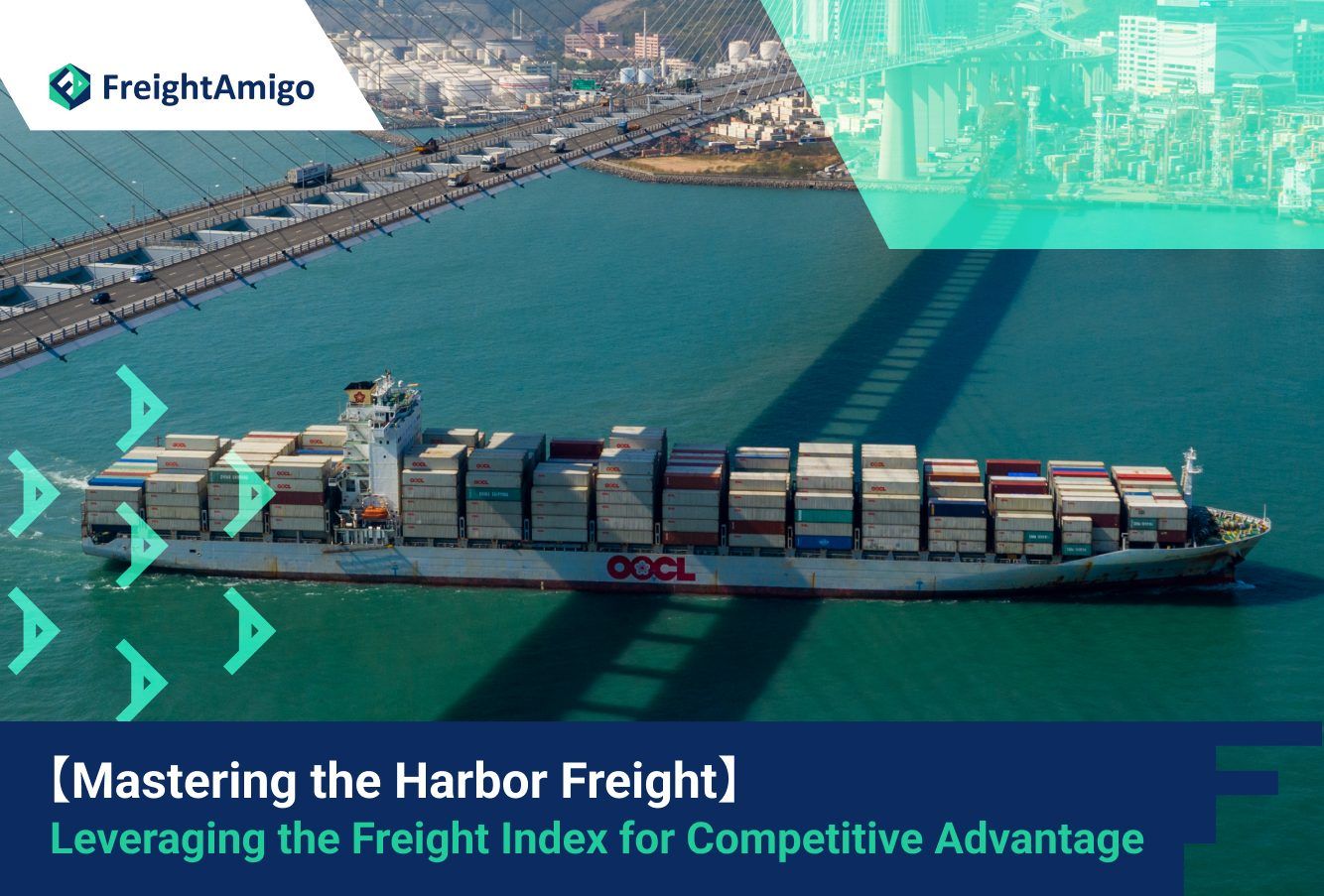
Mastering the Freight Index for Competitive Advantage in Logistics 2025
TL;DR: The Freight Index tracks logistics trends to optimize costs, forecast demand, and gain edges in 2025's volatile market—learn tracking methods, analysis strategies, and real-world applications for supply chain success.
What is the Freight Index in Logistics?
The Freight Index measures global freight activity, rates, and volumes to guide logistics decisions. Often called the Freight Index or HFI, it aggregates data from shipping lanes, truckloads, and air cargo.
In 2025, with national logistics regulations shifting massively, the Freight Index helps predict disruptions.
- Tracks ocean freight rates across major ports
- Monitors trucking capacity in key regions
- Analyzes air freight demand surges
- Includes rail and intermodal trends
- Updates monthly for timely insights
How Does the Freight Index Work in 2025?
Freight Index calculation combines real-time data from sensors, surveys, and economic signals. A rising index signals booming activity; declines warn of slowdowns.
Key 2025 updates incorporate AI-driven forecasts amid no WCO revisions until 2027 but huge national changes like EU digital freight mandates.
| Component | Data Source | 2025 Weight |
|---|
| Ocean Freight | Port volumes | 40% |
| Trucking | Load boards | 30% |
| Air Cargo | Airport stats | 20% |
| Rail | Carload data | 10% |
Key Benefits of Freight Index for Logistics Competitive Advantage
Leveraging Freight Index data cuts costs 20% through proactive adjustments.
- Cost Optimization: Spot rate spikes early to reroute shipments
- Demand Forecasting: Align inventory with index trends
- Supplier Negotiation: Use data-backed leverage for better terms
- Risk Mitigation: Avoid congested routes per index signals
- Performance Benchmarking: Compare vs. industry averages
2025 case study: A retailer used Freight Index to shift 30% volume from air to sea, saving $2M amid rate hikes.
How to Track Freight Index Data Effectively Step-by-Step
Start tracking Freight Index today with these proven steps for logistics pros.
- Subscribe to official sources: Access free monthly reports from logistics bureaus
- Set alerts: Use tools for index threshold notifications
- Integrate APIs: Pull live data into your ERP system
- Build dashboards: Visualize trends with simple charts
- Review weekly: Align with your freight cycles
This how-to ensures you're always 2-4 weeks ahead of market shifts.
Analyzing Freight Index Trends for Logistics Insights
Master Freight Index analysis by spotting patterns like seasonal peaks and 2025 anomalies.
Look for correlations: High index + low capacity = rate surges. Use simple regressions for predictions.
- Seasonal: Q4 spikes from holidays
- Cyclical: Post-recession booms
- 2025-Specific: National policy impacts on Asia-Europe lanes
Freight Index Strategies for Supply Chain Optimization 2025
Apply these Freight Index strategies to dominate logistics competition.
- Dynamic Routing: Switch modes when index favors sea over air
- Inventory Buffers: Stock up pre-index peaks
- Carrier Selection: Partner with index outperformers
- Contract Renewals: Time bids during low index periods
- Sustainability Tie-In: Favor green routes per index efficiency data
Pro tip: Combine with LSI metrics like capacity utilization for 25% better forecasts.
Top Tools and Resources for Freight Index Mastery
Free and paid Freight Index tools empower logistics teams without complexity.
- Public dashboards from trade associations
- Excel templates for custom analysis
- Analytics platforms with index APIs
- Mobile apps for on-the-go tracking
- Industry reports with deep dives
In 2025, AI-enhanced tools predict index moves with 85% accuracy.
Freight Index FAQ: Quick Answers for Logistics Managers
Get instant answers to top Freight Index questions.
What is the Freight Index used for?
It benchmarks logistics performance and forecasts rates.
How often is Freight Index updated?
Monthly, with weekly previews in 2025.
Can small businesses use Freight Index?
Yes, free public data levels the playing field.
What drives Freight Index changes?
Volumes, fuel costs, and geopolitical events.
How does Freight Index help cut costs?
activity periods.
Is Freight Index global or regional?
Both—track global or lane-specific versions.
2025 Freight Index predictions?
Moderate growth with volatility from regulations.
Integrate Freight Index with TMS?
Yes, via APIs for automated decisions.
Free Freight Index sources?
Government logistics portals and associations.
Conclusion: Freight Index for Logistics Success
Mastering the Freight Index delivers unbeatable logistics edges in 2025—optimize now for resilient supply chains.
For expert support comparing express, air, sea, rail, and trucking rates, Book a Demo with FreightAmigo.
Contact: HKG: +852 24671689 / +852 23194879 (Business), +852 28121686 / +852 23194878 (Personal) CHN: +86 4008751689 USA: +1 337 361 2833 GBR: +44 808 189 0136 AUS: +61 180002752 Email: enquiry@freightamigo.com











 Express
 Document
 Parcel - Air/Sea
 Container
 Relocation