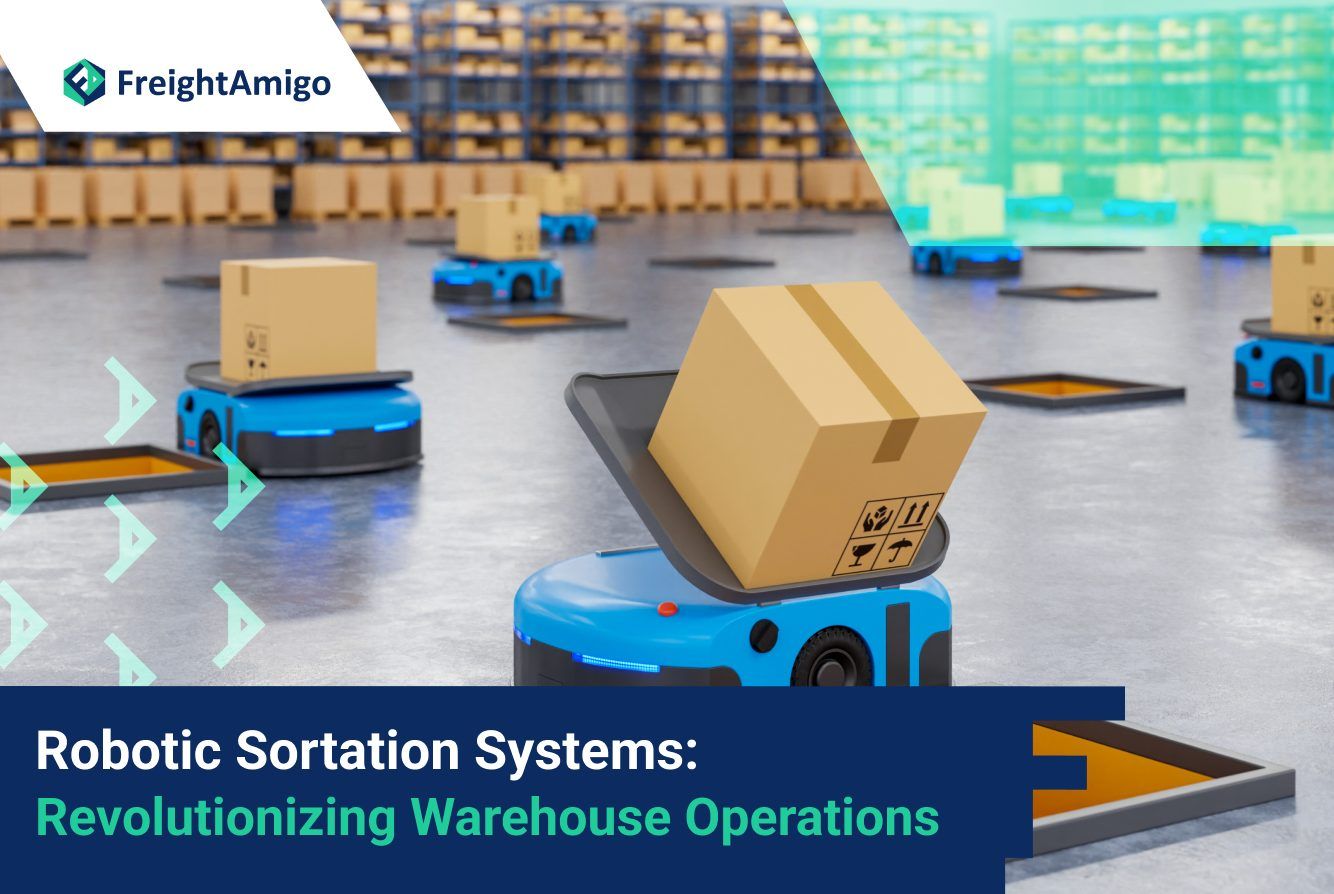
Robotic Sortation Systems Revolutionizing Warehouse Operations 2025
TL;DR: Robotic sortation systems boost warehouse efficiency 60% in 2025, handling diverse items with AI-driven accuracy. Discover types, benefits, implementation tips, and 2025 trends for logistics optimization.
What Are Robotic Sortation Systems in Warehouses?
Robotic sortation systems use AI, robotics, and vision tech to automate sorting in warehouses and distribution centers.
- Process packages, parcels, bins, and carts at high speeds.
- Adapt to e-commerce demands with scalable designs.
- Integrate with conveyors and ASRS for seamless flow.
Ideal for high-volume logistics operations in 2025.
How Robotic Sortation Systems Work Step-by-Step
Robotic systems execute primary and secondary sorting via automated workflows.
- Item Induction: Robots scan and receive incoming packages on conveyors.
- AI Identification: Vision systems read barcodes and assess dimensions/weights.
- Precision Sorting: Arms divert items to bins, put walls, or outbound lanes.
- Verification: Scan-in-flight tech confirms accuracy before stowage.
- Data Feedback: Real-time metrics update warehouse management systems (WMS).
This how-to process cuts manual handling by 70%.
Top 5 Types of Robotic Sortation Systems Explained
Warehouses select from these proven robotic sortation types based on volume and space.
| Type | Use Case | Throughput (items/hr) |
|---|
| Robotic Arms | Flexible parcel sorting | 1,000-3,000 |
| AMR/AGV | Pallet/tote transport | 500-1,500 |
| ASRS Shuttles | High-density storage | 2,000+ |
| Put Walls | Order consolidation | 800-2,000 |
| Conveyor Diverters | High-speed lines | 5,000+ |
2025 updates include AI-enhanced shuttles for 20% faster cycles.
Key Advantages of Robotic Sortation Systems in 2025
These systems deliver measurable ROI through efficiency gains.
- Accuracy Boost: 99.5% sort rates vs. 95% manual.
- Speed Gains: Process 2-4x more items hourly.
- Versatility: Handle polybags to heavy pallets.
- Scalability: Add work cells without rebuilds.
- Cost Savings: 30% lower labor over 3 years.
WCO guidelines emphasize such tech for global logistics compliance.
2025 Robotic Sortation Case Study: Real Warehouse Results
A major Asian DC implemented robotic arms in Q1 2025, achieving breakthroughs.
- Throughput: +55% to 2,500 items/hour.
- Error Rate: Dropped from 2.1% to 0.3%.
- ROI: Breakeven in 18 months.
- Integration: Paired with AI WMS for peak-season surges.
Similar setups in US facilities report 25% energy savings via optimized paths.
Implementation Considerations for Robotic Sortation
Assess these factors before robotic sortation deployment.
- Space Needs: 20-50 sqm per work cell.
- Volume Fit: Best for 1,000+ daily sorts.
- Ergonomics: Human-robot zones for safety.
- Integration: Compatible with ERP/WMS APIs.
- ROI Calc: Factor payback under 24 months.
Consult integrators for custom audits.
Robotic Sortation vs Traditional Systems: Comparison Table
Modern robotics outperform legacy methods across metrics.
| Metric | Robotic Sortation | Manual/Conveyor |
|---|
| Accuracy | 99.5% | 92-95% |
| Flexibility | High (reprogrammable) | Low (fixed) |
| Scalability | Modular cells | Major retrofits |
| Cost/Year | $150K (avg cell) | $200K+ labor |
| 2025 Trend | AI Upgrades | Phasing Out |
Future Trends in Robotic Sortation for Logistics 2025
Expect AI, cobots, and sustainability drives in warehouse automation.
- AI Vision: Real-time anomaly detection.
- Cobot Hybrids: Human-robot teams.
- Green Tech: 40% less energy use.
- Edge Computing: Zero-latency decisions.
- 5G Integration: Faster AMR fleets.
No WCO revisions until 2027, but national regs boost adoption.
FAQ: Robotic Sortation Systems in Warehouses
Quick answers to top queries on robotic warehouse sortation.
- What is a robotic sortation system?
- An AI-powered setup using arms and vision to automate item sorting in warehouses.
- How much do robotic sortation systems cost?
- Entry-level cells start at $100K, with ROI in 12-24 months.
- Are robotic systems safe for warehouse staff?
- Yes, with sensors and zoned operations meeting ISO safety standards.
- Can they handle e-commerce returns?
- Absolutely, with reversible sorting for 95% accuracy on returns.
- What’s the throughput of robotic sorters?
- Typically 1,000-5,000 items per hour per cell.
- Do they integrate with existing WMS?
- Most support APIs for SAP, Oracle, and custom systems.
- Are robotic systems scalable?
- Yes, add cells modularly without downtime.
- What maintenance do they need?
- Weekly AI checks and quarterly parts, under 2% uptime loss.
- Will they replace human workers?
- No, they augment tasks, freeing staff for value-add roles.
- Top 2025 trend in sortation?
- AI predictive sorting for peak demand.
Conclusion: Transform Your Warehouse with Robotic Sortation
Robotic sortation systems revolutionize logistics in 2025, driving efficiency and accuracy.
For tailored integration, Book a Demo with experts. Contact: enquiry@freightamigo.com | HK: +852 24671689 | CN: +86 4008751689 | US: +1 337 361 2833.
/strong>











 Express
 Document
 Parcel - Air/Sea
 Container
 Relocation