Understanding Free Shipping in 2026: What It Means for Ecommerce and Logistics
What Is Free Shipping in Ecommerce Logistics in 2026?
Free shipping continues to reshape buyer expectations while demanding smarter logistics strategies for ecommerce sellers in 2026.
It means customers pay nothing for delivery, with sellers absorbing or optimizing costs through pricing, volume deals, and efficiency tools.
In 2026, AI-driven personalization and stricter global regulations make it a key competitive edge.
Free shipping drives higher conversions but requires precise cost management.
2026 Free Shipping Costs Breakdown for Ecommerce
Understanding the full cost structure is essential for maintaining profitability with free shipping programs in 2026.
Sellers must account for base rates, surcharges, duties, and returns amid evolving trade rules.
Base freight rates have risen due to fuel and compliance.
Packaging and last-mile delivery add hidden expenses.
Returns policies amplify overall logistics spend.
Cost Component
2025 Avg
2026 Projection
Ecommerce Impact
Base Freight
$9-14
$10-16
Higher low-value duties
Fuel/Accessorials
18%
20%
Volatility from green fees
HS/Duty Compliance
$3
$4-5
Mandatory AI classification
Packaging
$1.75
$2.00
Sustainable mandates
Returns
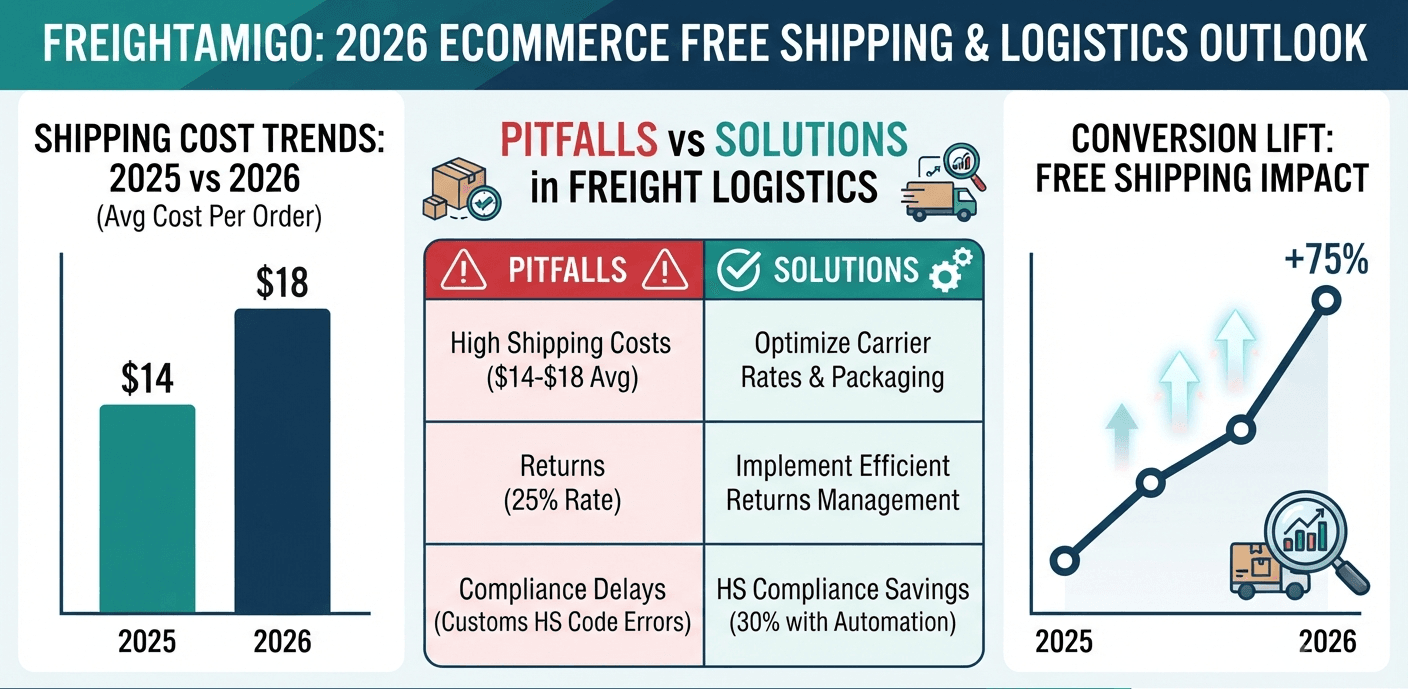
22% orders
25%
Free returns expectations
How HS Codes Impact Free Shipping Logistics in 2026
Accurate HS code classification remains critical for viable free shipping margins in 2026.
Updated national rules and AI tools help avoid unexpected duties that erode profits.
Global standards tighten compliance for cross-border parcels.
Free Shipping Threshold Strategies for Ecommerce Sellers in 2026
Data-driven thresholds balance customer appeal and logistics costs effectively in 2026.
Calculate based on 1.5–2x average shipping cost including duties.
Implement dynamic tiers using AI for real-time adjustments.
Bundle products to help customers reach free shipping naturally.
Regional customization for international routes with HS impacts.
Monitor customer lifetime value to justify subsidies.
Top Carriers Optimizing Free Shipping in 2026
Partnering with the right carriers unlocks volume discounts and seamless free shipping execution.
Major express networks offer integrated HS automation.
Regional specialists excel in compliance for key markets.
Sustainability-focused options appeal to eco-conscious buyers.
Negotiate contracts for 25-35% savings on high volumes.
Step-by-Step Guide to Profitable Free Shipping in 2026
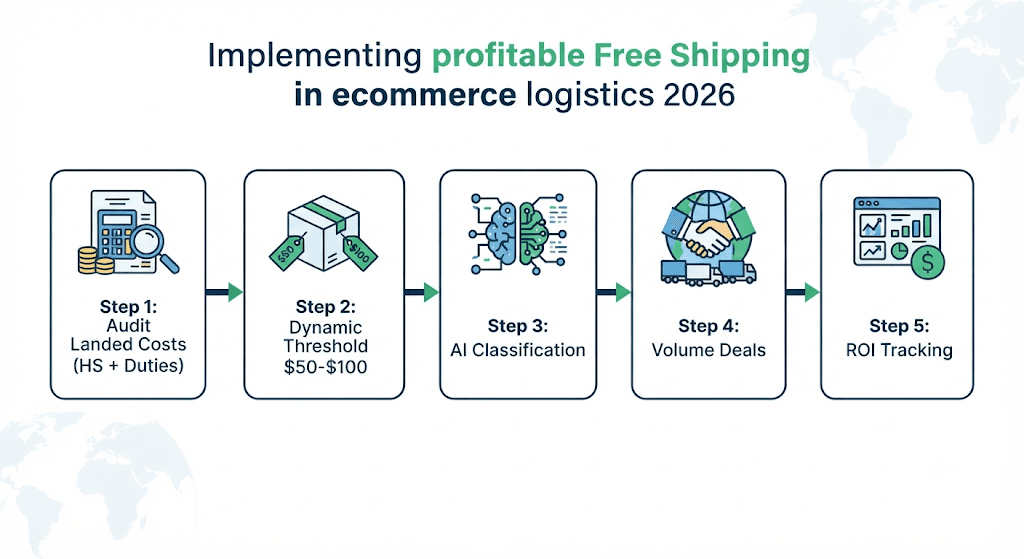
Follow this structured approach to launch and scale profitable free shipping without margin erosion.
Audit current landed costs with full HS integration.
Set and test optimized thresholds via A/B experiments.
Automate quoting and classification processes.
Build carrier partnerships for preferential rates.
Track performance metrics quarterly and adjust.
Sustainability and Green Free Shipping Trends 2026
Eco-friendly practices are becoming central to attractive free shipping offers in 2026.
Carbon offset programs and sustainable packaging help justify costs while boosting brand loyalty.
Consumers increasingly favor green logistics partners.
FreightAmigo's AmiGo Green solutions support certified offsets for free shipping programs.
Common Free Shipping Pitfalls to Avoid in 2026
Proactive avoidance of these issues protects your ecommerce margins and customer trust.
Ignoring peak season surcharges and delays.
Uniform pricing without regional HS adjustments.
Poor tracking transparency eroding confidence.
Underestimating return rates in fashion categories.
Failing to update HS codes amid regulatory shifts.
Frequently Asked Questions (FAQ)
What does free shipping really cost ecommerce sellers in 2026?
Free shipping costs sellers $14-20 per order on average in 2026, including freight, HS duties, packaging, and returns. Accurate forecasting with automation tools keeps it profitable.
How do 2026 HS codes affect free shipping?
2026 HS updates demand precise 8-12 digit classifications, increasing compliance costs but enabling duty optimization for sustainable free shipping margins.
What is the ideal free shipping threshold for ecommerce in 2026?
Most successful stores set thresholds between $45-90, calibrated to 1.5-2x shipping costs adjusted for regional duties and AOV.
Does free shipping increase conversions in 2026?
Yes, free shipping boosts conversions by up to 75% as shoppers continue abandoning carts over delivery fees.
How can sellers offer profitable free shipping in 2026?
Sellers achieve profitability by automating HS classification, negotiating carrier volumes, dynamic pricing, and monitoring LTV against logistics spend.
What role do carriers play in 2026 free shipping?
Carriers with strong HS integration and green options enable cost-effective, compliant free shipping at scale.
Are free returns commonly bundled with free shipping in 2026?
Many brands bundle them selectively when customer lifetime value justifies the added 20-30% cost increase.
How does sustainability impact free shipping strategies in 2026?
Green logistics and carbon offsets make free shipping more appealing, helping brands meet consumer expectations while managing regulatory pressures.
Ready to Optimize Your 2026 Free Shipping Strategy?
Partner with FreightAmigo for instant quotes, HS automation, and seamless global ecommerce logistics solutions.
For expert guidance, Book a Demo with FreightAmigo.


























 Global Popular RoutesTop sea & air shipping lanes
 Special OfferLimited-time shipping promotions





 Express
 Document
 Parcel - Air/Sea
 Container
 Relocation