2026 US-China Tariff Impact on Electronics Imports
Upcoming 2026 US-China tariffs could reshape electronics imports into the US. We break down the key changes, including de minimis exemption reforms, and share smart strategies for cross-border electronics shipping. At FreightAmigo, we help businesses adapt with our Digital Logistics Platform.
The 2026 US-China tariffs stem from ongoing trade policies aimed at protecting domestic industries.
These tariffs target goods from China, including electronics like smartphones and components.
Proposed rates could reach 60% on certain items, up from current levels.
Importers must prepare now in 2025 to avoid disruptions.
2026 Latest Electronics Tariff Schedule.
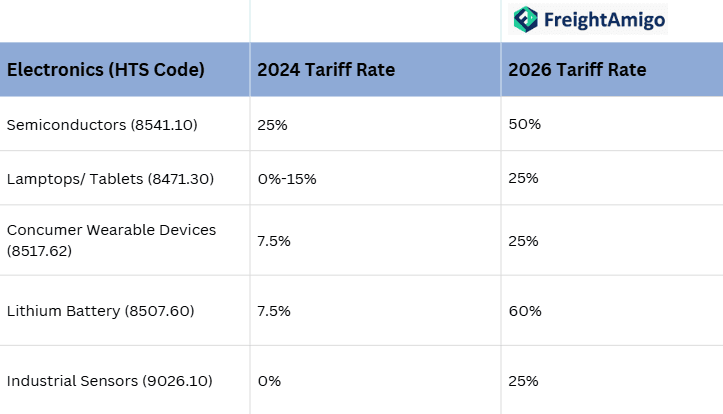
As of April 2026, tariffs on specific electronic categories have transitioned from proposals to mandatory enforcement, with some items hitting 60%.
Importers must now execute precise calculations based on updated HTS codes to avoid massive overheads.
FreightAmigo has compiled the most critical electronics categories and their current combined duty rates for 2026:
The End of the $800 De Minimis: Section 321 Reforms.
Effective April 2026, the $800 "De Minimis" exemption for electronics subject to Section 301 has been abolished.
This means that even a package valued at $50 is now subject to full duty payment if the origin falls under restricted regions.
Our data indicates a 22% average increase in landed costs for small-parcel B2C shipments following this reform.
Proposals aim to close loopholes exploited by Chinese sellers.
Expect stricter enforcement and lower thresholds.
Type 86 entries must now be filed electronically before takeoff, or importers face fines starting at $5,000 per shipment.
The threshold for "Commercial Intent" has also been lowered, meaning frequent personal imports of components are now automatically flagged for formal entry.
Electric vehicle batteries are classified as Class 9 dangerous goods. Temperature must be controlled throughout the journey at 15–25°C, requiring UN38.3 certified packaging, special labelling, and separate dangerous goods declarations.
Cross-border electronics shipping will see longer lead times and higher fees.
Shippers must rethink air vs. sea options.
Compliance costs rise with more documentation.
Air freight: Faster but pricier post-tariff
Sea freight: Cheaper volume but slower
Express couriers: Hit by de minimis loss
Key challenges include cost volatility and supply disruptions.
Balancing speed and cost becomes tougher.
Importers face inventory risks.
Rising insurance premiums
Vendor negotiations
Regulatory uncertainty
Tradeoff: Localize vs. import
Smart Strategies such as Bonded Warehouses to Ease Tariff Pressure.
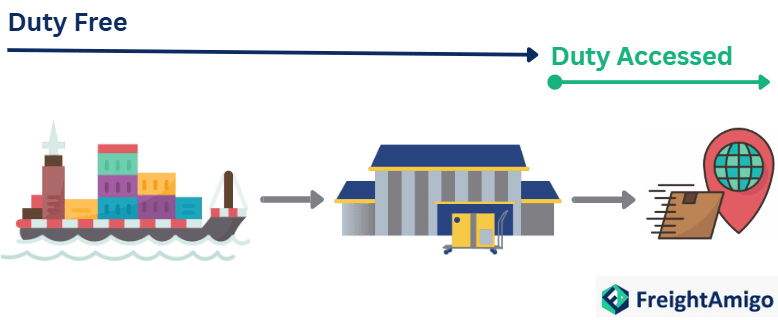
Bonded Warehouses remain the most effective tool for tech companies facing 2026 cash flow pressures.
By storing goods in FreightAmigo’s global bonded network, you can defer duty payments until the goods are sold locally.
This is essential for high-value equipment with longer inventory cycles.
Key smart strategies include:
Nearshoring to Mexico or Vietnam
FTZ utilization for storage
Accurate HS code classification
Bulk consolidation pre-tariff
Real-time rate monitoring
Main advantages:
Diversify suppliers early.
Use bonded warehouses to defer duties.
Digital Logistics Platforms offer tools for tariff compliance and optimization.
They provide instant quotes and tracking.
Automate paperwork for de minimis shifts.
In 2025, we at FreightAmigo saw users cut costs by 15% via our platform.
2025 case studies highlight successful adaptations.
One eCommerce firm shifted 30% sourcing, saving on projected tariffs.
Another used digital tools for compliance, avoiding delays.
Case 1: Electronics retailer diversified routes
Case 2: Forwarder optimized consolidations
Lessons: Plan 12 months ahead
These align with WCO guidelines on trade facilitation.
5 Recommendations for Coping with Tariff Fluctuations in 2026
Stop relying on the $800 exemption: For electronic products originating from China, fully budget for tariff expenses.
Adopt DDP mode: In the volatile tax system of 2026, DDP (Delivered Duty Paid) provides the most stable pricing.
Review HTS codes regularly: Check once per quarter, as customs code updates are more frequent in 2026.
Establish “friend-shoring” logistics: Prioritize logistics nodes that have trade preference agreements with the target market.
Digital document management: Ensure all Certificate of Origin (COO) documents are digitized to handle potential customs audits at any time.
FAQ
What is the US China tariff 2026?
Proposed higher duties on Chinese goods starting 2026 to address trade imbalances.
How does de minimis exemption work?
It lets shipments under $800 enter the US without duties or taxes.
Will de minimis change in 2026?
Yes, likely restricted for China-origin goods in electronics categories.
What electronics are most affected?
Consumer gadgets like phones, laptops, and accessories from China.
How to handle cross-border electronics shipping?
Use diversified routes and digital platforms for real-time compliance.
Can tariffs be avoided?
Not fully, but strategies like FTZs and sourcing shifts reduce impact.
What are preparation steps for 2025?
Audit suppliers, update contracts, and test new logistics tools now.
How does FreightAmigo help?
Our Digital Logistics Platform streamlines quoting and tariff calculations.
When do 2026 tariffs take effect?
Expected early 2026, with 2025 transition rules.
Conclusion: Prepare Today for Tomorrow's Challenges








 Global Popular RoutesTop sea & air shipping lanes
 Special OfferLimited-time shipping promotions





 Express
 Document
 Parcel - Air/Sea
 Container
 Relocation