In the fast-growing world of electric vehicles (EVs), lithium battery shipping demands strict safety and compliance to avoid risks. This guide covers key rules, challenges, and best practices for automotive electronics freight and dangerous goods transport, helping logistics pros stay ahead in 2025.
Lithium batteries drive EV innovation but pose unique shipping risks.
These power sources are vital for EVs, from cars to electronics. They fall under Class 9 dangerous goods due to fire hazards.
Shipping them requires balancing speed, cost, and safety. Overheating or damage can lead to incidents, so proper handling matters.
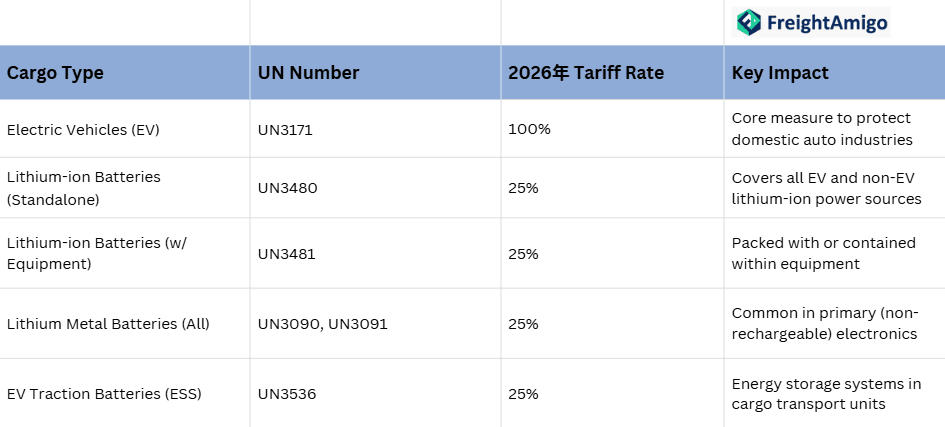
Common Types in Automotive Electronics Freight & US Section 301 Tariff Table
As of April 2026, exporters must master both the United Nations (UN) numbers for hazardous goods and their corresponding punitive tariff rates.
With the latest amendments to U.S. Section 301, tariffs on Chinese-made electronics and batteries have increased significantly.
The table below integrates common cargo types with the latest April 2026 implementation rates:
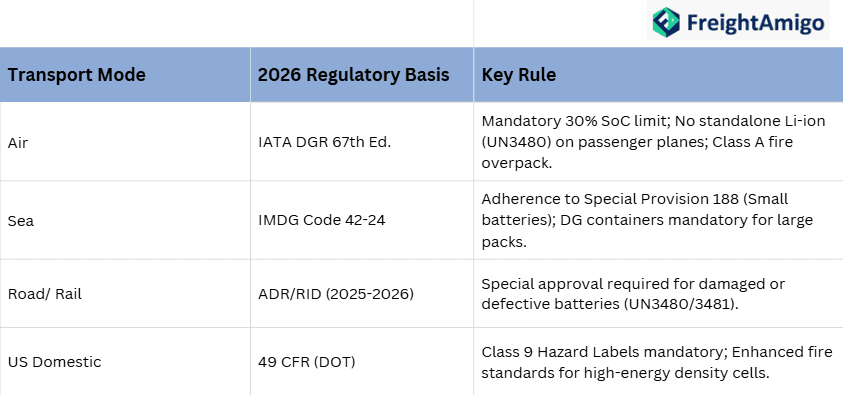
Global regulations shape safe lithium battery shipping.
Transporting hazardous electronics requires adherence to the updated annual standards of IATA, IMO, and DOT.
The 2026 focus is on reducing thermal runaway risks through stricter State of Charge (SoC) limits.
Below are the key rules for 2026 across transport modes:
Automotive electronics freight faces fire and compliance hurdles.
EV parts like battery modules and control units add complexity. Tradeoffs include faster air shipping versus safer sea routes.
Challenges: Supply chain delays from inspections, higher costs for certified packaging.
Increased scrutiny post-2023 incidents
National variations, e.g., China’s GB standards
Short supply of UN-tested boxes
Dangerous goods transport demands robust packaging standards.
UN-spec packaging prevents leaks or shorts. Inner packagings must pass drop and vibration tests.
Balance durability with weight to control freight costs.
Select Type 4A/4B fiberboard boxes for small batteries
Cushion with vermiculite or foam
Separate cells to avoid contact
Seal with pressure-sensitive tape
Test per UN 38.3
Labeling ensures clear identification in lithium battery shipping.
Use lithium battery handling label (Class 9) plus specific marks like UN number and phone contact.
For air, add “Lithium Battery—Forbidden for Transport Aboard Passenger Aircraft” if needed.
White background for primary labels
Minimum 100mm sides
Weather-resistant material
Documentation is critical for dangerous goods transport compliance.
Shipper’s Declaration, DG note on AWB, and test summaries are must-haves.
Missing papers lead to rejections. Digital tools streamline this.
Prepare Shipper’s Declaration for DG (electronic OK per IATA)
Include packing instructions (e.g., PI 965)
Attach UN38.3 certificates
Notify carriers 24-48 hours ahead
2025 updates bring national changes to EV logistics.
No major WCO revisions until 2027, but US FAA tightens air rules, EU mandates recycling certs, and Asia aligns with ICAO.
Expect stricter SOC monitoring and tracking tech requirements.
US: New DOT lithium battery exemptions
EU: Battery Regulation (EU) 2023/1542 phases in
China: Enhanced GB/T testing
Case study: Streamlined automotive electronics freight in 2025.
A Hong Kong forwarder shipped 500 EV battery packs to the US using IATA-compliant routes. Challenges: Tight deadlines, multi-modal.
Solution: Pre-checked packaging, digital docs. Result: Zero incidents, 20% faster clearance.
We at FreightAmigo supported with compliance audits.
FAQ
Can lithium batteries ship by air in 2025?
Yes, small ones under PI 965-967 limits; large packs need cargo-only approval.
What UN numbers for EV batteries?
UN3480/3481 for lithium-ion, UN3536 for vehicle systems.
Is dangerous goods training required?
Yes, IATA/IMO certified training every 24 months for handlers.
How to pack automotive electronics freight safely?
Use UN-tested boxes with separators and absorbent material.
What are 2025 lithium battery shipping changes?
Stricter SOC limits and digital tracking mandates in key markets.
Can damaged batteries be shipped?
No, unless specially approved and declared as damaged.
What docs for dangerous goods transport?
Shipper’s Declaration, labels, and UN test summaries.
How does FreightAmigo aid compliance?
Our Digital Logistics Platform checks regs and tracks shipments in real-time.
Are there sea shipping exemptions?
Yes, SP188 for low-capacity cells under 2.7Wh.
Conclusion: Prioritize Safety in EV Supply Chains
Mastering lithium battery shipping, automotive electronics freight, and dangerous goods transport protects businesses and the environment. We at FreightAmigo offer a Digital Logistics Platform to simplify compliance.








 Global Popular RoutesTop sea & air shipping lanes
 Special OfferLimited-time shipping promotions





 Express
 Document
 Parcel - Air/Sea
 Container
 Relocation