In the face of escalating geopolitical tensions, electronics firms must prioritize tariff risk management, trade war logistics, and resilience strategies to thrive in 2026. We at FreightAmigo break down the challenges, tradeoffs, and proven approaches to safeguard your supply chain.
The Growing Geopolitical Risks Facing Electronics
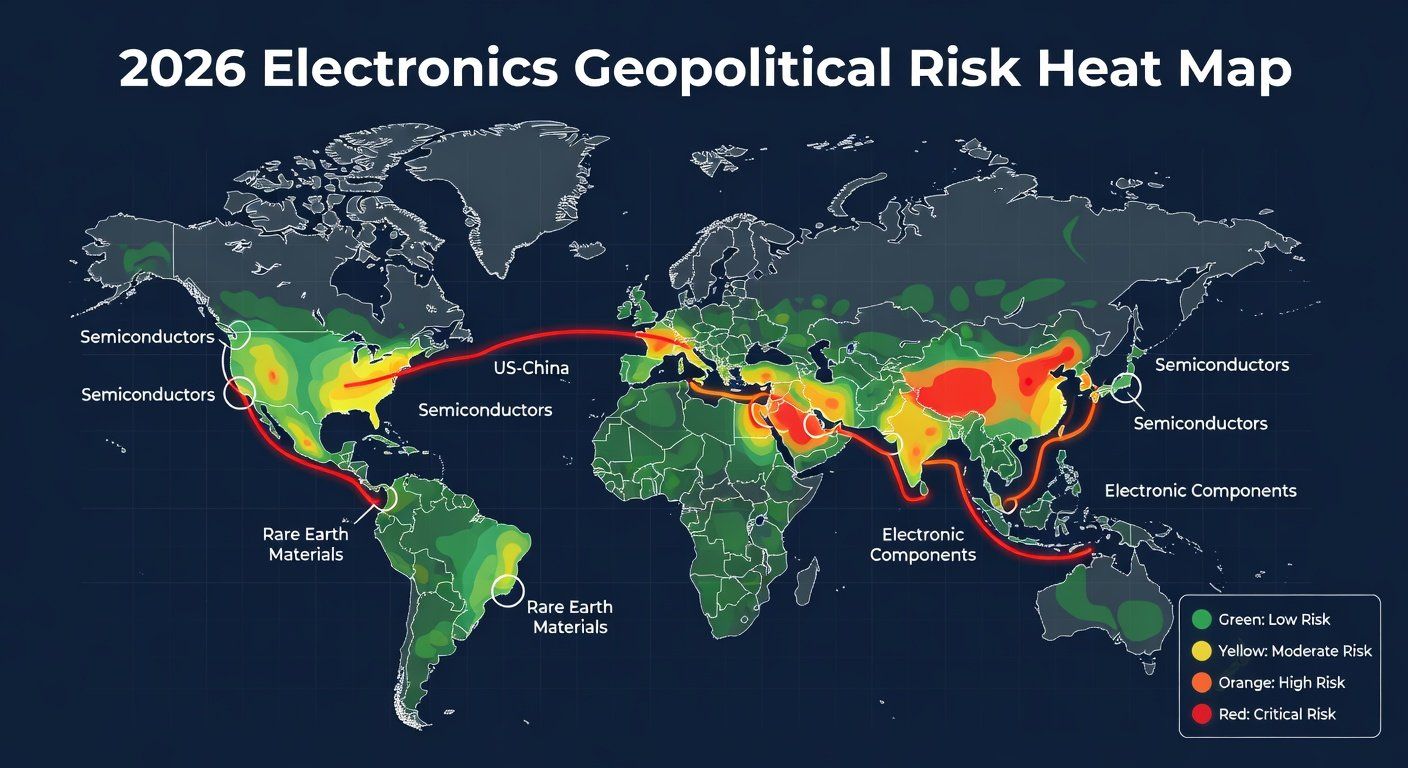
Geopolitical shifts are disrupting electronics supply chains worldwide. Tensions between major powers like the US and China heighten risks for components such as semiconductors and consumer gadgets.
According to World Trade Organization (WTO) data, global trade restrictive measures increased by 37% in 2025 compared to the previous year, with over 60% directly affecting cross-border electronics and component shipments.
Key factors include export controls and potential new tariffs under leaders like Trump. Balancing just-in-time inventory with stockpiling involves tradeoffs: lower costs versus vulnerability to sudden bans.
The US-China chip war continues to escalate, affecting a ~$400 billion global market
Taiwan Strait tensions threaten the stable supply of over 90% of the world's advanced chips
The EU Corporate Sustainability Due Diligence Directive (CSDDD) introduces new compliance thresholds and reporting obligations
Regional armed conflicts cause shortages of critical raw materials like rare earths, with lithium and cobalt price volatility intensifying
Divergent monetary policies across countries amplify import cost fluctuations
Southeast Asian emerging manufacturing hubs like Vietnam and India frequently adjusting regulations
Trade Wars and Their Direct Impact on Logistics
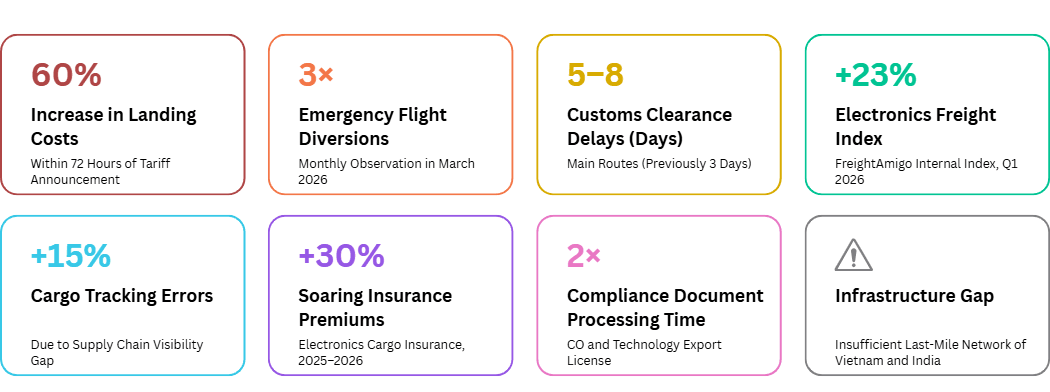
Trade wars create chaos in trade war logistics for electronics shippers. Sudden duties can spike costs 60% on imports from Asia.
Challenges include rerouting shipments and verifying origins. Firms weigh nearshoring to Mexico against higher labor costs in stable regions.
Customs clearance delays cause production line shutdowns, with average delays extending from 3 days to 5-8 working days
Capacity tightness drives up ocean and air freight rates, with the electronics freight index rising 23% year-over-year
Supply chain visibility gaps lead to a 15% increase in cargo tracking errors, complicating inventory management
Alternative manufacturing locations like Vietnam and India lack mature logistics infrastructure, limiting their capacity
Trade uncertainty pushes insurance premiums higher, with electronics cargo insurance premiums averaging a 30% increase
Compliance documentation requirements have doubled, with origin certificates and tech export license approvals taking longer
Key Tariff Changes Looming for 2026
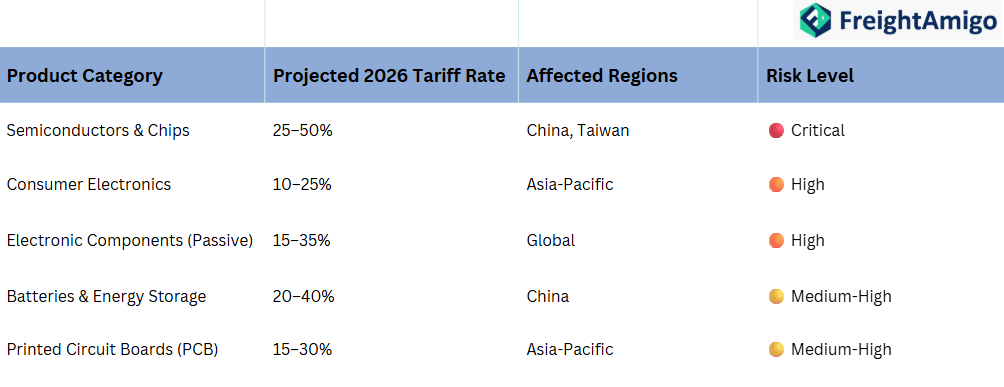
Anticipated 2026 tariffs demand proactive tariff risk management. Drawing from 2025 developments, expect hikes on electronics from China post-US policy shifts.
World Customs Organization (WCO) guidelines stress accurate HS code classification to avoid penalties. Tradeoffs pit short-term savings against long-term compliance investments.
Use the FreightAmigo tariff calculation tool for estimations and leverage free trade agreements (such as USMCA and RCEP) to plan a tariff optimization path.
Companies that prepared in advance saved an average of 22% on tariff costs in 2025.
Core Techniques for Effective Tariff Risk Management
Tariff risk management requires a mix of forecasting and diversification. Monitor policy changes via tools aligned with WCO standards.
Audit supplier declarations quarterly.
Use tariff simulators for scenario planning.
Audit supplier certificates of origin and compliance documents quarterly to ensure accurate HS code classification
Run multi-scenario stress tests using tariff simulators, covering at least three policy change scenarios
Strategically build safety stock buffers, maintaining 4-6 weeks of inventory for critical components
Establish a dedicated geopolitical risk monitoring team with regular risk assessment report updates
Challenges arise in volatile markets where overstocking ties up capital.
Building Resilience Strategies Amid Uncertainty
Resilience strategies turn vulnerabilities into strengths for electronics logistics. We balance multi-sourcing with tech for real-time tracking.
Diversify to 3+ suppliers per component.
Adopt AI for demand forecasting.
Establish 3+ qualified suppliers for every critical component, distributed across different countries or regions
Deploy AI-driven demand forecasting systems to push prediction accuracy above 85%
Invest in regional warehousing hubs — strategic transit warehouses in Southeast Asia, Mexico, and Eastern Europe
Regularly train teams on geopolitical intelligence analysis methods and early warning mechanisms
Conduct at least two comprehensive supply chain disruption emergency drills per year
Implement a supplier tiering management system to identify and reduce single-source concentration risk
This approach mitigates trade war shocks but demands upfront coordination.
Navigating Trade War Logistics Challenges
Trade war logistics demands agile routing and compliance. Reroute via allies like Vietnam to dodge duties.
Secure backup carriers instantly.
Automate documentation for speed.
Leverage bonded warehouses.
Monitor ocean freight indices daily.
Partner for end-to-end visibility.
Lessons from 2025 Electronics Case Studies
2025 case studies highlight successful resilience strategies. A major smartphone maker cut tariff exposure by 40% via diversification.
Firm A: Shifted 30% production to India, saving $5M in duties.
Firm B: Used digital tools for HS code optimization, avoiding $2M penalties.
Firm C: Implemented multi-modal shipping, reducing delays by 25%.
These align with WCO's 2025 updates on electronics classification, proving timely action pays off.
Steps to Prepare Your Supply Chain for 2026
Start tariff risk management preparations now for 2026 success. No major WCO revisions until 2027, but national changes in 2025 set the stage.
Conduct a full supply chain audit.
Model tariff scenarios.
Secure flexible contracts.
Upgrade tracking systems.
Review insurance coverage.
FAQ
What is tariff risk management?
It involves strategies to predict, mitigate, and adapt to tariff changes in global trade.
How do trade wars affect electronics logistics?
They raise costs, delay shipments, and force supplier shifts.
What resilience strategies work best?
Diversification, digital tools, and scenario planning build strong defenses.
Which 2026 tariffs impact electronics most?
US duties on Chinese semiconductors and components are key concerns.
How can firms handle trade war logistics?
What role does WCO play?
It standardizes classifications to ensure fair tariff application.
Why focus on 2025 changes now?
They preview 2026 risks, allowing proactive resilience strategies.
Can digital platforms aid tariff risk management?
Yes, they offer real-time rates, compliance checks, and scenario tools.
What are common pitfalls in resilience strategies?
Over-reliance on one supplier or ignoring geopolitical intel.
Conclusion: Strengthen Your Supply Chain Today
Mastering tariff risk management, trade war logistics, and resilience strategies positions electronics firms for 2026 success. At FreightAmigo, our Digital Logistics Platform supports freight forwarders and clients with real-time visibility, tariff calculators, and adaptive routing to navigate these challenges effectively.








 Global Popular RoutesTop sea & air shipping lanes
 Special OfferLimited-time shipping promotions





 Express
 Document
 Parcel - Air/Sea
 Container
 Relocation