Chip Shortage 2026: Semiconductor Supply Chain Resilience Our summary: The semiconductor supply chain faces ongoing chip shortage 2026 risks, driven by demand surges and geopolitical tensions. We explore strategies for resilience in electronics components shipping amid geopolitical risk freight challenges.
The chip shortage 2026 is reshaping global electronics manufacturing. Global semiconductor demand is projected to hit $820 billion in 2026, marking an 18% increase since 2024.
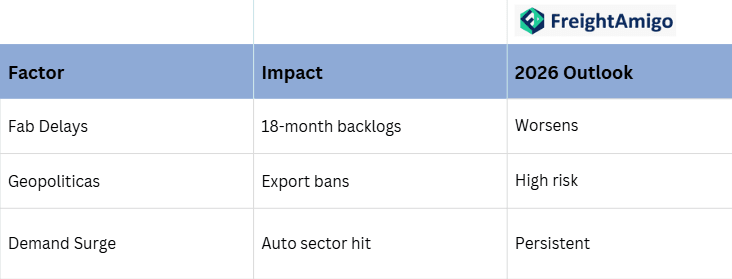
The explosive growth of AI servers and autonomous driving technologies has shifted the bottleneck from "production capacity" to "delivery efficiency."
Projections show shortages persisting into 2026 without major investments.
Freight forwarders must adapt to volatile lead times.
AI chips: Demand up 30% yearly. EV batteries: Need more control units. Consumer gadgets: Post-pandemic backlog. Geopolitical risk freight disrupts chip flows from Asia. Taiwan produces 60% of advanced chips, vulnerable to tensions.
US-China trade wars add tariffs and restrictions.
2025 sees new export controls tightening supply.
Taiwan Strait risks delay shipments. US bans impact rare earths. Europe pushes local production. Red Sea attacks hike ocean freight costs. Electronics components shipping faces capacity crunches. Air freight for high-value chips spikes during peaks.
Average transit times on Asia-Europe routes have lengthened by 7-10 days , forcing companies to pivot from sea to air freight. While the maritime risks in the Taiwan Strait and Red Sea have pushed semiconductor logistics costs up by 15% to 22% in 2026.
2025 port strikes in key hubs worsen delays.
Prioritize air for time-sensitive parts. Balance with sea for bulk. Track real-time via digital tools. Key factors fueling the chip shortage 2026. Fabrication plants take 2-3 years to build.
Raw materials like neon gas depend on Ukraine.
Energy costs strain foundries.
Tradeoffs in balancing chip supply strategies. Stockpiling ties up capital but avoids shortages.
Diversifying suppliers cuts single-point risks yet raises costs.
Nearshoring shortens lead times, demands big investments.
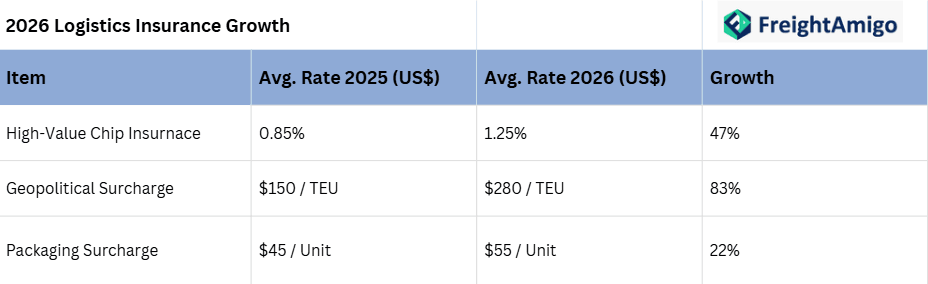
Stockpile: +Security, -Cash flow. Diversify: +Resilience, -Coordination. Nearshore: +Speed, -Scale. Insurance & Security: Protecting High-Value Cargo Cargo insurance rates for semiconductors have reached historic highs in 2026 as high-value assets become targets for supply chain interference.
Military risk surcharges in specific corridors have risen by nearly 40% compared to 2025.
FreightAmigo’s comprehensive insurance solutions offer coverage not just for damage, but for geopolitical delay compensations.
EU CBAM: The Green Logistics Mandate The full implementation of the EU Carbon Border Adjustment Mechanism (CBAM) in 2026 forces importers to report carbon emissions from transport.
Failure to provide verified low-carbon transport documentation results in heavy carbon levies.
FreightAmigo’s Green Path filter helps clients prioritize vessels with low carbon footprints or Sustainable Aviation Fuel (SAF).
2025 case studies highlight resilience wins. A major auto maker diversified to Malaysia fabs, cutting shortage exposure 40%.
Electronics firm used multi-modal shipping, saving 15% on delays.
These 2025 examples show proactive freight planning pays off.
How Digital Logistics Platforms build supply chain strength. Real-time tracking spots geopolitical risk freight issues early.
AI forecasts demand to preempt chip shortage 2026 .
Automated quoting speeds electronics components shipping .
FreightAmigo supports your semiconductor logistics. Our Digital Logistics Platform helps freight forwarders track shipments amid volatility.
Clients gain visibility into Asia-Europe lanes prone to disruptions.
We offer instant quotes and compliance tools for resilient chains.
Conclusion: Secure Your Supply Chain Now Navigating chip shortage 2026 requires agility. Book a Demo with our team to strengthen your resilience.
FAQ What causes the chip shortage 2026? Demand from AI and EVs exceeds fab capacity.
How does geopolitical risk freight affect chips? Tensions in Taiwan disrupt 60% of advanced supply.
What are electronics components shipping best practices? Mix air and sea with real-time tracking.
Will shortages end by 2026? Not fully; new fabs lag behind demand.
How to mitigate supply chain risks? Diversify suppliers and use digital platforms.
What 2025 changes impact freight? New export controls and port regulations.
Can Digital Logistics Platforms help? Yes, with forecasting and disruption alerts.
How does FreightAmigo address these? Through global visibility and quick rerouting.
What are tradeoffs of stockpiling chips? Reduces shortages but increases inventory costs.








 Global Popular RoutesTop sea & air shipping lanes
 Special OfferLimited-time shipping promotions





 Express
 Document
 Parcel - Air/Sea
 Container
 Relocation