In 2026, sustainable packaging for electronics is no longer optional — discover the cutting-edge materials, regulations, and logistics strategies that help freight forwarders protect devices, satisfy regulators, and slash carbon footprints.
The Rise of Eco-Packaging in Electronics Logistics
Eco-packaging has become essential for electronics as sustainability demands grow worldwide.
Shippers now prioritize materials that reduce waste and carbon footprints. Traditional plastic packaging harms the planet, but new options offer hope.
Why Anti-Static Sustainable Packaging Matters
Electronics demand anti-static sustainable solutions to prevent damage during transit.
Static electricity can ruin sensitive components like circuit boards. Eco-packaging must shield against this without relying on petroleum-based foams.
Reduces electrostatic discharge risks.
Supports green certifications like FSC.
Cuts shipping weight for lower emissions.
Key Regulations Reshaping Electronics Packaging in 2026
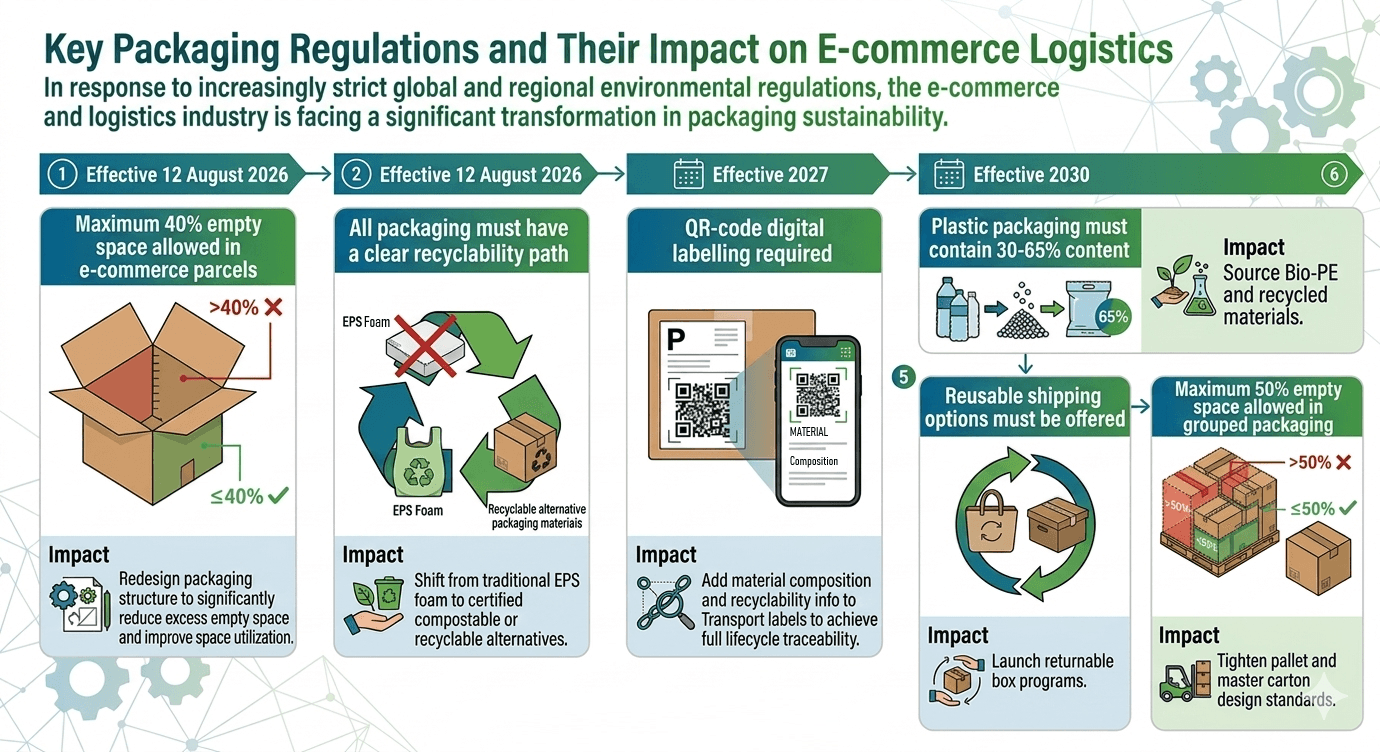
The EU Packaging and Packaging Waste Regulation (PPWR) 2025/40 is the single most impactful regulation for electronics shippers in 2026.
Adopted in December 2024 and effective from 12 August 2026, the PPWR replaces the former Packaging Directive (94/62/EC) and applies directly across all EU member.
US & Asia-Pacific Regulatory Updates
In the United States, 14 states now have active EPR legislation covering packaging. California's SB 54 mandates that 65% of all plastic packaging sold in the state must be recyclable or compostable by 2032.
Japan: 2025 Act on Promotion of Resource Circulation for Plastics tightens electronics packaging design rules
South Korea: K-BPI certification now required for eco-claims on packaging sold domestically
Singapore: Mandatory Packaging Reporting expanded to cover more SKU categories from January 2026
India: Plastic Packaging Waste Rules 2022 enforcement intensifying through 2026
Challenges with Protective Materials Today
Finding protective materials that are both tough and eco-friendly remains a key hurdle.
Current options often trade durability for biodegradability. Fragile items like smartphones need robust barriers.
Supply chain disruptions in 2025 highlighted the need for reliable sources.
Top Protective Materials for 2026 Eco-Packaging
2026 will spotlight innovative protective materials blending strength and sustainability.
Material
Anti-Static Rating
Shock Absorption
Compostable?
Cost vs EPS
Best For
Mushroom Mycelium Composite
Good (with bio-coating)
Excellent
✅ Yes (EN 13432)
+18–25%
Consumer electronics, servers
Recycled Moulded Pulp
Fair (additive treated)
Good
✅ Yes
+10–15%
Smartphones, tablets
Nano-Cellulose Fibre Board
Very Good
Excellent
✅ Yes
+30–40%
PCBs, semiconductors
Seaweed-Based Film Wrap
Good (natural conductivity)
Moderate
✅ Yes (weeks)
+20–28%
Cable wrapping, accessories
Bio-Polyethylene (sugarcane)
Inherent ESD properties
Moderate
❌ Recyclable
-5%(at scale)
Outer bag, void fill liner
Conductive Recycled Cardboard
Excellent
Good
✅ Yes
+5–8%
Flat panels, PCB trays
Mycelium composite packaging now commands approximately 27.8% of the sustainable protective packaging segment for electronics, with the global mycelium packaging market valued at USD 1.8 billion in 2025 and projected to reach USD 7.2 billion by 2034 at a CAGR of 16.7% (Market Intelo, 2026).
Decision-makers should model total lifecycle impacts.
Regulatory Shifts Impacting 2026 Packaging
New rules in 2025 pave the way for stricter 2026 standards on eco-packaging.
EU's Packaging Directive mandates 65% recyclability. US focuses on PFAS bans in protective materials.
No major WCO changes until 2027, but national updates demand quick adaptation.
Overcoming Adoption Challenges in Logistics
Freight forwarders face hurdles rolling out anti-static sustainable protective materials.
Supplier vetting takes time. Training staff on new handling is crucial.
2025 pilots showed 20% cost drops with proper integration.
Compatibility with existing equipment.
Global sourcing consistency.
Performance validation through tests.
Customer acceptance metrics.
Best Practices for Eco-Packaging Implementation
Start with audits to transition to 2026 eco-packaging successfully.
Assess current packaging waste.
Partner with certified suppliers.
Test prototypes in real shipments.
Track KPIs like damage rates.
Educate supply chain partners.
FAQ
What is eco-packaging for electronics?
Eco-packaging uses biodegradable or recycled materials to protect devices while minimizing environmental harm.
Why is anti-static sustainable packaging important?
It prevents static damage to electronics using green materials that don't harm the planet.
What protective materials are trending for 2026?
Mycelium, seaweed films, and bio-polyethylene lead as sustainable, strong options.
How does eco-packaging reduce shipping costs?
Lighter materials lower fuel use and emissions, leading to savings over time.
What are the main tradeoffs in sustainable packaging?
Balancing durability, cost, and recyclability requires careful material selection.
Are there 2025 regulations affecting 2026 packaging?
Yes, EU and US rules push for more recyclable content in electronics packaging.
How to test anti-static sustainable materials?
Use ESD simulators and drop tests to verify protection levels.
Can eco-packaging handle international shipping?
Yes, when designed for customs compliance and varying climates.
What role does logistics play in eco-packaging?
Platforms optimize routes and track sustainability metrics for better outcomes.
Conclusion: Preparing for a Greener Future
As 2026 nears, embracing eco-packaging, anti-static sustainable solutions, and advanced protective materials will define logistics leaders.
At FreightAmigo, our Digital Logistics Platform helps freight forwarders and clients navigate these changes with real-time visibility, efficient routing, and sustainability reporting. We support adaptation
Our features like automated quoting and tracking ensure compliance and efficiency in volatile markets.
To see how we can assist your transition, Book a Demo.








 Global Popular RoutesTop sea & air shipping lanes
 Special OfferLimited-time shipping promotions





 Express
 Document
 Parcel - Air/Sea
 Container
 Relocation