Mastering HS codes is essential for frictionless global apparel trade in 2026.
Accurate classification prevents customs delays, unexpected duties, and penalties for cotton and synthetic shirts. As a leading logistics provider, FreightAmigo helps importers navigate these rules daily.
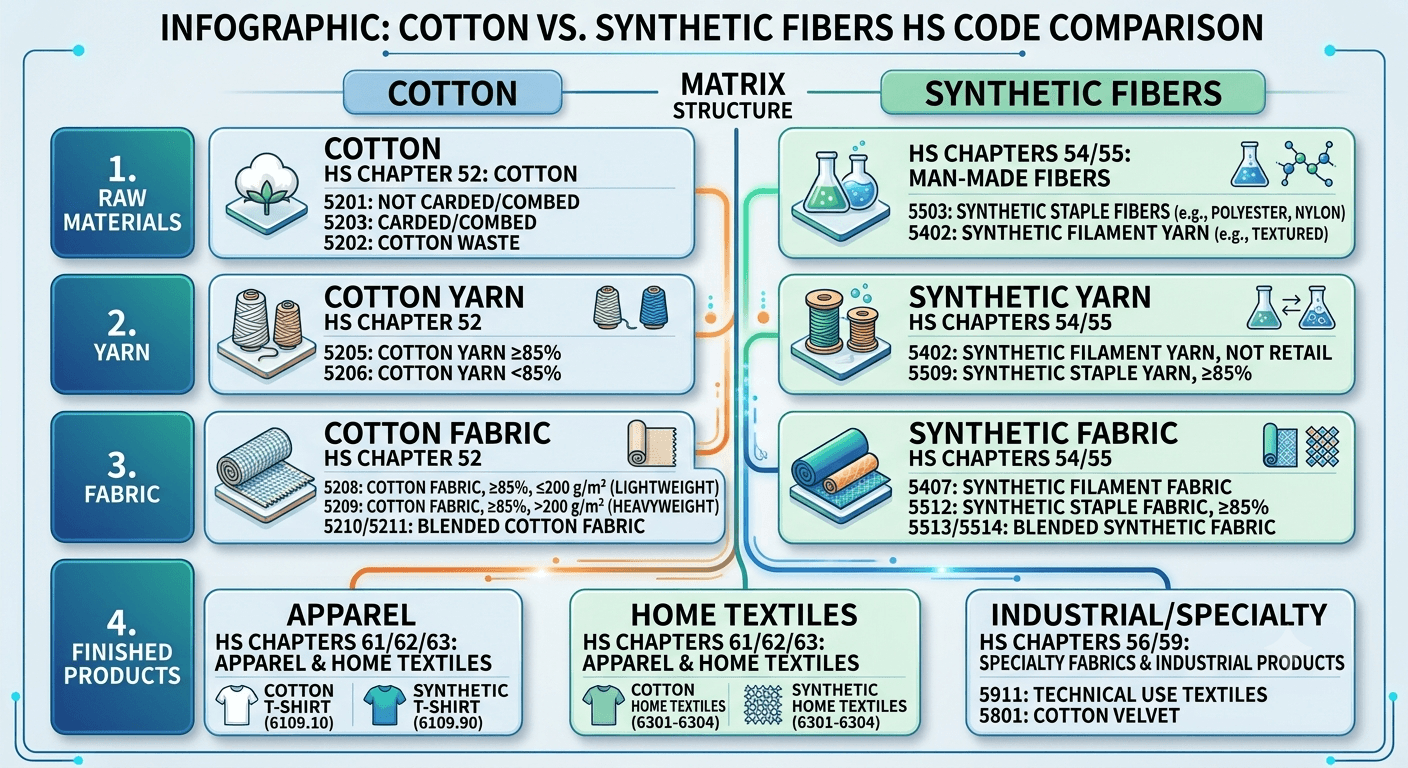
HS codes standardize product identification under the World Customs Organization system, typically six digits, with national extensions. For shirts, focus on Chapters 61 (knitted) and 62 (woven).
HS Codes for Cotton Shirts and T-Shirts
Cotton shirts generally enjoy lower duty rates due to natural fiber classification.
6109.10: Knitted or crocheted T-shirts, singlets, and similar garments of cotton.
6110.20: Knitted jerseys, pullovers, and cardigans of cotton.
6205.20: Woven men's or boys' shirts of cotton.
6206.20: Woven women's or girls' blouses and shirts of cotton.
Pure cotton requires over 70% by weight. Proper documentation like mill certificates supports lower tariffs via FTAs.
HS Codes for Synthetic Shirts and T-Shirts
Synthetic shirts fall under man-made fiber headings, often triggering higher tariffs.
6109.90: Knitted T-shirts and similar of other textile materials (synthetics).
6110.30: Knitted pullovers of man-made fibers.
6205.30: Woven men's shirts of man-made fibers.
6206.40: Woven women's blouses of man-made fibers.
Polyester and nylon dominate, with stricter scrutiny on blends. Lab testing confirms composition for accurate filing.
Key Differences and Tariff Impacts
Material composition drives major duty variations between cotton and synthetic shirts.
Cotton benefits from protective policies for natural fibers, while synthetics face higher rates to safeguard domestic industries. In the US, cotton T-shirts (6109.10) average 16.5%, synthetics (6109.90) reach 32.5%.
Shirt Type
Material
Primary HS Code
US Duty (2026 est.)
EU Duty (2026 est.)
Savings Potential (10K units @ $5)
T-Shirt
Cotton
6109.10
16.5%
12%
Up to $8,250
T-Shirt
Synthetic
6109.90
32.5%
12%
-
Woven Shirt
Cotton
6205.20
19.7%
12%
Significant with FTAs
Woven Shirt
Synthetic
6205.30
32.4%
12%
-
Always verify with latest HTS updates.
Common Pitfalls and Avoidance Strategies
Misclassifying fiber content is the top error leading to costly audits.
Relying on visual inspection instead of lab tests.
Request supplier fiber content reports early and consult experts like FreightAmigo.
Country-Specific Import Rules
Tariff application varies significantly by destination market.
Major importers must align with local extensions of HS codes. US and EU emphasize detailed statistical suffixes, while Asian markets focus on RCEP benefits. China applies varying rates favoring certain origins. Australia offers simpler 5% flat rates for many apparel items.
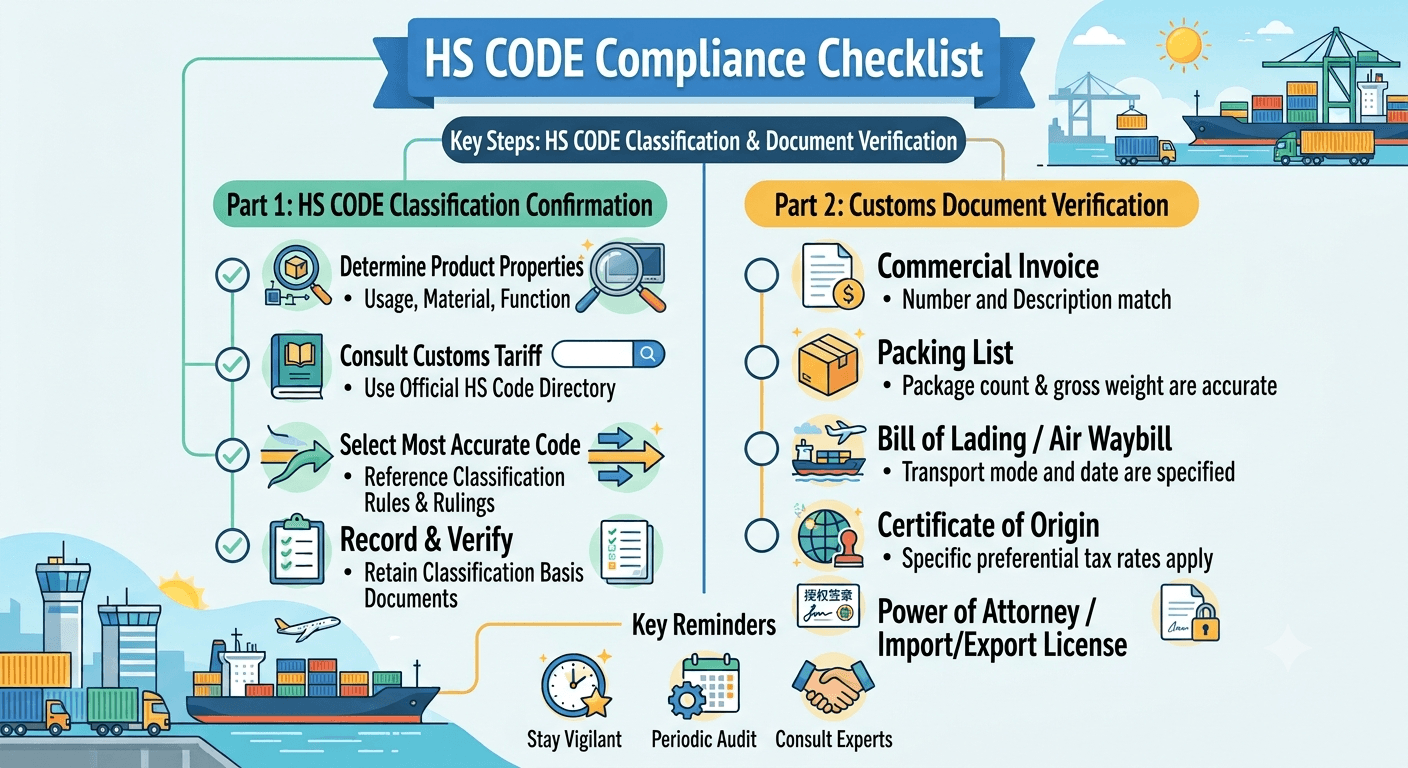
Document everything meticulously for smooth clearance.
Practical Compliance Tips for Importers
Proactive HS code verification streamlines your entire supply chain.
Future Trends and Sustainability in Apparel Shipping
Sustainability requirements will influence HS-related compliance in 2026 and beyond.
Eco-friendly certifications and carbon tracking integrate with tariff classifications. Recycled polyester may qualify for incentives, while traceable cotton gains preferences. FreightAmigo's AmiGo Green program supports compliant, low-impact shipping.
Plan ahead for evolving regulations.
Frequently Asked Questions
What is the HS code for cotton T-shirts in 2026?
The primary HS code for cotton T-shirts is 6109.10. This applies to knitted or crocheted garments. Verify subheadings based on gender, style, and destination country for precise classification and duty calculation.
What HS code applies to synthetic or polyester shirts?
Synthetic shirts primarily use 6109.90 for knitted versions. Woven styles fall under 6205.30. Higher duties often apply due to man-made fiber rules—confirm exact composition.
How do duties differ between cotton and synthetic shirts?
Cotton shirts typically face lower duties (e.g., 16.5% US) compared to synthetics (32.5% US). Differences stem from trade policies protecting natural fibers. Savings can exceed thousands per container with correct codes.
Why does fiber content matter for HS classification?
Fiber content by weight determines the heading under HS rules. Over 50-70% cotton keeps items in lower-duty categories. Blends require careful testing to avoid reclassification penalties.
Can I use the same HS code for all shirt types?
No—knitted vs woven, gender, and material all affect the code. Always provide detailed product descriptions and consult updated HTS schedules or experts.
How can FreightAmigo help with HS code compliance?
FreightAmigo offers tools, broker services, and calculators for accurate classification and clearance. Get instant quotes and expert support to avoid delays.
What documents prove shirt material for customs?
Mill certificates, lab test reports, and detailed commercial invoices are key. Include fiber percentages and origin details to support your declared HS code.
Are there 2026 updates affecting apparel HS codes?
Yes, minor amendments and sustainability-focused rules continue. Monitor WCO and national tariff databases. FTAs like RCEP or CPTPP can reduce rates with proper paperwork.
Conclusion: Optimize Your Apparel Logistics
Accurate HS codes for cotton vs synthetic shirts unlock cost savings and speed in 2026.
Implement these strategies with FreightAmigo for seamless global shipping. Compare rates, ensure compliance, and scale your apparel business confidently.
Contact us today for tailored logistics solutions.
For expert guidance, Book a Demo with FreightAmigo.








 Global Popular RoutesTop sea & air shipping lanes
 Special OfferLimited-time shipping promotions





 Express
 Document
 Parcel - Air/Sea
 Container
 Relocation