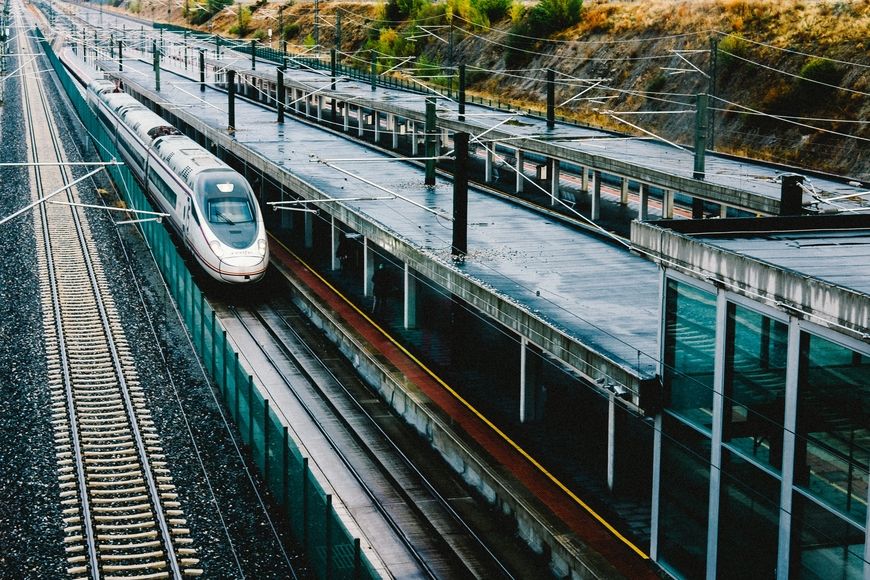
European Transport Evolution: Freight Logistics in the High-Speed Rail Era
TL;DR: Discover how high-speed rail is transforming European freight logistics in 2025, reducing road congestion, cutting emissions, and reshaping supply chains with intermodal integration and efficiency gains.
High-Speed Rail's Rise in European Freight Logistics
Europe's high-speed rail network is expanding rapidly, revolutionizing freight transport evolution.
Turin and Brenner Base Tunnel boost capacity for logistics.
- Over 10,000 km of high-speed tracks operational.
- Freight share projected to rise from 18% to 30% by 2030.
- Key drivers: EU Green Deal and TEN-T corridors.
2025 High-Speed Rail Freight Projects Transforming Europe
Major infrastructure upgrades drive European transport evolution.
These projects enable faster, greener freight movement across borders.
- Lyon-Turin Base Tunnel: 65 km, operational 2025, links France-Italy.
- Texel Tunnel (NL): World's longest freight rail tunnel by 2026.
- Fehmarnbelt Tunnel: Denmark-Germany, cuts travel by 7 hours.
- Mediterranean Corridor: Spain to Hungary integration.
- Rhine-Alpine Corridor: Netherlands to Italy freight boost.
Key Benefits of High-Speed Rail for Freight Logistics
High-speed rail freight offers unmatched advantages over trucks.
| Metric | Road Freight | HSR Freight 2025 | Gain |
|---|
| Speed (km/h) | 80 | 200-250 | 3x faster |
| CO2 Emissions (g/tonne-km) | 50-100 | 15-25 | 70% less |
| Cost (€/tonne-km) | 0.08 | 0.04 | 50% savings |
| Capacity (tonnes/train) | 25 | 1,600 | 64x more |
Source: European Commission TEN-T Report 2025.
Intermodal Integration in Europe's Rail Freight Era
Seamless truck-rail-sea hubs are key to freight logistics evolution.
- Terminal Upgrades: Rotterdam, Antwerp add HSR sidings.
- Digital Tracking: ETCS Level 2 for real-time visibility.
- Container Standardization: 45ft swap bodies for speed.
- Last-Mile Solutions: Electric shuttles from railheads.
- Policy Support: EU subsidies for intermodal shifts.
2025 Case Study: DB Cargo's High-Speed Freight Success
Germany's DB Cargo pioneered 160 km/h freight on ICE lines.
- Route: Hamburg-Munich, 5 hours vs 12 by truck.
- Volume: 1.2M tonnes/year, 40% emissions cut.
- Cost: 35% lower than road equivalents.
- Expansion: 10 new HSR freight paths in 2025.
Result: Model for pan-European high-speed rail logistics.
Challenges Facing High-Speed Rail Freight Growth
Infrastructure and policy hurdles remain in European freight evolution.
- Track access fees favor passengers over freight.
- Electrification gaps in Eastern Europe.
- Regulatory fragmentation across 27 nations.
- Loading gauge limits for oversized cargo.
- Sidings shortage for daily operations.
Future Outlook: Rail Freight by 2030
EU targets 30% modal shift by decade's end.
2025 marks tipping point for transport evolution Europe.
| Country | Current Rail Share | 2030 Target | Key Project |
|---|
| Germany | 19% | 25% | DB HSR freight |
| France | 10% | 20% | Lyon-Turin |
| Spain | 5% | 15% | Mediterranean Corridor |
| Poland | 25% | 35% | Baltic-Adriatic |
FAQ
What is driving high-speed rail freight growth in Europe 2025?
EU Green Deal mandates, TEN-T investments, and infrastructure like Lyon-Turin Tunnel accelerate rail freight evolution.
How does high-speed rail compare to trucks for freight logistics?
HSR offers 3x speed, 70% lower emissions, and 50% cost savings per tonne-km versus road transport.
Which 2025 projects boost European high-speed freight?
Lyon-Turin Base Tunnel, Fehmarnbelt Fixed Link, and Texel Tunnel enable faster cross-border logistics.
What intermodal solutions support HSR freight?
Upgraded terminals in Rotterdam/Antwerp, ETCS digital tracking, and electric last-mile shuttles ensure seamless integration.
Can high-speed rail handle oversized freight cargo?
Standardized 45ft containers fit most loads, though loading gauge upgrades are needed for full potential.
What is DB Cargo's role in rail freight evolution?
DB Cargo runs 160 km/h freight on passenger lines, serving as a model with 1.2M tonnes annually.
How will EU policy impact high-speed rail freight?
Subsidies for modal shifts and harmonized regulations target 30% rail share by 2030.
What challenges slow high-speed freight adoption?
High track fees, electrification gaps, and national regulatory differences hinder uniform growth.
Is high-speed rail freight ready for e-commerce parcels?
Yes, with automated sorting hubs and daily frequencies matching urban delivery demands.
Resources
For tailored European freight logistics solutions amid rail evolution, Book a Demo.
Contact: HKG: +852 24671689 | CHN: +86 4008751689 | USA: +1 337 361 2833 | enquiry@freightamigo.com
.








 Global Popular RoutesTop sea & air shipping lanes
 Special OfferLimited-time shipping promotions





 Express
 Document
 Parcel - Air/Sea
 Container
 Relocation