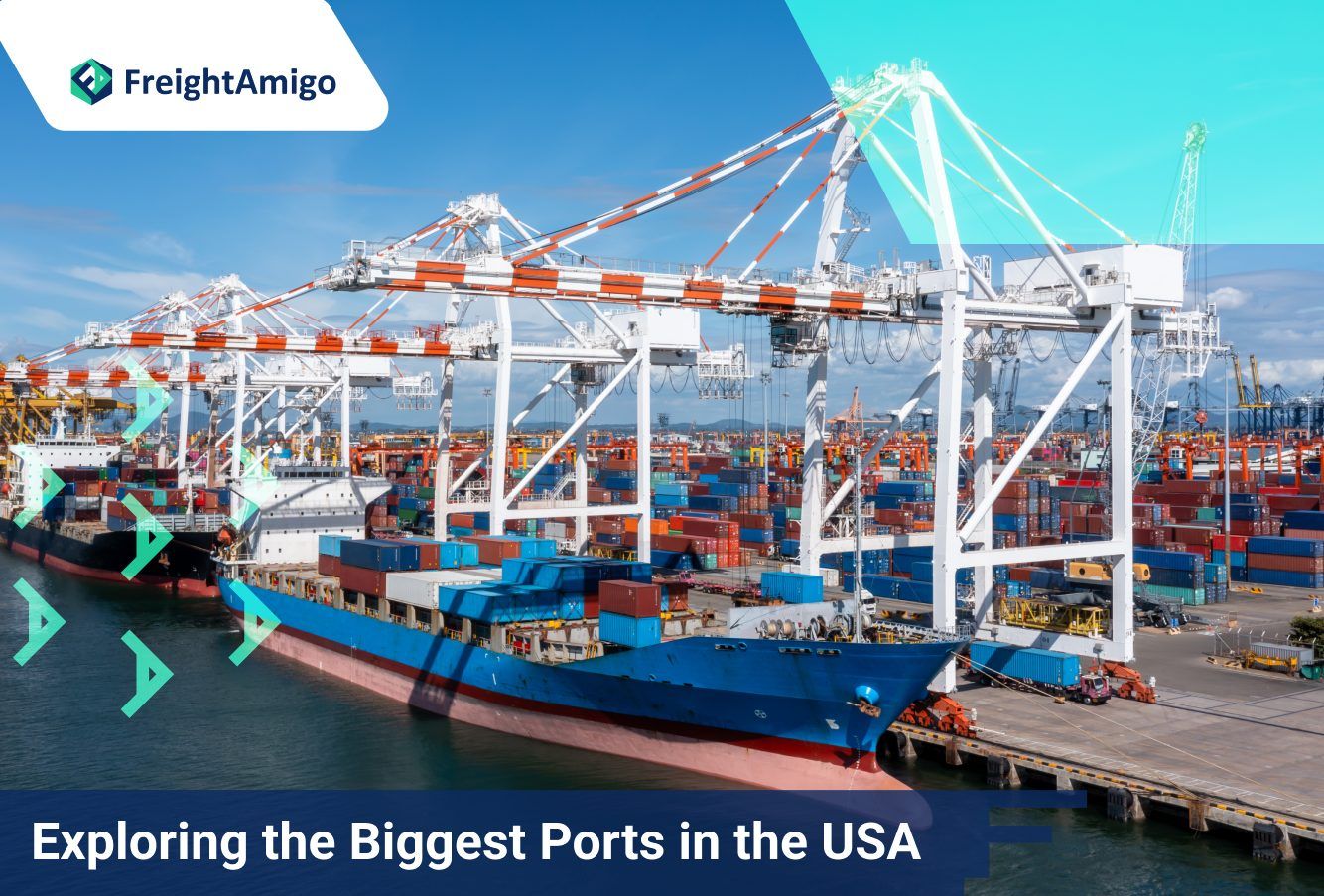
Exploring the Largest US Ports: Top Sea Ports Driving American Trade
In the fast-paced world of international logistics, choosing the right US port can make or break your supply chain efficiency. Imagine your shipment stuck in congestion at a suboptimal gateway, incurring delays, demurrage fees, and frustrated customers—a nightmare many shippers face amid fluctuating global trade volumes. But what if you could navigate to the largest US ports with confidence, leveraging their massive capacities to ensure smooth, cost-effective deliveries? At FreightAmigo Services Limited, we help businesses worldwide do just that by providing tools that connect you seamlessly to these vital hubs.
This comprehensive guide dives deep into the biggest ports in the US, answering questions like 'what is the biggest port in the US?' and offering insights into the largest port on the East Coast and beyond. Whether you're shipping from Asia, Europe, or elsewhere, understanding these usa sea port lists will empower you to optimize routes, reduce costs, and accelerate market access.
Key Highlights from This Guide
- Gain in-depth profiles of the top 10 largest US ports, including container volumes, tonnage, and trade partners for strategic decision-making.
- Discover how these ports influence global trade dynamics and what shippers need to know for efficient operations.
- Learn practical strategies to leverage these ports for your shipments, enhancing reliability and competitiveness.
| Rank | Port Name | Container Volume (TEUs, recent year) | Annual Cargo Tonnage (million metric revenue tons) | Key Trade Partners |
| 1 | Port of Los Angeles, CA | 10.66 million | 222 | China/HK, Japan, South Korea |
| 2 | Port of New Jersey and New York | 7.4 million | 74 | China, India, Germany |
| 3 | Port of Long Beach, CA | 9.13 million (2022) | 78.2 | Asia-focused |
| 4 | Port of Savannah, GA | 5.76 million (2022) | N/A | Asia, Latin America, Europe |
| 5 | Port of Houston, TX | 1.6 million | 247 | Gulf Coast trade |
| 6 | Port of Virginia | 3.7 million (2022) | N/A | Global |
| 7 | Northwest Seaport Alliance (Seattle-Tacoma) | 3.38 million | N/A | Asia |
| 8 | Port of Charleston, SC | 2.79 million (2022) | N/A | Southern trade |
| 9 | Port of Oakland, CA | 2.34 million | N/A | Asia |
| 10 | Port of Miami, FL | 1.2 million (2022) | N/A | Latin America, Cruise |
This table summarizes key metrics for the largest US ports, helping you quickly compare capacities and focus areas. Data drawn from recent port authority reports highlights why these hubs dominate US sea port lists.
1. Port of Los Angeles, California: America’s Premier Gateway
The Port of Los Angeles, often dubbed “America’s Port,” reigns as the largest port in the US and North America. Spanning 7,500 acres with 25 cargo terminals, it handles 20% of all incoming US cargo. For shippers targeting the West Coast, this port’s scale is unmatched, processing 10.66 million TEUs and 222 million metric revenue tons annually. It welcomed 1,867 vessels last year, supporting 1.6 million direct and indirect jobs.
Its primary trade partners—China and Hong Kong, Japan, and South Korea—underscore its role in trans-Pacific trade. From electronics to consumer goods, shipments here fuel the US economy. Infrastructure includes state-of-the-art cranes, automated gates, and extensive rail connections, minimizing dwell times. Challenges like occasional congestion are mitigated by ongoing expansions, ensuring reliability for high-volume importers.
For businesses shipping to Los Angeles, we at FreightAmigo recommend using our Sea Freight services. These provide economical, high-volume options tailored to this port’s capabilities, with direct routes from major Asian origins like Hong Kong. Pair it with our Instant Quote tool to compare rates across carriers instantly, locking in competitive pricing for your containers.
Delving deeper, the port’s environmental initiatives, such as shore power for vessels and zero-emission equipment, align with global sustainability goals. Shippers benefit from reduced emissions on their routes, supporting ESG compliance. Future dredging and terminal modernizations will accommodate even larger mega-vessels, future-proofing your supply chain investments here.
2. Port of New Jersey and New York: The Largest Port on the East Coast
Claiming the title of the largest port on the East Coast, the Port of New Jersey and New York manages over 7.4 million TEUs and 74 million metric revenue tons yearly. Home to the Port Authority Marine Terminal, it handles diverse cargo, generating $205 billion in annual container value. Key partners include China, India, and Germany, making it a transatlantic and transpacific powerhouse.
With 4.2 million total containers processed, its strategic location serves the densely populated Northeast corridor. Rail and highway networks ensure swift inland distribution, critical for time-sensitive goods. Recent investments in deeper channels and larger cranes enable handling of the world’s biggest ships, reducing transit times from Europe and Asia.
Shippers appreciate its resilience against West Coast disruptions, offering route diversification. We help clients optimize entries here via real-time visibility tools, ensuring compliance with stringent US customs. The port’s economic ripple effects bolster regional manufacturing and retail, indirectly benefiting importers with stable supply chains.
Expansion projects, including new terminals, position it for growth amid rising eCommerce demands. For East Coast focus, consider how our Sea Freight solutions integrate seamlessly, providing door-to-door reliability from global origins.
3. Port of Long Beach, California: Eco-Friendly Powerhouse
Adjacent to Los Angeles, the Port of Long Beach ranks as the 21st busiest globally, handling 9.13 million TEUs (2022) across 3,200 acres and 80 cargo berths. It moves 78.2 million metric revenue tons, employing 370,000 people. Its green policies—from clean air action plans to alternative fuels—set benchmarks for sustainable logistics.
Focused on US-Asia trade, it excels in diverse cargo like apparel, furniture, and perishables. Advanced tech like automated stacking cranes speeds operations, while partnerships with rail operators cut truck traffic. Shippers gain from predictive analytics for berth availability, avoiding delays.
In 2026, ongoing clean truck programs and hydrogen fuel initiatives enhance appeal for ESG-driven firms. Pairing with FreightAmigo’s AmiGo Green indirectly supports your carbon reduction goals when routing through here, though our core Sea Freight handles the heavy lifting.
Its proximity to LA allows load balancing, optimizing costs for West Coast entries. Detailed planning with sailing schedules ensures just-in-time arrivals.
4. Port of Savannah, Georgia: Single-Terminal Giant
The Port of Savannah boasts North America’s largest single-terminal container facility at Garden City (1,200 acres). It processed 5.76 million TEUs (2022), specializing in heavy lift cargo like autos, machinery, and ag products. Trade spans Asia, Latin America, and Europe, leveraging deepwater access.
Ocean Terminal adds ro-ro capabilities, diversifying options. Expansions like the Mason Mega Rail project boost intermodal capacity, serving the Southeast efficiently. Economic impacts include job creation and manufacturing resurgence.
For shippers, its lower congestion versus mega-ports means faster customs clearance. We facilitate this with integrated Customs Clearance services, though Sea Freight remains primary here.
Future channel deepening to 47 feet will attract larger vessels, enhancing competitiveness.
5. Port of Houston, Texas: Tonnage Leader
By far the busiest for foreign waterborne tonnage at 247 million metric revenue tons, Houston handles 1.6 million TEUs, 8,200 vessel calls, and 215,000 barges. Energy products dominate, but containers grow steadily. Economic impact: $339 billion to Texas.
Gulf location suits petrochemicals, grains, and steel. Inland waterway access via the Houston Ship Channel cuts costs. Modern terminals and IT systems ensure efficiency.
Shippers benefit from diversified cargo mixes, hedging against container volatility. Our platform’s Sailing Schedule tool lets you check up to 8 weeks ahead for Houston routes.
LNG expansions signal energy trade booms, opening opportunities.
6. Port of Virginia: Modern Infrastructure Hub
Ranked 6th, Virginia handles 3.7 million TEUs (2022) across 5 terminals, generating $92 billion impact and 397,000 jobs. It accommodates the world’s largest ships via 50-foot channels.
Mid-Atlantic position serves multiple regions. Rail tunnels to the Midwest enhance reach. Tech like remote cranes boosts productivity.
Resilience during pandemics highlights reliability. Ideal for diversified portfolios.
7. Northwest Seaport Alliance (Seattle-Tacoma): Pacific Northwest Gateway
This alliance moved 3.38 million TEUs, contributing $4.3 billion economically. Asia trade focus, with growth to 3.7 million TEUs in 2021.
Shared infrastructure optimizes costs. Forestry and perishables specialties.
Sustainability via electric equipment aligns with green shipping.
8. Port of Charleston, South Carolina: Efficient Southern Star
2.79 million TEUs (2022), $17 billion impact. Hugh K. Leatherman Terminal (2021) features mega-ships capability.
Auto and manufacturing exports thrive. Environmental commitments include wetland preservation.
9. Port of Oakland, California: Asia Trade Specialist
2.34 million TEUs, 27 cranes, emission-reduction truck programs. Infrastructure upgrades for larger vessels.
Bay Area access serves tech imports.
10. Port of Miami, Florida: Versatile Cruise and Cargo Hub
1.2 million TEUs (2022), world’s largest cruise port. Deep Dredge Project enhances capacity, $41 billion revenue.
Latin America gateway for perishables, pharma.
The Strategic Significance of the Largest US Ports
These usa ports form the backbone of US trade, facilitating international nexus, tech advancements, geographical leverage, and infrastructure growth. They drive GDP, supply chains, commercial hubs, and security.
West Coast ports like LA and Long Beach dominate transpacific volumes, while East Coast like NY/NJ and Savannah balance with Europe/LatAm. Diversification mitigates risks like strikes or chokepoints.
In 2026, automation, AI berth planning, and green tech define leaders. Shippers using FreightAmigo gain edge via integrated Sea Freight and Instant Quote, ensuring competitive access.
West Coast vs. East Coast: Choosing the Right US Port
West Coast offers speed from Asia (15-20 days from HK), lower costs for bulk. East Coast suits Europe (10-15 days), serves interior via rail. Factors: origin, cargo type, urgency.
Our Sailing Schedule aids selection.
Sustainability and Future Trends in US Ports
Ports invest in zero-emission zones, shore power. Tie to AmiGo Green for offsets. Mega-ship readiness, digital twins for ops.
Optimizing Shipments to US Ports with FreightAmigo
We streamline with Sea Freight for volume, Instant Quote for rates, Track & Trace for visibility, Customs Clearance for compliance. PO to POD manages end-to-end.
Case: HK exporter to LA cut costs 15% via our platform.
FAQ
What is the biggest port in the US?
The Port of Los Angeles is the largest port in the US by container volume, handling over 10 million TEUs annually.
What is the largest port on the East Coast?
The Port of New Jersey and New York is the largest on the East Coast, processing about 7.4 million TEUs.
How do I choose between major US ports?
Consider transit time, cost, congestion, and inland distribution; tools like sailing schedules help.
What are key metrics for US ports?
TEUs, tonnage, vessel calls, employment impact, and trade partners define capacity and influence.
Are US ports investing in sustainability?
Yes, leaders like Long Beach and Oakland prioritize green tech, emissions reductions.
How can FreightAmigo help with US port shipments?
Our Sea Freight, Instant Quote, and Track & Trace ensure efficient, visible, cost-effective shipping.
Conclusion
The largest US ports, from LA’s dominance to emerging Southern hubs, power global trade. By understanding their strengths—capacities, partners, infrastructure—shippers optimize logistics. At FreightAmigo, we empower you with Sea Freight solutions, Instant Quotes, and more to navigate these gateways effortlessly. Start today with our Instant Quote calculator and transform your US-bound shipments.








 Global Popular RoutesTop sea & air shipping lanes
 Special OfferLimited-time shipping promotions





 Express
 Document
 Parcel - Air/Sea
 Container
 Relocation