Understanding the SCFI: What It Measures

Want To CompareThe Best Express, Air Freight, Sea Freight, Rail Freight & Trucking Rates SoAs To Have Better ControlOn Cost?

Introduction to SCFI in 2026

The Shanghai Containerized Freight Index (SCFI) remains a vital benchmark for global container shipping rates in 2026.

It provides real-time insights into spot market freight costs from Shanghai to major destinations worldwide.

Businesses use it to navigate volatile pricing and optimize logistics strategies.

Get instant freight quotes aligned with current SCFI trends.

History and Evolution of SCFI

Launched in 2009 by the Shanghai Shipping Exchange, the SCFI has evolved into a cornerstone of container freight intelligence.

It started with a base value of 1,000 points and quickly reflected major disruptions like the 2021-2022 supply chain crisis.

By 2026, it incorporates advanced data collection for more accurate weekly snapshots.

What the SCFI Measures Today

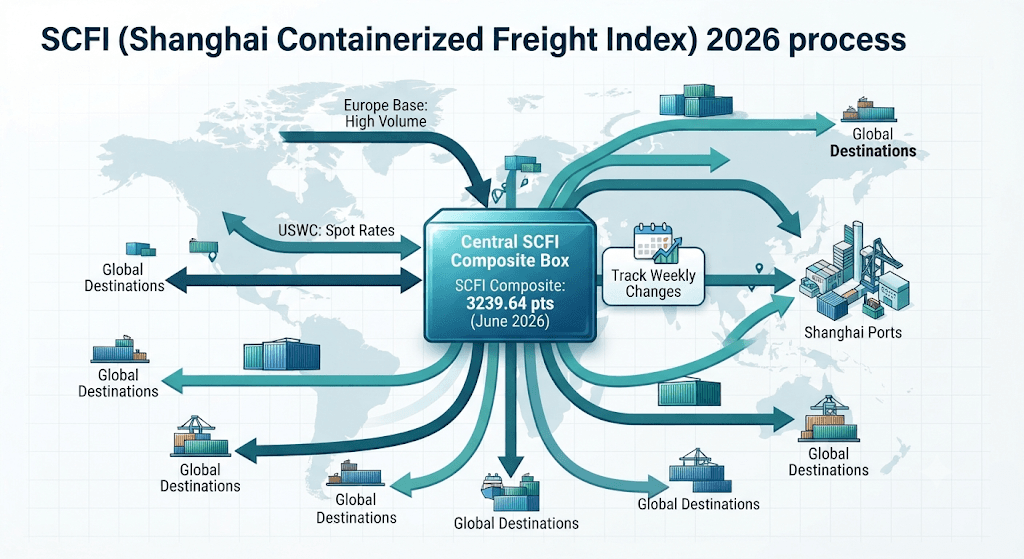
The SCFI tracks spot freight rates and surcharges for containerized cargo departing from Shanghai.

It covers 15 key routes, offering a composite index plus individual route breakdowns.

This helps shippers anticipate costs for exports to Europe, North America, and beyond.

Get instant freight quote from Shanghai with FreightAmigo.

What the SCFI Measures Today

How SCFI is Calculated in 2026

SCFI calculation uses weighted averages of spot rates collected every Friday.

  1. Data from shipping lines and forwarders on 15 routes.
  2. Inclusion of ocean freight plus surcharges.
  3. Route weighting based on trade volume.
  4. Base value anchored at 1,000 points from 2009.
  5. Weekly publication for timely market signals.

This methodology ensures reliability amid 2026 market shifts.

Current SCFI Trends and 2026 Forecasts

As of mid-2026, the SCFI composite hovers around 3,000+ points with notable route variations.

Recent data shows upward pressure from capacity constraints and geopolitical factors.

Experts forecast moderated volatility with strategic booking opportunities for shippers.

RouteMid-2026 Rate Trend (USD/TEU)2026 OutlookKey Driver
Europe BaseElevated (~2,000+)Stable to RisingRed Sea Diversions
US West CoastModerateCapacity TighteningDemand Recovery
Southeast AsiaLower VolatilityFavorable for SMEsRegional Trade Growth
South AmericaVariableWatch for SpikesSeasonal Factors


Factors Influencing SCFI Volatility

Multiple global elements drive SCFI fluctuations in 2026.

Supply-demand imbalances, fuel costs, and economic conditions remain primary movers.

Geopolitical events and new regulations add layers of complexity for planners.

  • Supply Chain Disruptions: Canal issues and rerouting increase costs.
  • Economic Indicators: GDP growth directly impacts cargo volumes.
  • Fuel and Sustainability: Rising green fuel mandates affect surcharges.
  • Seasonal Peaks: Pre-holiday surges create booking pressure.
  • Regulatory Shifts: Environmental rules influence carrier pricing.

FreightAmigo's Customer Clearance expert assist for regulatory shifts.

SCFI vs Other Freight Indices

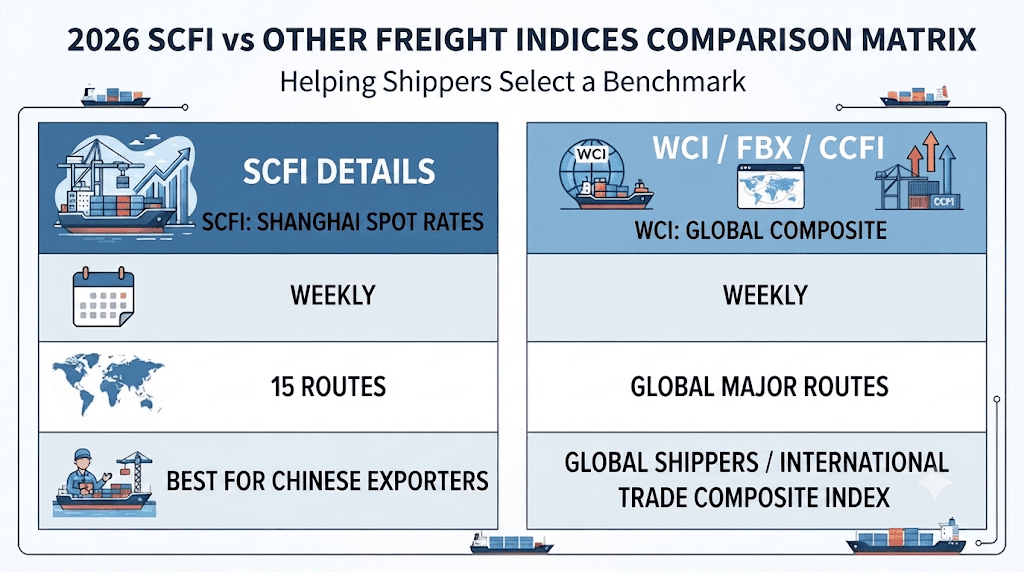
SCFI stands out for its focus on Shanghai-origin spot rates.

It differs from broader global benchmarks in scope and frequency.

  • SCFI: Shanghai-centric, weekly spot focus.
  • WCI (Drewry): Broader East-West routes.
  • FBX (Freightos): Daily updates for more agility.
  • CCFI: Includes more Chinese ports and contract rates.
  • BDI: Dry bulk, not container-specific.
2026 SCFI vs Other Freight Indices Comparison

Practical Impact on Shippers and Forwarders

Understanding SCFI empowers better budgeting and timing of shipments.

It helps mitigate risks in volatile 2026 markets.

Freight forwarders leverage it for competitive quoting and contract negotiations.

Frequently Asked Questions (FAQ)

What does SCFI stand for and why does it matter in 2026?

SCFI stands for Shanghai Containerized Freight Index. It measures spot container rates from Shanghai, helping shippers forecast costs and manage volatility in the current market.

How often is the SCFI updated?

The SCFI is published weekly every Friday by the Shanghai Shipping Exchange. This regular cadence allows businesses to track short-term trends effectively.

What routes does the SCFI cover?

It tracks 15 major routes including Europe, US coasts, Asia, and South America. This comprehensive coverage supports global exporters from China.

How can shippers use SCFI for budgeting?

Monitor SCFI trends to time bookings and negotiate contracts. High index periods signal the need for advance planning to control expenses.

Is SCFI different from CCFI?

Yes, SCFI focuses on Shanghai spot rates while CCFI covers broader Chinese ports with some contract data. Both provide valuable but distinct market views.

What factors are driving SCFI in 2026?

Capacity tightness, geopolitical issues, and demand recovery primarily influence 2026 SCFI levels. Fuel costs and regulations also play key roles.

How does FreightAmigo help with SCFI insights?

We provide integrated tools and quotes that reflect current SCFI data for optimal shipping decisions.

Should I book freight based on current SCFI?

Yes, use SCFI as a guide but combine with route-specific analysis and forwarder expertise for best results in 2026.

Start optimizing your shipments today with FreightAmigo's SCFI-powered solutions.

Conclusion: Master SCFI for 2026 Logistics Success

Stay ahead by tracking the index, leveraging comparison tools, and partnering with experts like FreightAmigo for resilient supply chains.

For expert guidance, Book a Demo with FreightAmigo. 

HKG Business +852 24671689 /+852 23194879, Personal +852 28121686 / +852 23194878 ︳CHN +86 4008751689 ︳USA +1 337 361 2833 ︳GBR +44 808 189 0136 ︳AUS +61 180002752 ︳Email: enquiry@freightamigo.com