Master container yard basics to cut dwell times and avoid costly demurrage in today’s high-volume trade environment.
Container yards remain the critical buffer between ocean vessels and inland transport. Understanding their role helps shippers reduce delays and improve reliability.
Key points for 2026 include rising automation, capacity growth, and tighter occupancy targets.
Choose on-dock or off-dock yards based on volume needs.
Plan bookings around projected occupancy levels under 90%.
Leverage multimodal gates for lower emissions and faster handoffs.
These insights support just-in-time operations amid expected TEU capacity expansion.
Defining a Container Yard: Core Concepts
A container yard is a specialized facility for temporary storage, handling, and transfer of shipping containers at or near ports.
It manages full container loads (FCL), empty units, and refrigerated (reefer) containers. Positioned between ocean carriers and trucks, rail, or barges, it marks the start or end of carrier responsibility under CY-CY terms.
Unlike general warehouses, yards focus on high-density stacking and rapid turnover.
In global trade, they handle over 95% of non-bulk ocean cargo movements. Efficient yards prevent pier backlogs and speed vessel turnarounds.
Shippers rely on them for predictable ETAs and lower inventory costs.
Key Functions and Operations of Container Yards
Container yards keep global trade flowing through storage, handling, maintenance, and multimodal transfers.
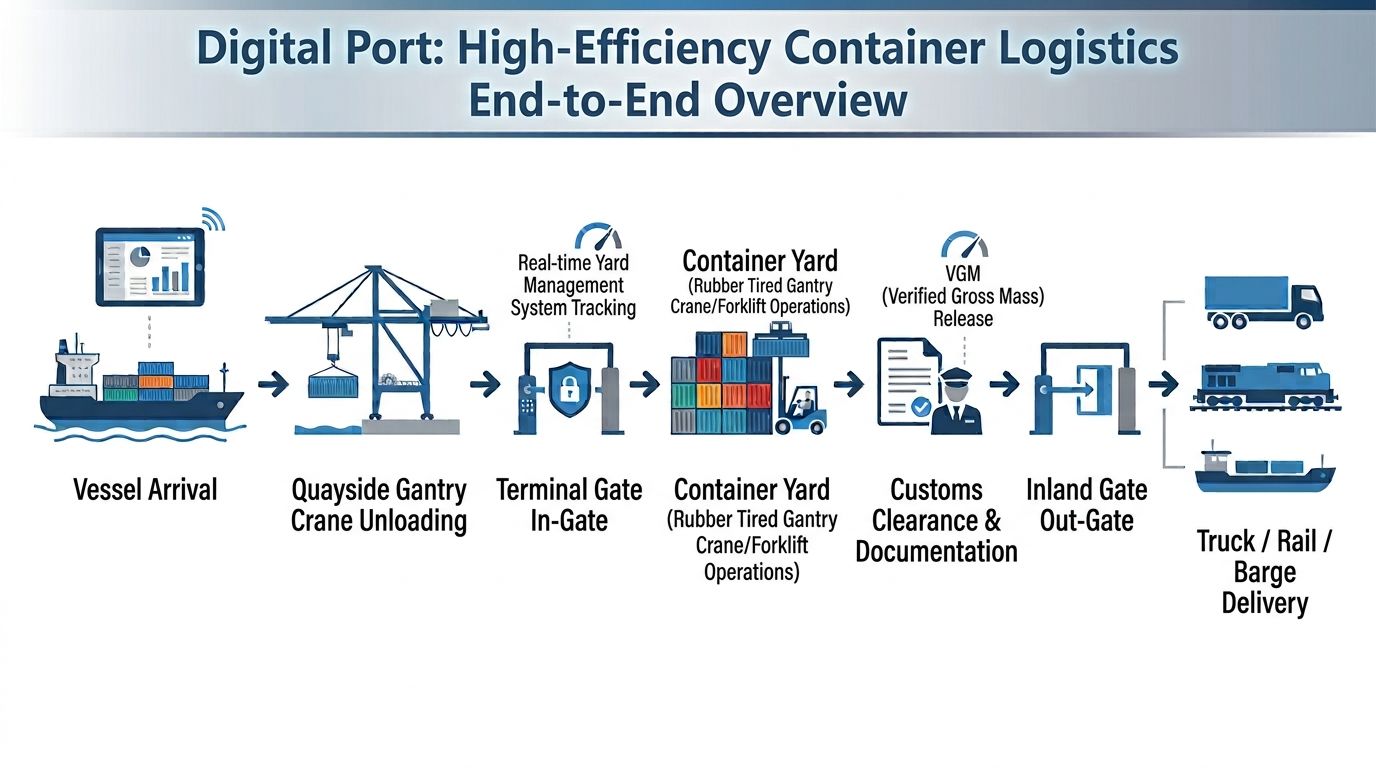
Primary operations include holding containers for days or weeks to bridge vessel schedules, customs clearance, and inland pickups.
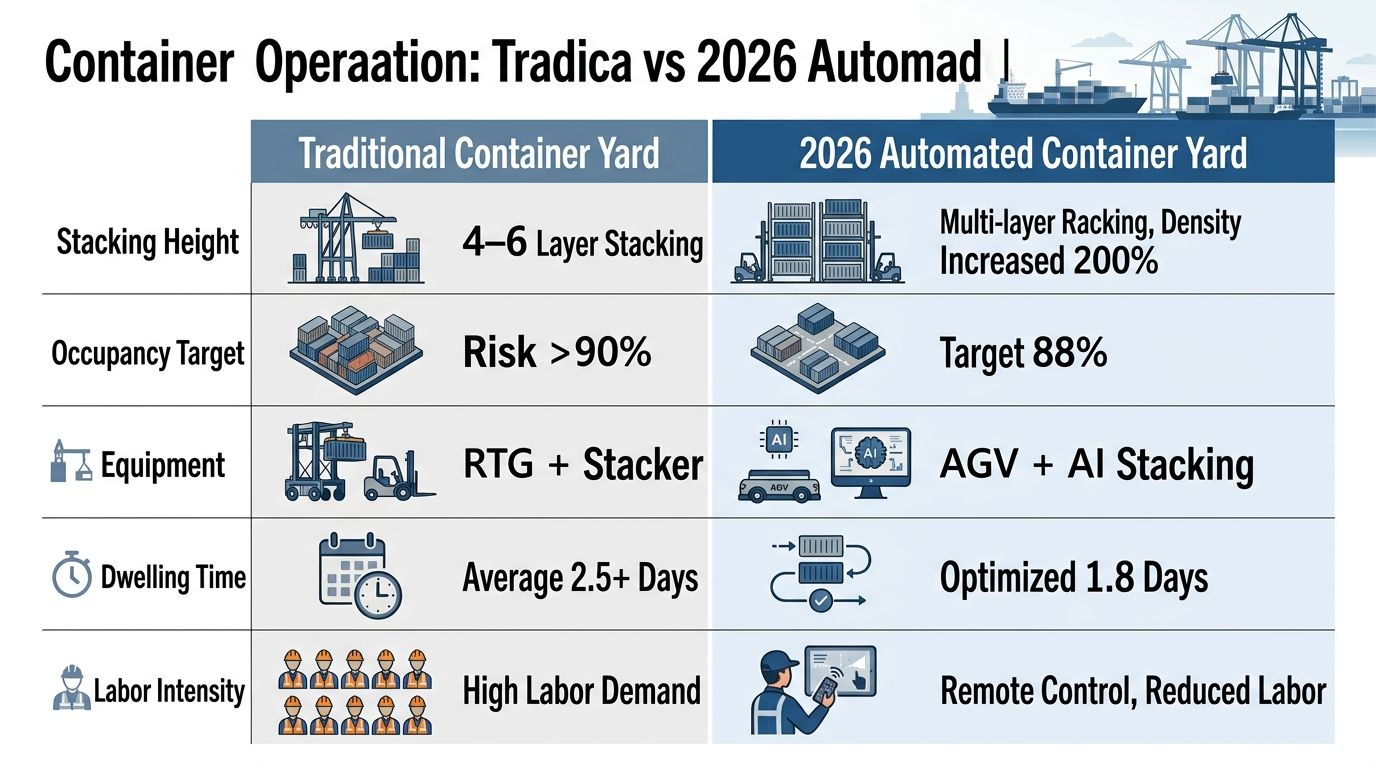
Equipment such as RTG cranes, reach stackers, and straddle carriers enables stacking typically 4–6 high.
Digital yard management systems track locations in real time and reduce costly rehandles.
Storage and staging for schedule mismatches.
Handling and movement with specialized machinery.
Maintenance including repairs, cleaning, and reefer power connections.
Multimodal interchange at truck, rail, or barge gates.
Verified Gross Mass weighing to meet SOLAS rules.
Optimal occupancy stays below 90% to avoid congestion and demurrage fees.
Types of Container Yards Compared
Container yards differ by location and specialization to match diverse shipping needs.
On-dock yards sit inside terminals for direct vessel access. Off-dock or near-dock yards provide overflow capacity a short distance away. Inland depots focus on empty container repositioning. Specialized yards handle reefers or hazardous materials.
Type
Location
Key Advantages
Typical Use Cases
On-Dock CY
Inside port terminals
Direct vessel access, low drayage
High-volume transshipment
Off-Dock/Near-Dock
1–50 km from ports
Overflow storage, repair space
Terminal decongestion
Inland Depots
Remote from ports
Long-term empty storage
Repositioning empty containers
Specialized Yards
Varies
Reefer power, hazmat zones
Temperature-sensitive or DG cargo
Multi-storey automated racks can boost capacity by up to 200% compared with traditional stacking.
Strategic Importance in Global Supply Chains
Container yards act as linchpins that enable just-in-time delivery and absorb port congestion risks.
They support transshipment hubs that handle roughly 30% of global container moves. Poor management can cascade delays and raise freight rates 20–50%.
In 2026, fleet capacity growth and moderate trade expansion place higher demands on yard efficiency.
Selecting the right yard type improves compliance, cost control, and reliability.
Real-time tracking platforms give shippers visibility from yard entry to final delivery.
This visibility helps adjust plans before dwell times become costly.
2026 Trends and Challenges in Container Yards
Automation, capacity expansion, and multimodal integration define container yard evolution in 2026.
Global terminal capacity continues rising while hotspot occupancy often exceeds 90%. Market projections point to strong growth in yard services through 2028.
AI-optimized stacking, AGVs, and remote-controlled cranes reduce labor needs and errors.
Sustainability pressures push greener rail-connected yards that cut truck emissions.
Capacity growth supports higher trade volumes.
Automation lowers rehandles and improves safety.
Multimodal gates align with ESG goals.
Dwell-time targets aim for under 2 days in optimized facilities.
Reefer infrastructure remains critical for perishable trades.
Challenges include residual disruption effects and the need for better forecasting tools.
How to Optimize Container Yard Interactions
Proactive planning and real-time monitoring deliver the biggest reductions in dwell time and demurrage.
Align bookings with sailing schedules and current yard occupancy data. Verify VGM early to prevent gate rejections.
Use tracking tools for early intervention when delays appear.
Partner with forwarders who maintain strong yard relationships for priority access.
Check sailing schedules and occupancy forecasts before booking.
Complete VGM and documentation ahead of arrival.
Monitor containers via real-time platforms.
Select yards with multimodal options when possible.
Build relationships for preferential handling during peak periods.
These steps have helped many shippers cut demurrage costs significantly.
Container Yard vs CFS: Critical Differences
Container yards handle intact full containers while Container Freight Stations manage LCL consolidation.
Yards focus on storage and transfer of sealed FCL units. CFS facilities break down or build up less-than-container loads.
Choosing the correct facility prevents unnecessary handling and extra fees.
Shippers moving FCL cargo should route through container yards.
LCL shippers benefit from CFS services for consolidation efficiency.
Understanding this distinction streamlines documentation and reduces transit time.
Frequently Asked Questions
What is a container yard?
A container yard is a port-adjacent facility designed for temporary storage, handling, and transfer of full shipping containers between ocean vessels and inland transport modes such as trucks or rail.
High occupancy above 90%, customs clearance delays, mismatched vessel and inland transport schedules, and limited equipment capacity are the main drivers of yard congestion.
What are the main types of container yards?
The primary types are on-dock (inside terminals), off-dock or near-dock (nearby overflow), inland depots (remote empty storage), and specialized yards for reefers or hazardous materials.
How can shippers reduce dwell times at container yards?
Shippers can lower dwell times by planning bookings against occupancy data, verifying VGM early, using real-time tracking, and partnering with providers who have strong yard access.
What trends are shaping container yards in 2026?
Key 2026 trends include automation with AGVs and AI stacking, multi-storey capacity expansion, multimodal rail integration, and stricter sustainability requirements.
Why is Verified Gross Mass important at container yards?
Verified Gross Mass (VGM) weighing ensures SOLAS compliance; incomplete or late VGM data often causes gate rejection and additional delays.
How do container yards support just-in-time supply chains?
By acting as flexible buffers that absorb schedule mismatches, efficient yards enable faster vessel turnarounds and more predictable inland delivery windows.
Conclusion: Master Container Yards for 2026 Success
Understanding container yard operations equips shippers to combat congestion, control costs, and improve reliability in 2026.
From core definitions and functions to automation trends and optimization tactics, yards remain essential hubs in global logistics.
Selecting the right type, monitoring dwell times, and leveraging visibility tools deliver measurable advantages.
FreightAmigo provides the digital platforms and expertise needed to navigate these facilities smoothly.
Applythe strategies in this guide to turn potential bottlenecks into competitive strengths.
For expert guidance, Book a Demo with FreightAmigo.








 Global Popular RoutesTop sea & air shipping lanes
 Special OfferLimited-time shipping promotions





 Express
 Document
 Parcel - Air/Sea
 Container
 Relocation