What Is Commercial Merchandise for US Customs: A Comprehensive Guide
Want To Compare The Best Express, Air Freight, Sea Freight, Rail Freight & Trucking Rates So As To Have Better Control On Cost?
Introduction: Why Commercial Merchandise Classification Matters in 2026
In 2026, global cross-border trade volumes have surged past pre-pandemic benchmarks, making accurate customs classification more critical — and more scrutinized — than ever before.
Misclassifying your goods can trigger costly delays, penalties, or full cargo seizures at US ports of entry.
Whether you are a first-time importer or a seasoned logistics manager, understanding exactly what US Customs and Border Protection (CBP) defines as "commercial merchandise" is the foundation of compliant, efficient international trade.
This guide breaks down every layer of that definition — and shows you how to act on it in 2026.
Understanding US Customs and Border Protection (CBP)
The United States Customs and Border Protection (CBP) is the largest federal law enforcement agency within the Department of Homeland Security (DHS), and it is the single most important gatekeeper for all commercial goods entering or leaving the US.
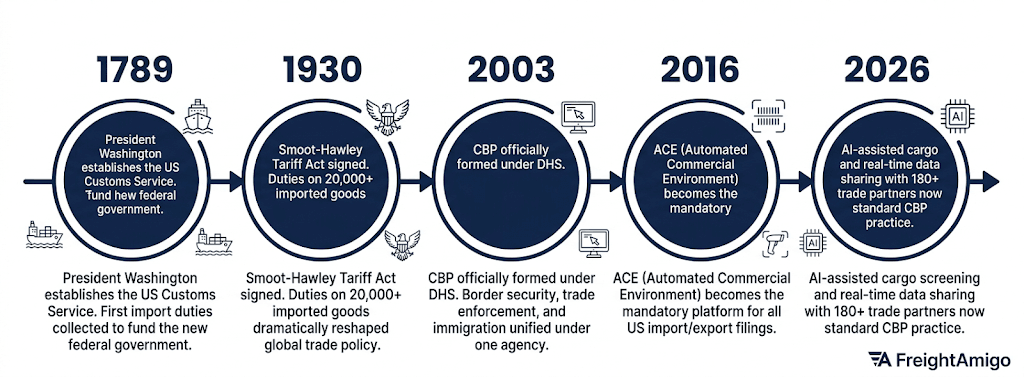
CBP was formally consolidated in 2003 under President George W. Bush, unifying multiple border agencies into one streamlined body.
Its authority spans trade regulation, duty collection, immigration enforcement, and national security screening.
Core CBP Responsibilities at a Glance
Regulating and facilitating international trade flows
Collecting import duties and enforcing tariff schedules
Enforcing US trade, customs, and immigration laws
Preventing illegal entry of persons and prohibited goods
Monitoring and controlling US exports
Administering the Automated Commercial Environment (ACE) system
What is CBP?
CBP is a federal law enforcement agency that falls under the umbrella of the United States Department of Homeland Security (DHS). As the largest agency within DHS, CBP serves as the primary border control organization for the United States. Its responsibilities include:
Regulating and facilitating international trade
Collecting import duties
Enforcing US regulations related to trade, customs, and immigration
Preventing illegal entry of individuals and goods into the country
Monitoring and controlling exports from the United States
A Brief History of CBP
The roots of CBP can be traced back to 1789 when President George Washington established the United States Customs Service. Over the years, various agencies were created to manage different aspects of border control and international trade. In 2003, President George W. Bush consolidated several of these organizations to form the United States Customs and Border Protection, creating a more streamlined and efficient approach to border security and trade regulation.
What Constitutes Commercial Merchandise for US Customs?
Commercial merchandise is legally defined by CBP as any goods or products imported into or exported from the United States for business, commercial, or resale purposes — as opposed to items imported for personal use.
This distinction carries enormous regulatory weight, affecting duty rates, required documentation, and inspection priority.
Getting this classification right from the start is non-negotiable for compliant trade in 2026.
Categories That Typically Qualify as Commercial Merchandise
Raw materials (steel, timber, chemical compounds, textiles)
Manufactured and finished goods (electronics, machinery, apparel)
Any item purchased abroad and intended for sale or business use within the US
Key Factors CBP Uses to Determine Commercial Merchandise
CBP officers do not rely on a single data point — they apply a multi-factor analysis to every shipment to determine whether goods should be classified as commercial merchandise.
Understanding these factors helps importers and exporters prepare accurate, defensible declarations.
Misrepresenting any one factor — even unintentionally — can trigger audits or penalties.
The 5 Primary CBP Classification Factors
Quantity: Large volumes of identical or similar items strongly signal commercial intent, even without a business invoice.
Nature of the Goods: Products designed for industrial use, resale packaging, or B2B supply chains are flagged as commercial by default.
Frequency of Shipments: Regular recurring shipments — even small ones — establish a pattern CBP interprets as commercial activity.
Intent of Use: The stated end-use on customs documentation must be consistent with the nature, quantity, and packaging of the goods.
The Import Process for Commercial Merchandise: Step-by-Step
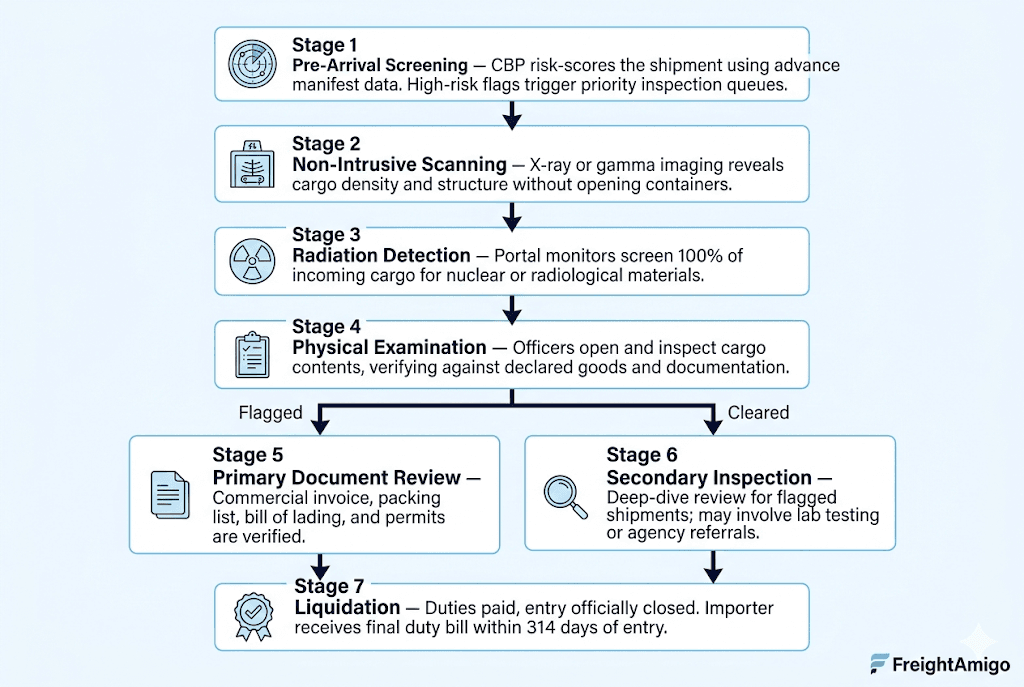
The US customs import process for commercial merchandise follows a structured, multi-stage workflow designed to balance trade facilitation with national security — and in 2026, much of it is digitally automated.
Knowing each stage helps importers anticipate timelines, prepare documentation, and reduce the risk of costly holds.
Here is a clear breakdown of every step.
Step-by-Step Import Workflow
Import Licenses and Permits: What You Need to Know
Not all commercial merchandise can enter the United States freely — certain product categories require specific import licenses or agency permits before a shipment can legally clear US customs.
Failing to secure the correct authorization before shipping results in holds, fines, or permanent seizure.
Research permit requirements early — ideally before you finalize your purchase order.
Product Category
Governing Agency
Key Requirement
Food & Agricultural Products
USDA / FDA
Prior notice + phytosanitary certificate
Pharmaceuticals & Medical Devices
FDA
FDA registration + 510(k) clearance (where applicable)
Weapons & Ammunition
ATF / State Dept
Import permit or State Dept license
Textiles & Apparel (restricted origins)
CBP / CITA
Visa or quota documentation
Wildlife & Animal Products
USFWS
CITES permit
Alcoholic Beverages
TTB / State ABC
Federal Basic Permit + state-level license
Radioactive Materials
NRC
NRC import authorization
Controlled Pharmaceuticals
DEA
DEA Import Declaration (Form 357)
The Export Process for Commercial Merchandise
Exporting commercial merchandise from the United States is equally regulated — and in 2026, US export controls have expanded significantly in response to geopolitical shifts affecting technology, semiconductors, and dual-use goods.
All US exports are governed by the Export Administration Regulations (EAR) administered by the Bureau of Industry and Security (BIS).
Exporters must evaluate every shipment against three core criteria before proceeding.
The 3 Export Control Determining Factors
Nature of the Product: Does the item appear on the Commerce Control List (CCL) or US Munitions List (USML)?
Destination Country: Is the recipient country subject to US trade sanctions or embargoes (OFAC list)?
End-User and End-Use: Is the declared end-user a flagged entity, and is the stated use consistent with the item's technical specifications?
Exporters should also file Electronic Export Information (EEI) through the Automated Export System (AES) for shipments valued above $2,500 per Schedule B classification.
Export Control Laws
All items being exported from the US are subject to export control laws. These regulations are designed to protect national security interests, enforce trade agreements, and prevent the proliferation of sensitive technologies.
Export Licenses
Certain types of commercial merchandise may require an export license. The need for a license depends on various factors, including:
The nature of the product
The destination country
The end-user of the item
The intended use of the product
Exporters must consult the regulations of the relevant federal agencies to determine if their commercial merchandise requires an export license.
How FreightAmigo Simplifies US Customs Processes in 2026
FreightAmigo's Digital Logistics Platform was purpose-built to remove the friction, guesswork, and manual errors that cause commercial merchandise shipments to stall at US customs.
In 2026, the platform has expanded its AI-assisted document verification, real-time CBP status integration, and multi-modal rate comparison capabilities.
Here is how FreightAmigo directly addresses each major customs pain point.
FreightAmigo Platform Features for Commercial Importers and Exporters
Instant Multi-Modal Quote Comparison: Compare door-to-door rates across international courier, air freight, sea freight, rail freight, and trucking — simultaneously, on one screen.
Real-Time Shipment Tracking: Live connections to 1,000+ airlines and shipping lines deliver milestone-by-milestone visibility from origin to US customs release.
One-Stop Customs Clearance Coordination: FreightAmigo connects you with licensed customs brokers within the platform — no third-party hunting required.
Automated Document Generation: The platform auto-generates commercial invoices, packing lists, certificates of origin, and ISF filings — reducing manual error rates.
24/7 Expert Logistics Support: Round-the-clock access to human logistics specialists for complex customs queries, classification questions, and compliance guidance.
Integrated Trade Finance and Insurance: Arrange cargo insurance and trade finance instruments directly through the platform, protecting your commercial merchandise end-to-end.
Best Practices for Handling Commercial Merchandise in 2026
The importers and exporters who consistently clear US customs without delays, fines, or cargo holds share one common trait: they treat compliance as a proactive system, not a reactive checklist.
The following best practices reflect current 2026 CBP enforcement priorities and digital trade requirements.
Apply them before your next shipment departs.
Top Best Practices for Commercial Merchandise Compliance
Stay Current on Regulatory Changes: CBP updates its policies, tariff schedules, and enforcement priorities frequently. Subscribe to CBP's official trade update bulletins and monitor the Federal Register.
Maintain Immaculate Documentation: Every commercial shipment needs an accurate commercial invoice, packing list, bill of lading, certificate of origin, and any product-specific permits. Errors in any one document can hold an entire container.
Use the Correct HTS Classification: The Harmonized Tariff Schedule (HTS) code determines your duty rate and regulatory requirements. When in doubt, request a binding ruling from CBP before shipping.
File ISF 10+2 On Time: For ocean freight, the Importer Security Filing must be submitted at least 24 hours before the vessel departs the foreign port. Late or inaccurate ISF filings carry a $5,000-per-violation penalty.
Build Customs Buffer Time Into Your Supply Chain: Even compliant shipments can experience port congestion, random inspections, or agency referrals. Build 3–5 additional business days into your delivery commitment for international shipments.
Leverage Trusted Trader Programs: CBP's Customs-Trade Partnership Against Terrorism (C-TPAT) and the Importer Self-Assessment (ISA) program offer expedited processing benefits for certified participants.
Use Technology Platforms for End-to-End Visibility: Platforms like FreightAmigo centralize your documentation, tracking, compliance checks, and broker communication — dramatically reducing the risk of human error.
Conclusion
In 2026, the cost of customs non-compliance — in delays, penalties, and supply chain disruption — far exceeds the cost of getting it right from the start.
Understanding what CBP classifies as commercial merchandise, why those factors matter, and how the import and export processes actually work gives your business a decisive operational advantage.
FreightAmigo's Digital Logistics Platform is built to support every stage of that journey — from instant rate comparison and automated document generation to 24/7 expert support and real-time shipment tracking across 1,000+ carriers.
The global marketplace rewards the businesses that move fast and stay compliant. FreightAmigo helps you do both.
If You Wish To Learn More About Ocean Freight Rates, Please Go To The FreightAmigo Page For Inquiries








 Global Popular RoutesTop sea & air shipping lanes
 Special OfferLimited-time shipping promotions





 Express
 Document
 Parcel - Air/Sea
 Container
 Relocation