Navigating Gulf War Risk Insurance in 2026: Premium Surges and Marine Coverage Challenges
Understanding Shipping Disruptions in the Strait of Hormuz
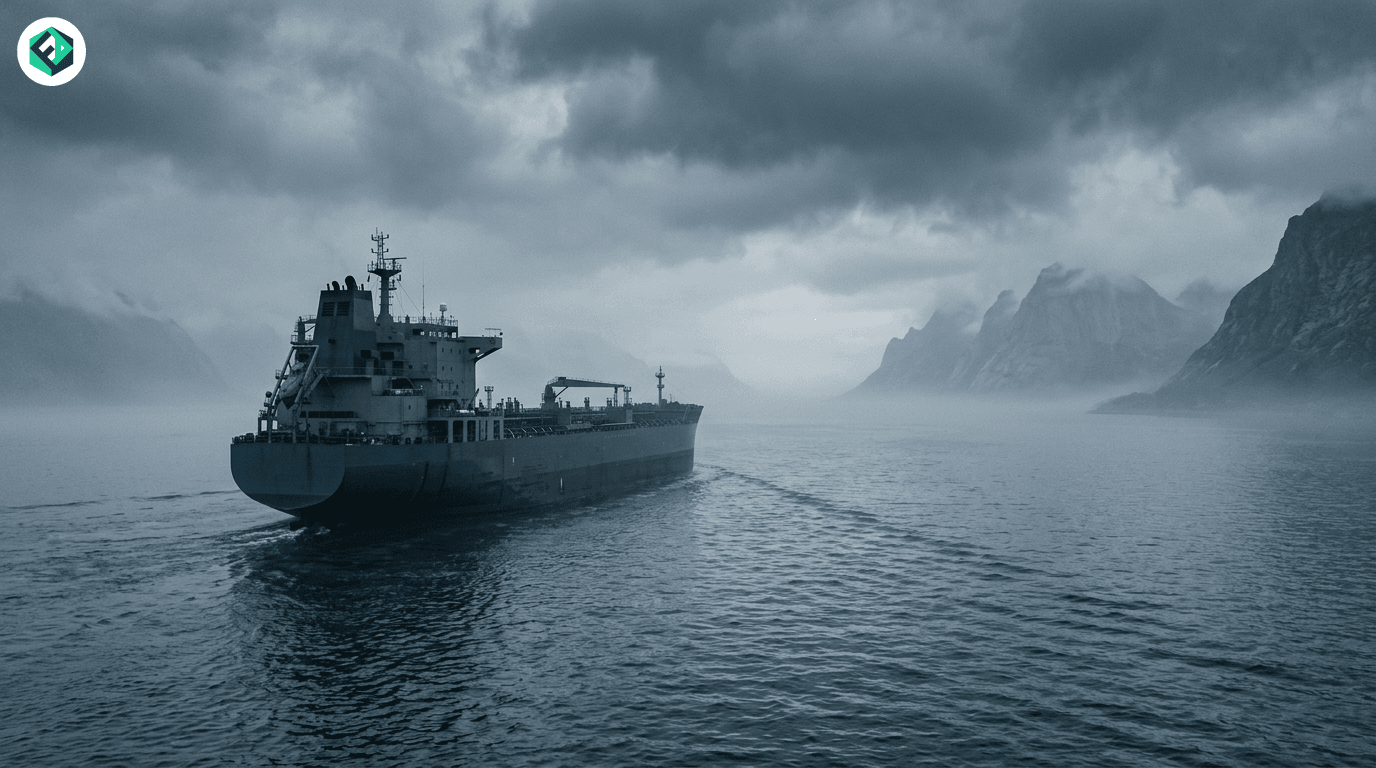
The geopolitical landscape of the Gulf region has experienced extreme volatility, culminating in severe operational hurdles for commercial maritime transport. On March 3, 2026, marking day four of the conflict, Iran's Revolutionary Guard Corps officially declared the closure of the Strait of Hormuz and issued direct warnings that they would set fire to any vessels attempting to transit the area. This dramatic announcement, documented in Al Jazeera's report on day four of the conflict, triggered immediate panic across global shipping networks. Commercial operators were forced to halt voyages as the threat of direct military targeting became a reality, following earlier statements on March 2, 2026, where Iranian forces asserted absolute control over the passage, as detailed in Al Jazeera's coverage of the Iranian threats.
The physical consequences of this escalation were swift and severe. According to maritime intelligence reports, shipping through the Strait of Hormuz ground to a near-halt, with overall transit traffic plummeting by at least 80% in the immediate aftermath of the closure. The physical danger was highlighted by several tankers being damaged in Gulf waters, resulting in the loss of two maritime personnel during the initial days of the hostilities. Additionally, approximately 150 commercial ships found themselves stranded in and around the Gulf, unable to find safe passage or secure the necessary clearances. These operational disruptions, tracked in Al Jazeera's analysis on the Hormuz shutdown and Al Jazeera's live updates on the military escalation, have completely upended standard transit schedules. For commercial fleets, the Strait of Hormuz shipping corridor has transformed from a vital maritime superhighway into an active conflict zone, resulting in unprecedented shipping disruptions, transit delays, and damaged tankers left stranded in contested Gulf territories.
Why Maritime Insurers Cancel War Risk Coverage
The sudden escalation in physical threats has forced marine insurance underwriters to rapidly re-evaluate their exposure in the Gulf. In response to the high risk of vessel damage and total loss, major maritime insurers and P&I (Protection and Indemnity) clubs have initiated widespread coverage cancellations for voyages transiting the affected waters. Under standard marine insurance cancellation procedures, underwriters typically maintain the right to cancel war risk coverage upon giving a short notice period—often just seven days or, in extreme circumstances, immediately. This mechanism allows insurers to protect their capital reserves from catastrophic, systemic losses when a localized conflict erupts.
When underwriters issue a cancelled war risk cover notice, it does not mean that transit is permanently uninsurable, but rather that the existing policy terms are no longer valid for that specific geographic zone. Shippers must understand that coverage cancellations for marine insurance policies are driven by rigorous risk assessments. For shipowners and cargo shippers, this means they can suddenly be left without essential liability and hull protection mid-voyage. Consequently, operators are actively seeking new insurance cover to bridge the gap. Acquiring a new marine insurance policy under these conditions requires navigating a highly constrained market, where only a select few specialized syndicates are willing to write policies.
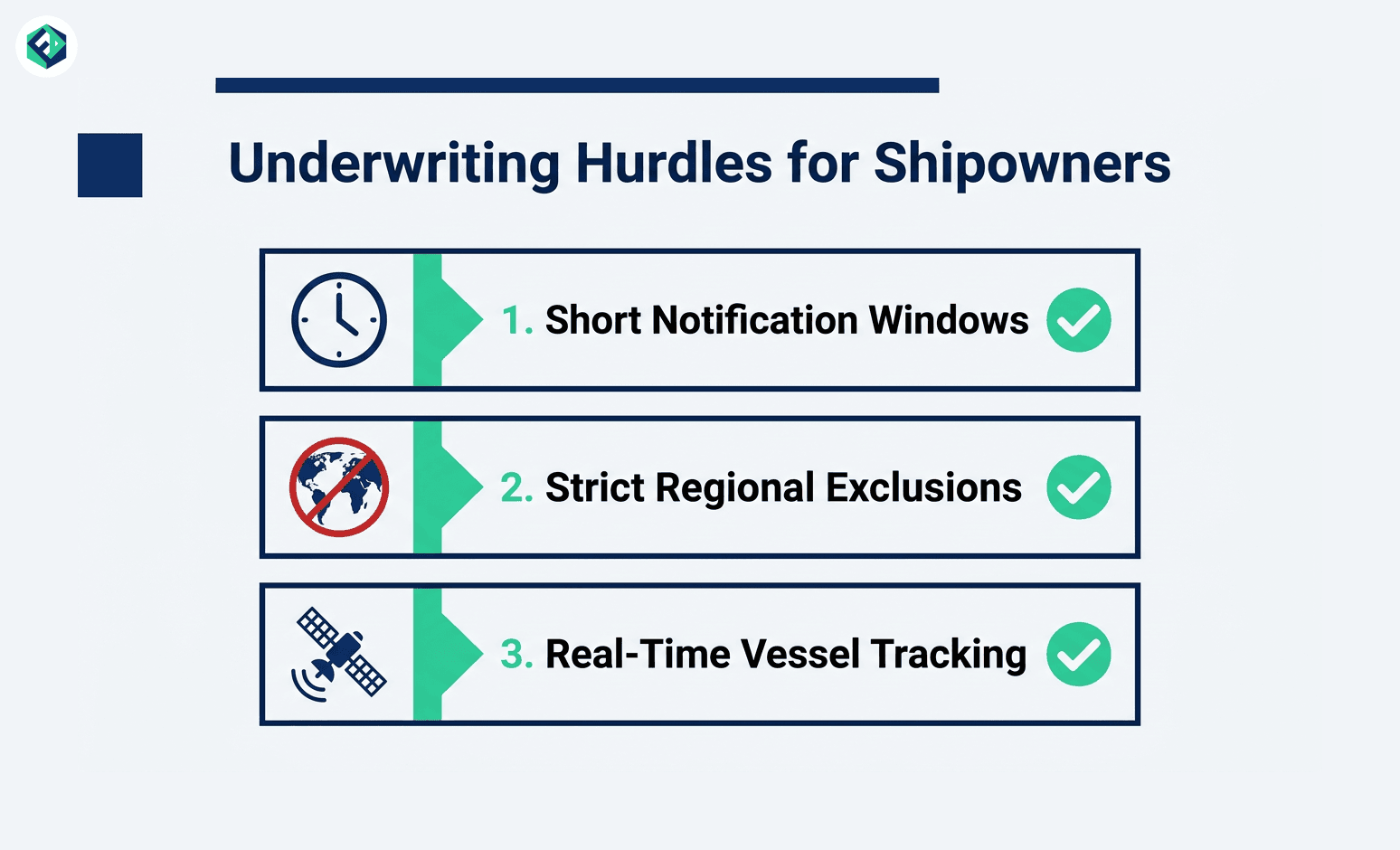
When seeking new insurance cover, shipowners typically face several hurdles, including:
- Extremely short notification windows for policy changes.
- Strict regional exclusions that render standard routes uninsurable.
- The necessity of providing detailed, real-time vessel tracking data to underwriters.
The Essential Importance of War Risk Insurance for Ocean Fleets
To understand why the current crisis has caused such concern, it is necessary to examine the fundamental structure of maritime insurance. Standard marine insurance policies, such as standard hull insurance and standard marine cargo policies, are designed to cover routine operational hazards. These hazards include weather damage, collisions, groundings, and mechanical failures. However, standard marine insurance policies almost universally contain strict exclusions for losses resulting from acts of war, strikes, riots, civil commotions, and political violence. Without specialized add-ons, a standard marine policy provides zero financial protection if a vessel is hit by a missile, damaged by a sea mine, or seized by a foreign military force.
This is where specialized marine war risk insurance becomes indispensable. A comprehensive war risk insurance cover is specifically designed to fill these critical gaps, providing dedicated coverage for physical damage, vessel detention, and cargo loss caused by hostile acts. Securing specialized marine cargo war risk coverage ensures that both the shipowner and the cargo owner are protected against the extreme financial consequences of geopolitical conflict. In high-risk zones like the Gulf, operating without this specialized cover is virtually impossible, as commercial banks will refuse to finance cargo, and port authorities will deny entry to vessels that lack adequate war risk liabilities. The table below outlines the core differences between standard coverage and specialized war risk insurance.
| Insurance Type | Standard Marine Insurance | Specialized War Risk Insurance |
|---|
| Primary Focus | Routine operational risks, weather, collisions, and accidents. | Hostile acts, military conflicts, terrorism, and political violence. |
| Key Exclusions | War, weapons of mass destruction, seizure, and political strikes. | Standard wear and tear, operational negligence, and non-war accidents. |
| Geographic Scope | Typically global, subject to standard navigational limits. | Highly restricted; requires special declaration for listed high-risk zones. |
| Premium Structure | Annual fixed rate based on vessel history and standard routes. | Base annual rate plus additional premiums calculated per transit. |
Navigating Gulf Transit Marine Insurance Rates and Surging Premiums
The immediate consequence of the current conflict is an unprecedented surge in war risk premiums. Underwriters calculate these additional premiums as a percentage of the total value of the vessel and its cargo for each single transit through a designated high-risk area. Prior to the March 2026 crisis, war risk premiums for the Gulf were relatively stable, representing a minor fraction of overall shipping costs. However, the closure of the Strait of Hormuz and the subsequent vessel attacks have triggered a massive war risk premium surge, with surging war risk rates reaching levels that threaten the economic viability of many commercial voyages.
These rising insurance costs are a primary driver of the overall increase in shipping costs Middle East operators must bear. Shippers must also contend with rising bunker adjustment factors, security fees, and rerouting expenses as vessels seek alternative pathways, causing Middle East shipping rates to climb. In this challenging commercial environment, securing competitive and reliable coverage is essential.
FreightAmigo helps logistics managers navigate these volatile rates by offering comprehensive coverage that goes far beyond limited carrier liability. By integrating insurance directly with your booking process, our platform provides centralized shipment management and real-time cost visibility. You can easily protect your assets against unexpected political risks and transit disruptions. Get started today by securing your tailored Cargo Insurance to keep your supply chain resilient.
The Geopolitical Impact on Global Energy Shipping and Supply Chains
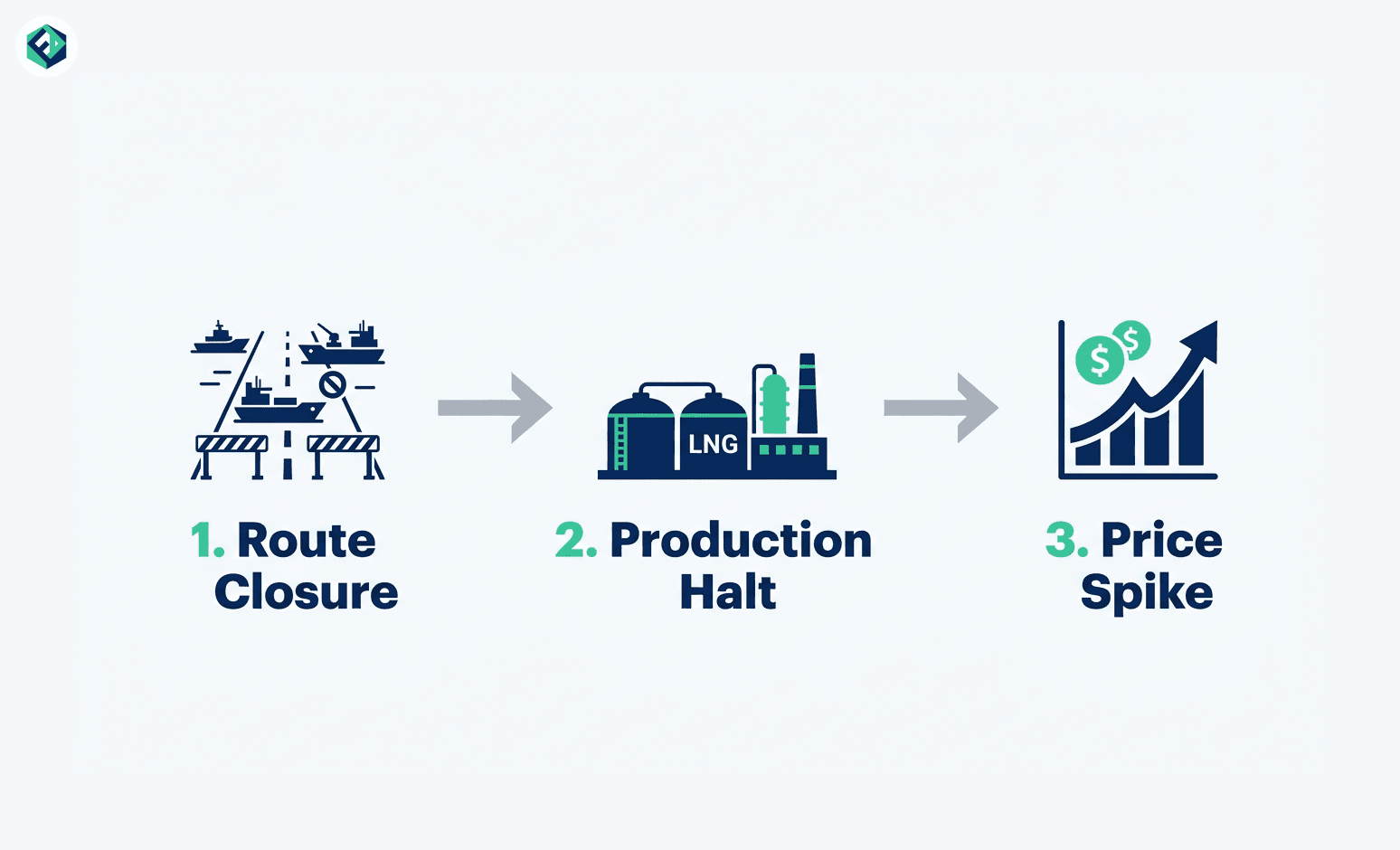
The maritime blockade in the Strait of Hormuz has sent shockwaves far beyond the immediate region, directly impacting global energy shipping and supply chains. The Strait is a vital chokepoint for global energy transit, carrying a significant portion of the world's liquefied natural gas (LNG) and crude oil. The physical disruption of this route has immediately translated into rising energy costs worldwide. For instance, following attacks on its processing facilities, QatarEnergy announced a complete LNG production halt at two of its major processing bases and subsequently declared force majeure on several shipments. This sudden Qatar LNG shutdown, analyzed in Al Jazeera's report on the QatarEnergy shutdown, caused European natural gas benchmark prices (Dutch TTF) to spike by nearly 45% in a single day.
The broader oil markets have responded with similar volatility. Crude oil prices quickly rose past $79.40 per barrel, with market analysts warning that a prolonged closure of the Strait of Hormuz shipping corridor could have a severe impact on energy prices, pushing oil prices past the $100 mark. This dramatic impact has triggered widespread concerns over long-term inflation and global energy costs. As manufacturing and transport sectors face escalating fuel costs, logistics managers must implement robust mitigation strategies. These strategies include diversifying supply routes, increasing safety stock, and securing long-term freight and insurance contracts to buffer against sudden market shocks and the cascading effects of the QatarEnergy production halt.
US Government Political Risk Insurance and Naval Support Solutions
To prevent a complete collapse of trade and stabilize the volatile energy markets, state-backed interventions have emerged as a critical alternative. On March 3, 2026, President Trump issued an executive directive instructing the U.S. International Development Finance Corporation (DFC) to step in. As revealed in President Trump's official directive on Truth Social, the U.S. government ordered the DFC to provide political risk insurance and guarantees for commercial maritime trade traveling through the Gulf. This intervention aims to provide a state-backed alternative to private commercial marine insurance, which has become either prohibitively expensive or entirely unavailable due to the private underwriters' risk aversion.
The introduction of DFC political risk insurance and U.S. government marine insurance guarantees serves as a vital financial backstop, giving shipping lines the confidence to continue operations despite the private market's coverage cancellations. Alongside these financial guarantees, the directive also outlined a military component, stating that the U.S. Navy would begin a U.S. Navy tanker escort operation through the Strait of Hormuz if necessary. A naval escort Strait of Hormuz operation provides the physical security required to deter further attacks, working hand-in-hand with political risk insurance guarantees to restore some degree of order to the trade lanes. However, because these government-backed programs and naval escort operations are subject to complex geopolitical conditions and rapid administrative changes, shippers must remain proactive.
To navigate these turbulent waters successfully, logistics professionals must continuously monitor both physical transit conditions and the evolving insurance landscape. The optimal approach involves combining state-backed guarantees with private-sector agility. Shippers should immediately review their existing cargo policies, consult with experienced logistics partners, and utilize advanced digital platforms to secure flexible coverage. By proactively obtaining a comprehensive cargo insurance quote and exploring diverse routing options, businesses can mitigate risk, protect their financial bottom line, and maintain supply chain resilience through the ongoing 2026 Gulf crisis.
FAQ
How are geopolitical tensions causing maritime shipping transit delays in the Strait of Hormuz?
Geopolitical tensions have led to severe transit blockages and military threats. The closure of the Strait of Hormuz has halted traffic and left numerous commercial vessels stranded in the region.
Why are marine insurers cancelling war risk coverage in the Gulf region?
Insurers cancel coverage to protect their financial reserves from catastrophic losses. Underwriters utilize short-notice cancellation clauses to re-evaluate and withdraw terms when risks of vessel damage escalate.
Why is war risk insurance essential for commercial ocean vessels operating in high-risk zones?
Standard marine policies typically exclude losses caused by war and political violence. Specialized war risk cover is necessary to protect against physical damage, vessel detention, and cargo losses in conflict areas.
How are underwriters calculating war risk premium rate increases for tankers in the Gulf?
Premiums are calculated as a percentage of the total vessel and cargo value per transit. The heightened threat of attacks has driven these rates to unprecedented levels, significantly increasing shipping costs.
What are the projected global energy shipping cost increases resulting from Gulf tensions?
Tensions are causing significant spikes in global oil and natural gas prices. Production halts and route disruptions have already driven European natural gas benchmark prices up by nearly 45%.
How does the United States Development Finance Corporation provide political risk cover for transit?
The DFC provides state-backed political risk insurance and guarantees for commercial maritime trade. This government intervention serves as a financial backstop when private marine insurance becomes unavailable or too expensive.





















 Global Popular RoutesTop sea & air shipping lanes
 Special OfferLimited-time shipping promotions


 Express
 Document
 Parcel - Air/Sea
 Container
 Relocation