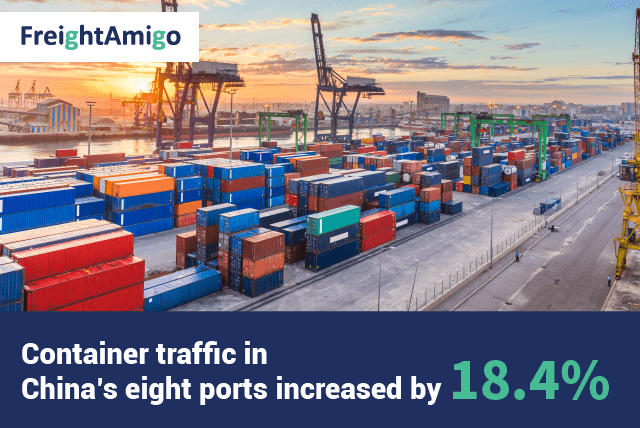
China's Port Container Traffic Hits 18.4% Growth in 2025
In early 2025, **China's eight major ports recorded an impressive 18.4% year-on-year increase in container throughput**. This surge highlights strengthening global trade amid economic recovery and supply chain optimizations.
Ports like Tianjin, Shanghai, Ningbo-Zhoushan, Xiamen, Guangzhou, and Shenzhen led with growth exceeding 20%, reflecting heightened export activities.
Export and Inland Container Throughput Breakdown
Export container throughput across these ports jumped **19.8% year-on-year**, while inland volumes rose by 14.6%.
- Export boom tied to electronics and manufacturing exports.
- Inland growth from efficient rail-port integrations.
- Overall, signaling 2025's trade resilience.
Key Drivers Behind 18.4% Container Traffic Surge
The rapid rise in **container traffic in China's ports** stems from multiple factors. **Reopened Pan Pacific routes and soaring freight rates fueled the momentum**.
- Empty container shortages at major hubs.
- Post-2025 national logistics policy changes boosting efficiency.
- Global demand recovery in e-commerce and renewables.
- Increased vessel calls despite Red Sea disruptions.
Cargo Throughput Trends in Major Coastal Ports 2025
Major coastal ports saw **cargo throughput climb 15.8% year-on-year**, with exports up 23.1%.
Crude oil shipments grew 27.7%, led by Dalian Port's 60% spike and 38.1% inventory rise.
Metal ore shipments increased 21.2%, though port inventories dipped 7.4%.
| Category | YoY Growth | Key Ports |
| Container Traffic | 18.4% | Tianjin, Shanghai |
| Export Containers | 19.8% | Ningbo-Zhoushan |
| Crude Oil | 27.7% | Dalian |
| Metal Ore | 21.2% | Coastal Hubs |
Yangtze River Ports Performance Amid National Shifts
Three major Yangtze ports—Nanjing, Wuhan, Chongqing—saw cargo throughput dip 3.5% but **container throughput rose 16.3%**.
- Inland waterway optimizations counterbalanced declines.
- 2025 policies enhanced multimodal logistics.
- Focus on high-value containerized goods.
2025 Case Study: Shanghai Port's Record Volumes
Shanghai, world's busiest port, exemplified the trend with over 20% growth. **A 2025 case study shows how digital tracking reduced dwell times by 15%**, boosting throughput.
Similar gains in Ningbo-Zhoushan via AI-driven scheduling.
Implications for Global Logistics in 2025
This **18.4% container traffic increase** underscores China's pivotal role in global supply chains. Businesses face higher freight rates but gain from volume efficiencies.
- Monitor empty container availability.
- Leverage 2025 national reforms for faster customs.
- Adopt real-time tracking for resilience.
- Plan for sustained high demand into 2026.
- Integrate with emerging Southeast Asia routes.
How to Navigate China's Port Surge Challenges
Follow this step-by-step guide for **managing container traffic in China's ports**:
- Book early: Secure slots amid shortages.
- Track digitally: Use platforms for visibility.
- Diversify routes: Balance coastal and inland.
- Hedge rates: Lock in freight contracts.
- Consult experts: Optimize with logistics pros.
FAQ: China's Port Container Traffic 2025
Quick answers to common queries on **China's eight ports container traffic** growth.
- What caused the 18.4% increase? Export demand, route reopenings, and 2025 policy boosts.
- Which ports grew most? Tianjin, Shanghai, and Shenzhen exceeded 20%.
- How did exports perform? Up 19.8% year-on-year across eight ports.
- What's the crude oil trend? 27.7% growth, with Dalian at 60%.
- Yangtze ports status? Containers up 16.3% despite cargo dip.
- Impact on freight rates? Soaring due to shortages and demand.
- 2025 forecasts? Sustained growth with national logistics upgrades.
- How to handle shortages? Use advanced booking and tracking tools.
- Global effects? Stronger supply chains but higher costs.
- Best practices? Digital integration and multimodal planning.
























 Express
 Document
 Parcel - Air/Sea
 Container
 Relocation