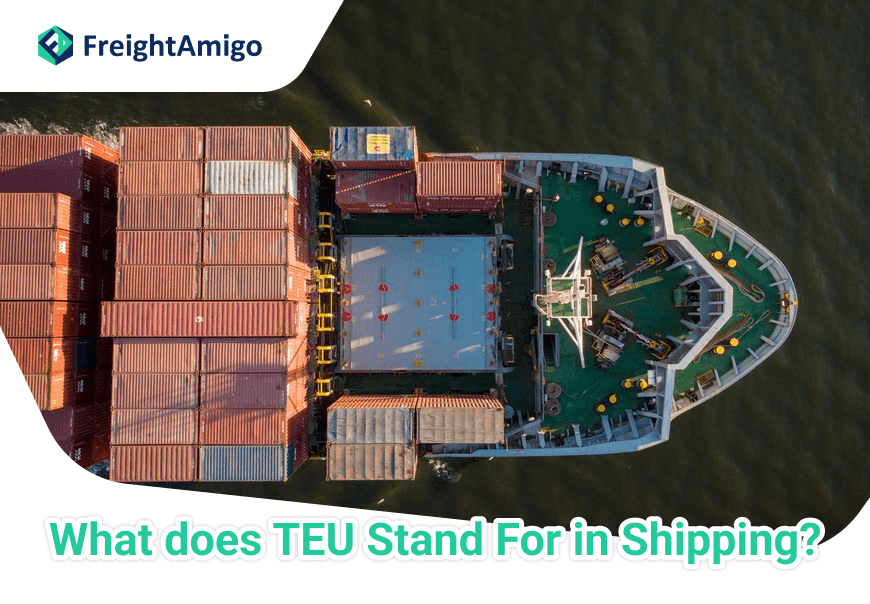
Understanding TEU and FEU: The Standard Units of Shipping Container Measurement
The global trade landscape is a complex network of interconnected supply chains, and at its heart lies the humble shipping container. For decades, these standardized metal boxes have been the workhorses of international commerce, facilitating the movement of goods across vast oceans and continents. But have you ever wondered how the capacity of colossal container ships is measured, or how shipping costs are calculated? The answer lies in two fundamental units: the Twenty-Foot Equivalent Unit (TEU) and the Forty-Foot Equivalent Unit (FEU). Understanding these terms is not just about deciphering industry jargon; it's crucial for anyone involved in international logistics, from manufacturers and exporters to freight forwarders and procurement managers. Without a firm grasp of TEU and FEU, you risk miscalculating costs, underestimating capacity needs, and ultimately, hindering the efficiency of your supply chain.
- Gain clarity on the standard measurements that drive global shipping costs.
- Understand the relationship between TEU, FEU, and actual container dimensions.
- Learn how TEU capacity impacts vessel size and port operations.
In this comprehensive guide, we will demystify the concepts of TEU and FEU, explore their significance in the shipping industry, and illustrate how they form the bedrock of containerized freight operations. We'll delve into the practical implications for cost calculation, vessel capacity, and the overall efficiency of global trade. By the end of this article, you'll have a solid understanding of these essential shipping terms and how they influence your logistics decisions.
The Genesis of Containerization and the Need for Standardization
Before the advent of standardized shipping containers, the process of moving goods internationally was a laborious and inefficient affair. Cargo was typically loaded directly onto ships in various forms – sacks, barrels, crates, and loose items. This manual loading and unloading process was time-consuming, prone to damage and theft, and made it difficult to track shipments accurately. Each item had to be handled individually, leading to significant delays and increased costs.
The mid-20th century saw a revolution with the introduction of standardized intermodal containers. Spearheaded by Malcolm McLean, a trucking entrepreneur, the concept was simple yet transformative: create a uniform box that could be easily transferred between different modes of transport – ships, trains, and trucks – without the cargo needing to be unpacked and repacked. This innovation, known as containerization, dramatically reduced handling times, minimized damage and theft, and paved the way for the globalization of trade as we know it today.
As containerization took hold, the need for a standardized unit of measurement became apparent. This would allow for consistent quoting, capacity planning, and operational efficiency across the industry. This is where the TEU and FEU emerged as the universal language of container shipping.
What is a TEU? The Cornerstone of Container Shipping
The Twenty-Foot Equivalent Unit (TEU) is the fundamental unit of measurement used to describe the capacity of container ships and the volume of cargo being transported in containers. As the name suggests, a TEU is based on a standard shipping container with internal dimensions of approximately 20 feet (about 6.1 meters) in length, 8 feet (about 2.44 meters) in width, and 8.6 feet (about 2.6 meters) in height. While these are the nominal internal dimensions, the actual external dimensions and internal volume can vary slightly depending on the container manufacturer and its specific design (e.g., standard, high cube).
A standard 20-foot container has an approximate internal volume of 1,172 cubic feet (33.2 cubic meters). This volume is sufficient to hold between 9 and 11 standard pallets, depending on their size and how they are arranged. The TEU unit allows for a consistent way to quantify cargo, regardless of whether it's shipped in a 20-foot container or a larger one.
The Practical Application of TEU in Logistics
The TEU is more than just a unit of measurement; it's a critical factor in several key aspects of logistics:
- Cost Calculation: Shipping rates are predominantly quoted on a per-TEU basis. When you request a quote for shipping goods, the price will often be expressed as a certain amount per TEU. To determine the total cost of your shipment, you multiply the rate per TEU by the number of TEUs you are shipping. For example, if the rate is $1,000 per TEU and you are shipping the equivalent of 5 TEUs, your base freight cost would be $5,000. This standardized pricing model simplifies quoting and billing for carriers and shippers alike.
- Vessel Capacity: The capacity of container ships is measured in TEUs. A ship's TEU capacity indicates how many standard 20-foot containers it can carry. For instance, a large modern container vessel might have a capacity of 18,000 TEUs or even more. This metric is crucial for shipping lines when planning vessel deployment, determining optimal load factors, and managing their fleet.
- Port Operations: Ports are equipped with specialized cranes and handling equipment designed to manage containers efficiently. The TEU measurement helps in planning port infrastructure, such as the number and size of cranes, the capacity of storage yards, and the efficiency of truck and rail connections.
- Statistical Reporting: International trade statistics, cargo throughput at ports, and global shipping volumes are all reported using TEU figures. This provides a standardized way to track and analyze trends in global trade.
Understanding FEU: The Forty-Foot Equivalent Unit
Complementing the TEU is the Forty-Foot Equivalent Unit (FEU). An FEU represents a standard 40-foot shipping container. Essentially, one 40-foot container is equivalent to two TEUs. This means a 40-foot container has roughly twice the internal volume of a 20-foot container.
A standard 40-foot container has internal dimensions of approximately 39 feet (about 11.9 meters) in length, 7.7 feet (about 2.35 meters) in width, and 8.6 feet (about 2.6 meters) in height. Its internal volume is typically around 2,385 cubic feet (67.7 cubic meters), allowing it to carry between 18 and 21 standard pallets. The FEU is particularly useful when discussing larger container volumes or when comparing the capacity of vessels that primarily carry 40-foot containers.
TEU vs. FEU: A Clear Distinction
The relationship between TEU and FEU is straightforward: 1 FEU = 2 TEU. This simple conversion is vital for accurate cargo calculations.
For example, if a shipment consists of:
- Two 20-foot containers
- One 40-foot container
The total TEU equivalent would be calculated as follows:
- Two 20-foot containers = 2 TEU
- One 40-foot container = 2 TEU
- Total = 4 TEU
Alternatively, this shipment could be described as 2 FEU (since the 40-foot container is 1 FEU, and two 20-foot containers are equivalent to one 40-foot container). This dual measurement system provides flexibility in how shipping volumes are discussed and managed.
Beyond TEU and FEU: Other Container Sizes
While TEU and FEU are the most common units, the shipping industry utilizes various container sizes to accommodate different types of cargo and shipping needs. These include:
- High Cube Containers: These are similar in length and width to standard containers but are taller, offering additional volume. A 20-foot High Cube container is approximately 9.6 feet tall, and a 40-foot High Cube container is also around 9.6 feet tall. These are often measured in TEU equivalents, with a 40-foot High Cube container typically counting as 2 TEU, but offering more cubic capacity than a standard 40-foot container.
- Refrigerated Containers (Reefers): These specialized containers are designed to transport temperature-sensitive goods like perishables. They come in standard sizes (20-foot and 40-foot) and are also measured in TEU and FEU equivalents.
- Specialized Containers: Open-top containers, flat-rack containers, and tank containers are used for oversized, heavy, or liquid cargo. Their capacity is often discussed in terms of weight and volume rather than a strict TEU/FEU count, though they might be accommodated on vessels based on their footprint equivalent to TEU/FEU.
The TEU remains the primary unit for measuring overall capacity and for pricing, even when other container types are used. The industry has developed conversion factors to express the volume of these non-standard containers in TEU terms for consistent reporting and planning.
The Impact of TEU Capacity on Ship Size and Port Infrastructure
The evolution of container shipping has been marked by a relentless pursuit of economies of scale, leading to the development of increasingly larger container vessels. The TEU capacity is the primary metric used to define the size of these behemoths. Ships are categorized based on their TEU capacity, ranging from smaller feeder vessels to the ultra-large container vessels (ULCVs) that ply major international trade routes.
A vessel with a capacity of, say, 1,000 TEU is considered a small feeder vessel, typically used to transport containers from smaller ports to larger hubs. Mid-size vessels might range from 2,000 to 5,000 TEU, while large vessels can carry 8,000 to 14,000 TEU. The largest ULCVs today can exceed 20,000 TEU, and some are even approaching capacities of 24,000 TEU.
This exponential growth in ship size has profound implications for port infrastructure:
- Port Depth and Berths: Larger ships require deeper channels and longer berths to dock safely. Ports must continuously invest in dredging and expanding their waterfront facilities to accommodate these mega-vessels.
- Cranes: The sheer volume of containers necessitates larger, more powerful gantry cranes capable of reaching across wider decks and lifting heavier loads quickly. The number of cranes at a port is also a critical factor in its efficiency.
- Yard Capacity: Storing tens of thousands of containers requires vast land areas. Ports need sophisticated yard management systems and ample space to stack containers efficiently, facilitating quick turnaround times for trucks and trains.
- Intermodal Connectivity: Efficient connections to inland transportation networks (rail and road) are essential to move containers away from the port quickly, preventing congestion.
The TEU capacity, therefore, is not just a number; it's a driving force behind the massive investments in global port infrastructure and the operational strategies of shipping lines.
Calculating Shipping Costs with TEU and FEU
As mentioned earlier, TEU is the primary unit for calculating freight costs. When you use a platform like FreightAmigo's Instant Quote Calculator, you can compare rates across various carriers and modes of transport. The system typically asks for details about your shipment, including the type and number of containers, which are then translated into TEU equivalents for accurate pricing.
Here’s a simplified breakdown of how costs are determined:
- Base Freight Rate: Carriers set a base rate per TEU for specific trade lanes. This rate fluctuates based on market demand, fuel prices, seasonality, and other economic factors.
- Container Type: While the base rate is per TEU, the actual cost might differ slightly for a 40-foot container versus two 20-foot containers, even though they represent the same TEU volume. Often, 40-foot containers (or FEUs) may have a slightly lower per-TEU rate due to economies of scale in handling and transport.
- Additional Charges: Beyond the base freight rate, various surcharges and fees apply, such as terminal handling charges, security fees, documentation fees, and port congestion surcharges. These are also often calculated on a per-container or per-TEU basis.
- Ancillary Services: If you require additional services like customs clearance, warehousing, or door-to-door delivery, these will incur separate charges, often also influenced by the TEU/FEU volume.
For businesses, understanding these cost components is vital for accurate budgeting and negotiation. By leveraging tools that provide transparent pricing based on TEU and FEU, such as FreightAmigo's Instant Quote Calculator, you can gain a competitive edge.
Typical Container Dimensions and Volumes (Approximate) | Container Type | External Dimensions (L x W x H) | Internal Dimensions (L x W x H) | Internal Volume (Cubic Meters) | Max Payload (kg) | TEU Equivalent |
| 20-foot Standard | 20' x 8' x 8.5' (6.1m x 2.44m x 2.6m) | 19.3' x 7.7' x 7.8' (5.89m x 2.35m x 2.39m) | 33.2 m³ | 28,000 kg | 1 TEU |
| 40-foot Standard | 40' x 8' x 8.5' (12.2m x 2.44m x 2.6m) | 39' x 7.7' x 7.8' (11.58m x 2.35m x 2.39m) | 67.7 m³ | 30,000 kg | 2 TEU (1 FEU) |
| 40-foot High Cube | 40' x 8' x 9.6' (12.2m x 2.44m x 2.9m) | 39' x 7.7' x 8.9' (11.58m x 2.35m x 2.71m) | 76.4 m³ | 29,000 kg | 2 TEU (1 FEU) |
The Role of TEU in Different Shipping Modes
While TEU and FEU are most commonly associated with sea freight, the concept extends to other modes of transport, particularly in intermodal operations. When cargo is moved from a ship to a train or truck, the container itself is the unit being transferred, and its TEU/FEU designation remains relevant for capacity planning and tracking.
Sea Freight
This is where TEU and FEU are paramount. The entire global shipping industry relies on these units to measure vessel capacity, port throughput, and freight rates. The efficiency of sea freight, particularly for large volumes, is directly tied to the standardized nature of containers and their TEU measurement.
Rail Freight
In rail freight, containers are loaded onto specialized railcars. While rail transport might have its own specific capacity metrics (e.g., number of railcars), the containers themselves are still measured in TEU/FEU. A single railcar can typically carry two 20-foot containers or one 40-foot container. The full form of TEU in railway contexts refers to the container's measurement unit, facilitating seamless intermodal transfers from ships to trains.
Air Freight
Air freight operates differently. While some cargo might be consolidated into ULDs (Unit Load Devices) that resemble smaller containers, the primary unit of measurement for air cargo is weight (chargeable weight) and volume (measured in cubic meters). TEU and FEU are generally not used directly in air freight pricing or capacity calculations, as aircraft have vastly different dimensions and payload constraints compared to ships or trains. However, if a shipment originates or terminates via sea freight and then transitions to air, the TEU/FEU count from the sea leg is still relevant for the overall logistics chain.
Trucking
Trucking, especially for last-mile delivery or port drayage, deals directly with moving containers. A standard semi-trailer truck in many regions can carry one 20-foot container or one 40-foot container. The TEU/FEU designation is crucial for logistics planners to determine how many truck movements are needed to transport a given volume of containerized cargo from a port or distribution center.
FreightAmigo's Solutions for Managing Containerized Cargo
Navigating the complexities of container shipping, from understanding TEU and FEU to managing costs and ensuring timely delivery, can be challenging. At FreightAmigo, we provide a suite of digital solutions designed to streamline these processes and empower businesses.
Instant Rate Comparison and Booking
Our Instant Quote Calculator is your gateway to transparent and competitive shipping rates. By inputting your shipment details, including container type and dimensions, you can instantly compare quotes from multiple carriers across various modes, including sea freight and air freight. This allows you to make informed decisions based on cost, transit time, and carrier reliability, all while understanding the TEU/FEU implications for your budget.
End-to-End Visibility with Track & Trace
Once your container is on its way, maintaining visibility is key. Our Track & Trace service offers real-time, end-to-end visibility of your shipments. Whether your cargo is moving by sea, rail, or truck, you can monitor its progress, anticipate potential delays, and manage your supply chain proactively. This is invaluable for coordinating with port operations, customs, and final delivery.
Streamlining Customs and Compliance
International shipments invariably involve customs procedures. Our Customs Clearance service, powered by AI, helps validate HS codes, optimize duty payments, and ensure compliance with regulations. Accurate understanding of container types and volumes (TEU/FEU) is fundamental for correct customs declarations and avoiding costly penalties.
Managing Purchase Orders to Final Delivery
For businesses managing complex supply chains, our PO to POD solution provides a holistic approach. It integrates procurement, shipping, and tracking, offering real-time updates from Purchase Order creation to Proof of Delivery. This comprehensive oversight is essential for managing containerized shipments efficiently.
Embracing Green Logistics
As sustainability becomes increasingly important, our AmiGo Green initiative offers solutions to reduce carbon emissions. By optimizing routes, selecting more fuel-efficient transport modes, and providing carbon footprint data, we help businesses achieve their ESG goals while managing their containerized freight.
FAQ
What is the full form of TEU in shipping?
The full form of TEU in shipping is Twenty-Foot Equivalent Unit. It is a standardized unit of measurement used to describe the capacity of container ships and the volume of cargo being transported in shipping containers.
What is the difference between TEU and FEU?
TEU stands for Twenty-Foot Equivalent Unit, representing a standard 20-foot shipping container. FEU stands for Forty-Foot Equivalent Unit, representing a standard 40-foot shipping container. The key relationship is that 1 FEU is equivalent to 2 TEUs.
How is TEU used to calculate shipping costs?
Shipping rates are primarily quoted on a per-TEU basis. To determine the total cost of a shipment, you multiply the rate per TEU by the number of TEUs being shipped. Additional charges and surcharges are also often calculated based on TEU volume.
What is the TEU capacity of a container ship?
The TEU capacity of a container ship refers to the maximum number of standard 20-foot containers it can carry. This metric is used to classify ship sizes, with modern mega-vessels capable of carrying over 20,000 TEUs.
Does TEU apply to rail freight?
Yes, TEU is relevant to rail freight, especially in intermodal operations. While rail transport has its own capacity metrics, the containers themselves are measured in TEU/FEU, facilitating seamless transfers from ships to trains and vice versa.
What is the TEU full form in railway?
The TEU full form in railway is the same as in shipping: Twenty-Foot Equivalent Unit. It refers to the standardized measurement of a 20-foot container, which is crucial for planning the loading and capacity of trains in intermodal logistics.
Conclusion
The TEU and FEU are more than just acronyms; they are the universal language of global containerized trade. Understanding these fundamental units is essential for accurate cost calculation, efficient capacity planning, and navigating the complexities of international logistics. From the colossal container ships that traverse the oceans to the intricate operations within ports and the final leg of delivery by truck or rail, TEU and FEU provide the standardized framework that makes global commerce possible.
Whether you are shipping a single pallet or managing a fleet of containers, FreightAmigo is here to simplify your logistics journey. Leverage our Instant Quote Calculator to compare rates and book your shipments with confidence. Explore our comprehensive suite of services, including Track & Trace for real-time visibility and Customs Clearance to ensure smooth transit. Partner with FreightAmigo to optimize your supply chain and navigate the world of global trade with ease.








 Global Popular RoutesTop sea & air shipping lanes
 Special OfferLimited-time shipping promotions





 Express
 Document
 Parcel - Air/Sea
 Container
 Relocation