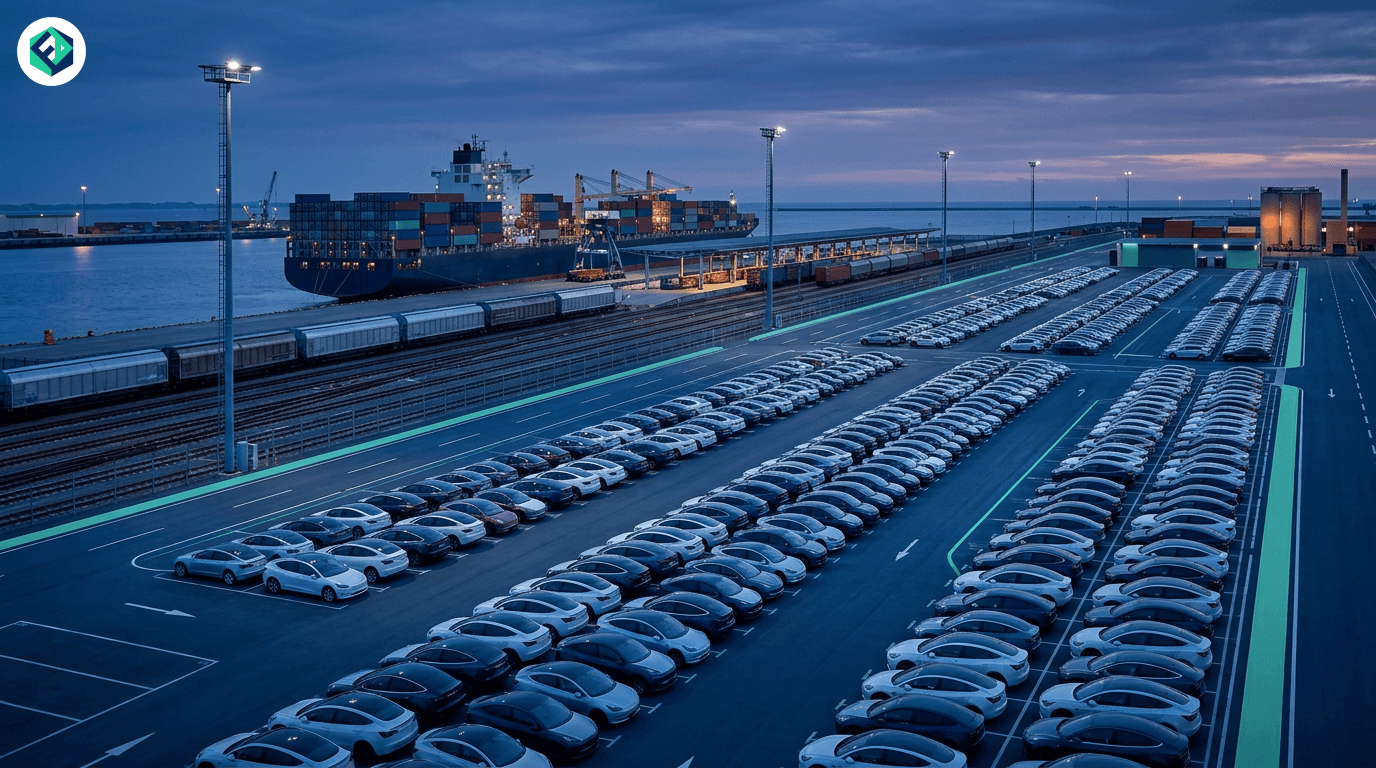
How Automated Vehicle Logistics Is Revolutionizing Global Car Distribution
The global automotive supply chain is entering a transformative era as vehicle distribution shifts from manual handling to highly coordinated autonomous processes. As manufacturers look toward 2026, the adoption of automated vehicle logistics has emerged as a crucial driver of operational resilience, redefining how passenger cars move from factory floors to railway wagons and seaports. This evolution represents a fundamental restructuring of global vehicle distribution.
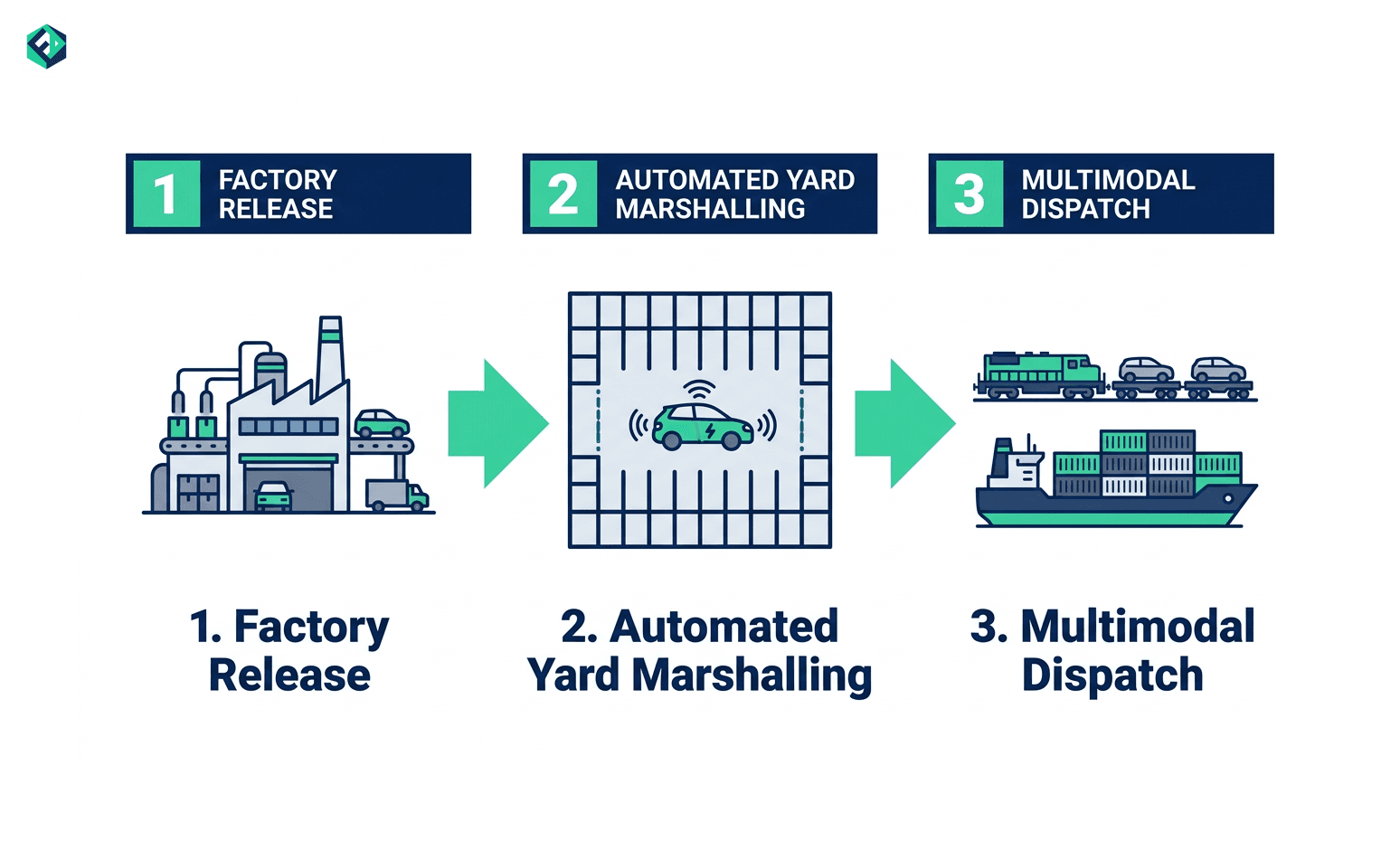
Key Benefits of Transitioning to Automated Vehicle Logistics
Transitioning from manual yard management to a digitalized infrastructure offers profound operational benefits. One of the most compelling advantages of automation is the direct reduction in process-related costs. When vehicles move autonomously, handovers become seamless, removing manual bottlenecks. Consequently, the benefits extend beyond simple cost-cutting, establishing a more predictable flow of inventory and helping companies realize long-term efficiency gains to build resilient supply chains.
To maximize efficiency in automated logistics, it is essential to analyze how these automated processes elevate overall terminal throughput. By removing manual handovers, terminals achieve a higher rate of streamlined vehicle distribution. Real-time fleet management systems coordinate vehicle movements with precision, ensuring that vehicles are parked and loaded with minimal idle time. This synchronization significantly boosts operational efficiency and ensures a reliable flow of inventory.
| Operational Parameter | Traditional Manual Logistics | Automated Vehicle Logistics |
|---|
| Handover Friction | High manual coordination and delays | Instantaneous digital handovers |
| Process-Related Costs | Elevated due to labor and idle times | Significantly reduced via optimized routing |
| Space Utilization | Suboptimal due to manual safety buffers | Maximised through precise maneuvering |
| Risk of Vehicle Damage | Moderate due to human handling errors | Minimized by automated sensor guidance |
Implementing Automated Driving and Navigation in Port Operations
Implementing automated driving in ports is proving to be a game-changer for terminal operators managing thousands of vehicles daily. Through port automation, vehicles navigate from storage yards to loading ramps without physical drivers. This implementation of autonomous driving in terminals ensures that vehicle positioning is handled with consistency, optimizing terminal throughput and redefining maritime transit hubs.
A prominent real-world example is the Volkswagen logistics terminal in Emden. As detailed in the Financial Post report on Unikie and Audi, testing at the Emden terminal—the largest seaport in the Volkswagen Group—proved that automated vehicle movements can be safely integrated into busy terminal environments. The trial demonstrated that automated driving is highly viable in mixed-traffic scenarios.
When considering the hurdles of implementing automated driving in modern port operations, terminal managers must address mixed-traffic safety. Ensuring autonomous systems safely interact with manually driven vehicles requires robust safety protocols and positioning sensors across the terminal yard.
Insights from the Audi Automated Rail Loading Demonstration
A notable milestone was achieved during the world premiere of the Audi automated rail loading demonstration at Audi's Ingolstadt site. Conducted as part of the AutoLog project, this demonstration successfully showcased the automated loading and unloading of passenger vehicles onto railway wagons, highlighting the potential of automated rail operations. The success of the trial at the Ingolstadt logistics center proves that rail operations can be digitized safely, laying the groundwork for future automated railway wagon loading.
The project demonstrated that passenger cars could be driven autonomously onto train platforms, addressing a historical bottleneck in terminal operations. By utilizing railway wagon loading automation, the entire process is accelerated, reducing train idle times. Testing shows that this automated approach is highly viable, effectively bypassing traditional terminal delays.
This demonstration shows that future railway logistics will rely on localized digital infrastructures. Combining external sensors with high-speed connectivity guides vehicles precisely. This collaborative approach allows for automated car loading on trains even in tight environments where GPS signals are weak, paving the way for broader industrial adoption.
Addressing Major Challenges in Traditional Vehicle Distribution
To appreciate the value of automation, it is necessary to examine traditional vehicle distribution challenges. Conventional operations rely heavily on manual processes, which introduce operational vulnerabilities. Manual vehicle handling risks are a constant concern, as minor human errors during parking or loading result in costly damages. Furthermore, traditional dispatches involve numerous manual handovers, introducing potential delays and friction.
These issues are compounded by severe labor shortages in the logistics sector. The limited availability of drivers makes it difficult for terminal operators to maintain consistent throughput. This persistent driver shortage in vehicle transport has accelerated the search for alternative solutions, as traditional driver-dependent models are no longer sufficient to meet the growing demands of global distribution.
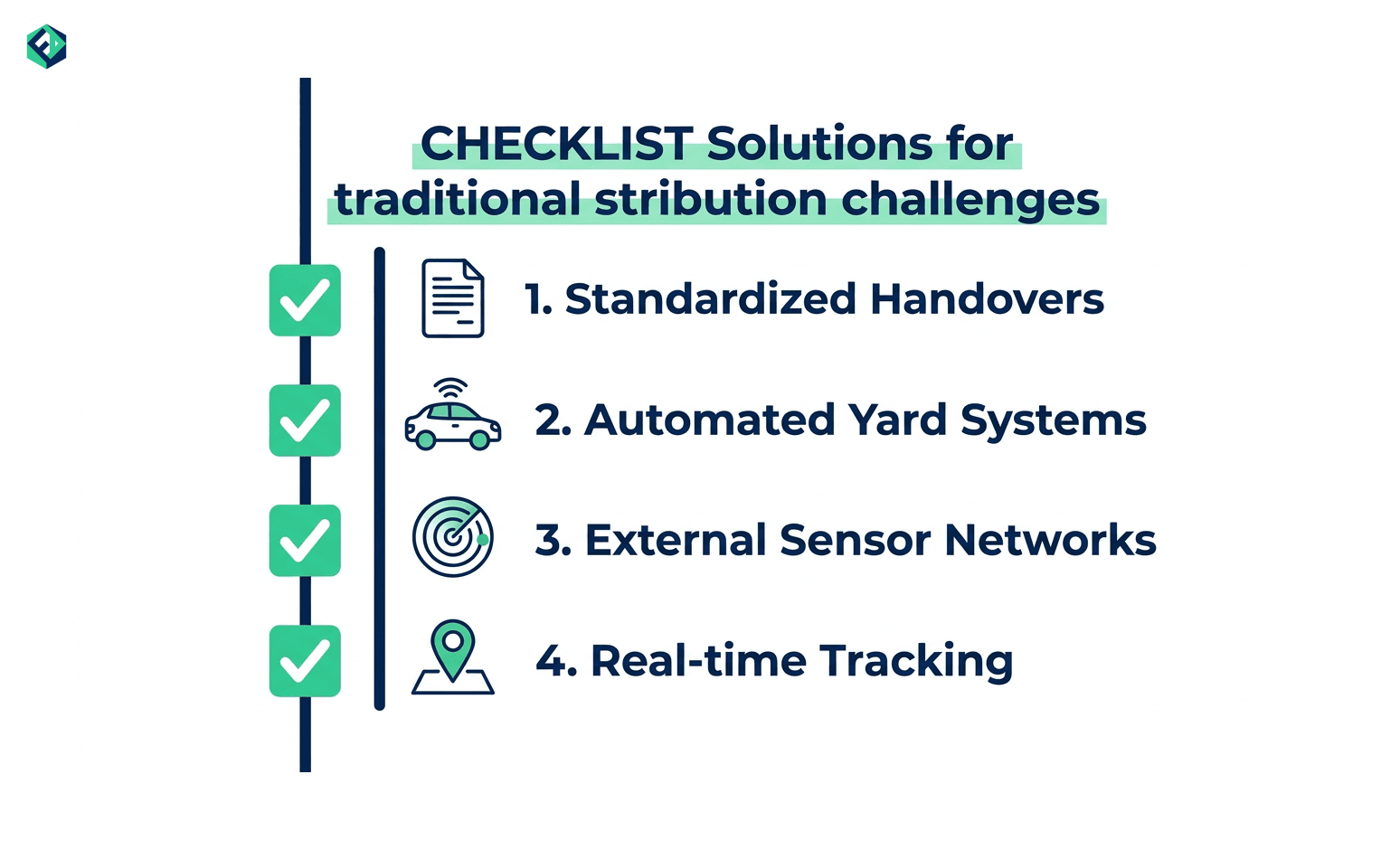
To overcome key challenges in traditional vehicle distribution, logistics companies should consider:
- Standardizing digital handovers to eliminate manual paperwork.
- Deploying automated yard systems to mitigate driver shortages.
- Utilizing external sensor networks to reduce manual vehicle handling risks.
- Integrating real-time tracking software to provide end-to-end visibility.
Integrating Smart Technology for Advanced Automotive Logistics
At the heart of automated terminal operations is the Unikie marshalling solution. This advanced software acts as an automated marshalling system, orchestrating vehicle movements with high precision. Deploying this solution allows operators to transform yards, while the software integrates seamlessly with vehicle telematics to ensure every movement is optimized.
To support this, reliable telecommunications connectivity is indispensable. The implementation of 5G connectivity for vehicle logistics provides the low-latency communication required to transmit control commands in real time. Utilizing Deutsche Telekom's 5G infrastructure and edge cloud computing allows the system to process data instantly. This connectivity guarantees precise maneuvers, ensuring terminal operations remain stable and secure.
When integrating smart technology for automotive logistics projects, critical infrastructure elements must be established. Terminal operators must deploy high-speed 5G private networks, establish edge computing nodes, and install localized sensor grids. This robust digital foundation is essential to guarantee the safety and reliability of driverless vehicle movements.
The Strategic Future of Global Car Distribution and Shipping
Looking ahead, the future of car distribution is defined by the rapid scaling of automation across the logistics ecosystem. As we move through 2026, global vehicle logistics trends point toward a highly connected supply chain. The next phase of vehicle distribution will involve expanding these automated marshalling solutions into widespread commercial series production to secure the future of car distribution.
Transitioning to these automated environments requires a clear understanding of shipping costs and route efficiencies across different modes of transport. FreightAmigo provides the necessary digital tools to simplify this transition, allowing automotive businesses to manage their global distribution networks with ease. Through our platform, shippers can compare multimodal rates instantly, gaining full cost visibility across air, sea, rail, and express freight. This eliminates manual coordination and helps enterprises adapt to changing market dynamics in real time. You can streamline your planning and find the most cost-effective shipping routes by obtaining an Instant Quote today.
The 2026 strategic outlook for the future of global car distribution and shipping highlights a clear shift toward collaborative logistics. By combining automated terminal operations with digital freight forwarding platforms, manufacturers can establish highly responsive supply chains that can quickly adapt to market fluctuations, labor constraints, and global shipping disruptions.
Deploying Efficient Marshalling Solutions in Busy Port Terminals
Maximizing the efficiency of high-density port terminals requires the deployment of efficient marshalling solutions that optimize space and flow. Implementing a dedicated marshalling solution for terminals allows operators to organize vehicles dynamically based on shipping schedules and destination ports. This yard automation approach eliminates chaotic yard practices, enabling terminals to store and retrieve vehicles with speed and creating a standardized system for terminals globally.
A key enabling technology is the integration of LiDAR sensors in vehicle logistics. By utilizing LiDAR-based vehicle guidance and external sensors, the automated system builds an accurate, real-time 3D map of the yard. This external sensor grid tracks every vehicle and obstacle, transmitting positioning data via the 5G network, allowing driverless vehicles to navigate safely through tight spaces and reducing the footprint required for vehicle storage.
Optimizing terminal yard space and implementing these sensor-guided technologies requires careful planning and coordination across the entire supply chain. FreightAmigo offers comprehensive support to help businesses integrate these advanced workflows into their international shipping routes smoothly. Our team provides expert logistics consultation and tailored freight booking services to design end-to-end solutions that fit your specific cargo requirements. We assist you in managing complex transport processes, choosing the best multimodal transit options, and planning door-to-door shipping under any relevant trade terms. To optimize your distribution network and elevate your supply chain efficiency, contact our specialists for a Tailored Solution today.
FAQ
How can supply chain managers maximize efficiency in automated vehicle logistics operations?
By eliminating manual handovers and integrating real-time fleet management systems. This synchronization ensures vehicles are parked and loaded with minimal idle time, boosting terminal throughput.
What are the primary hurdles when implementing automated driving in modern port operations?
Managing mixed-traffic safety is the primary challenge. Ensuring autonomous systems safely interact with manually driven vehicles requires robust safety protocols and positioning sensors across the terminal yard.
What does the successful Audi automated rail loading demonstration tell us about future railway logistics?
Future railway logistics will rely heavily on localized digital infrastructures. Combining external sensors with high-speed 5G connectivity allows vehicles to navigate precisely onto trains, even in tight environments with weak GPS signals.
What strategies are most effective for overcoming key challenges in traditional vehicle distribution?
Deploying automated yard systems and standardizing digital handovers are highly effective. These strategies help mitigate severe driver shortages, minimize manual handling risks, and eliminate operational delays.
Which infrastructure elements are critical when integrating smart technology for automotive logistics projects?
High-speed 5G private networks, edge computing nodes, and localized sensor grids are essential. This digital foundation supports advanced marshalling software to process data in real time and guarantee safe, driverless vehicle movements.
What is the 2026 strategic outlook for the future of global car distribution and shipping?
The outlook highlights a shift toward collaborative logistics and automated marshalling. Scaling automation into commercial production combined with digital freight platforms like FreightAmigo will create highly responsive supply chains.
How does deploying efficient marshalling solutions optimize yard space for busy ports?
By organizing vehicles dynamically and utilizing LiDAR-based guidance systems. This approach builds real-time 3D maps of the terminal yard, allowing driverless vehicles to navigate safely through tight spaces and reducing the storage footprint.








 Global Popular RoutesTop sea & air shipping lanes
 Special OfferLimited-time shipping promotions





 Express
 Document
 Parcel - Air/Sea
 Container
 Relocation