UN numbers are critical four-digit identifiers for hazardous materials in international shipping.
In 2026, accurate UN number usage ensures seamless customs clearance, prevents costly delays, and prioritizes safety across air, sea, and land transport. FreightAmigo helps businesses navigate these requirements efficiently.
What is a UN Number and Why It Matters in 2026
UN numbers serve as the universal language for identifying dangerous goods during transport.
They enable quick hazard recognition by handlers, emergency responders, and regulators worldwide. Proper classification reduces risks and supports compliance in an increasingly regulated logistics environment.
Short paragraphs keep mobile users engaged while delivering key insights.
Safety First: Prevents accidents involving flammables, corrosives, or toxics.
Regulatory Alignment: Meets standards from IMO, IATA, and national bodies.
Efficiency Gains: Speeds up documentation and customs processing.
History and Evolution of UN Numbers
UN numbers trace back to the United Nations' 1956 recommendations on dangerous goods transport.
These guidelines evolved into the Model Regulations, known as the Orange Book, adopted globally. By 2026, they cover thousands of substances with periodic updates for new chemicals and technologies.
The system standardizes identification across borders, minimizing confusion from varying national names.
Structure and Format of UN Numbers
Each UN number consists of four digits prefixed by "UN" for clear visibility on labels and documents.
Numbers are grouped roughly by hazard type, making quick reference possible during handling.
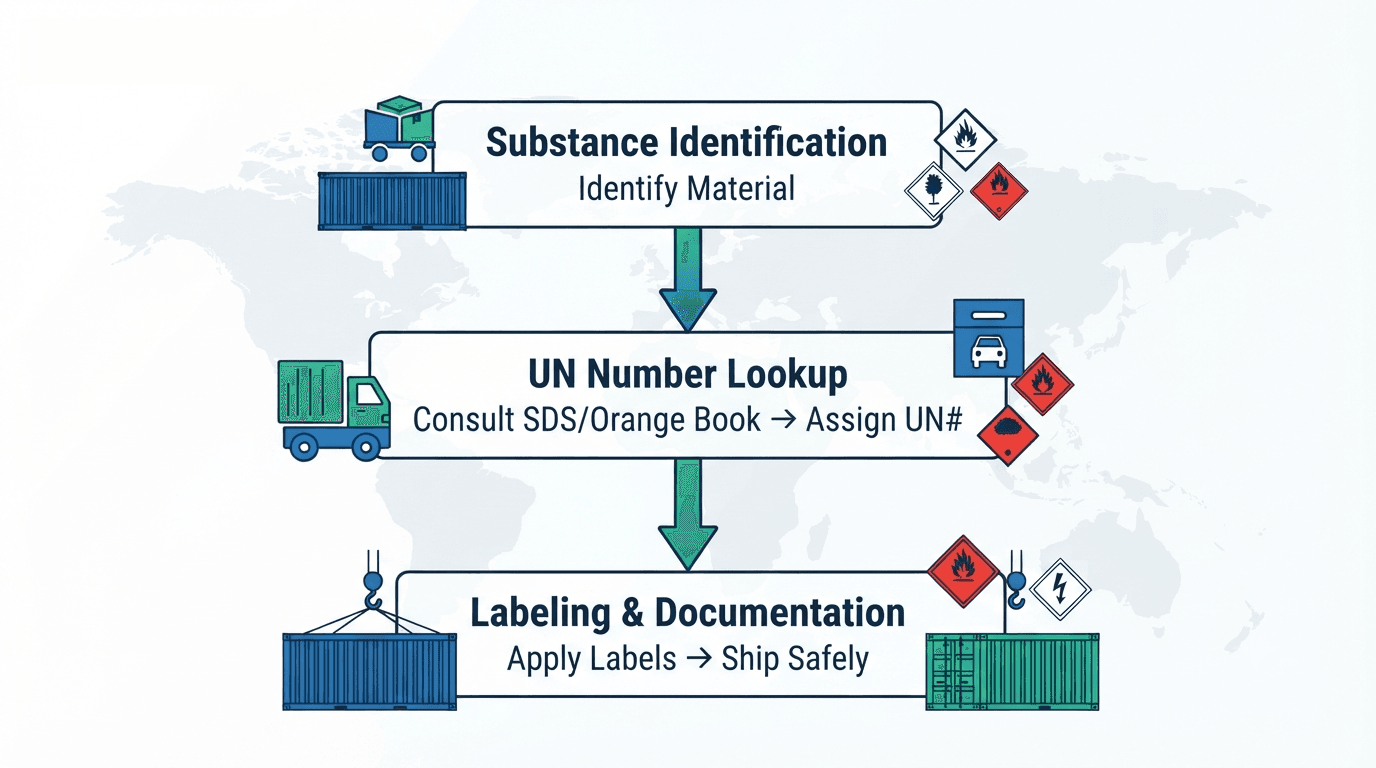
How to Find the Correct UN Number for Your Shipment
Finding the right UN number starts with reviewing the material's Safety Data Sheet (SDS).
Consult official resources like the UN Orange Book or modal-specific lists (IMDG for sea, IATA for air).
Check the substance name and properties.
Search databases or supplier documentation.
Verify against 2026 national amendments.
Cross-reference with FreightAmigo experts for accuracy.
Document everything for customs declaration.
Importance of UN Numbers in Global Shipping and Customs
UN numbers are vital for safety, compliance, and efficient customs clearance in 2026.
They inform packaging, labeling, stowage, and emergency protocols, reducing liability and delays.
Enable proper hazard communication.
Facilitate international regulatory harmony.
Support insurance validity and risk management.
Streamline inspections at ports and borders.
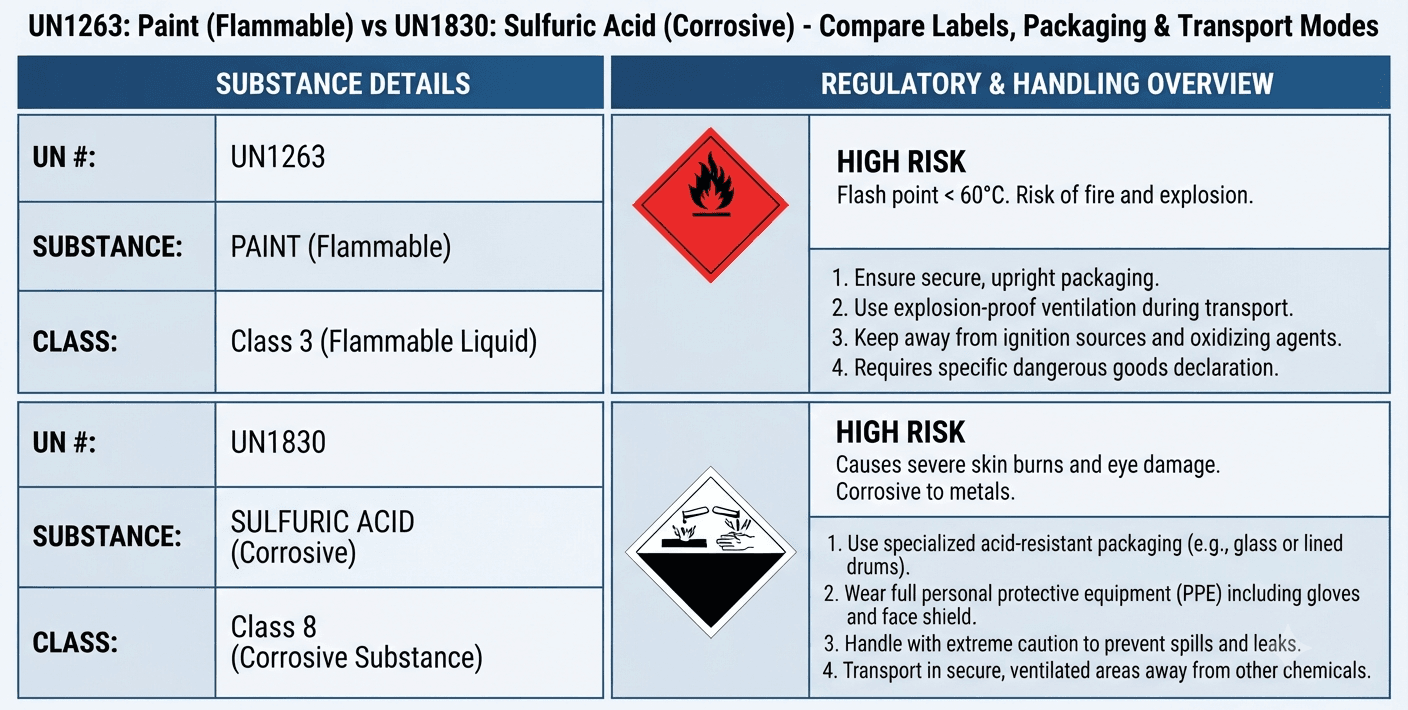
Common UN Numbers and Real-World Examples
Common UN numbers appear frequently in everyday logistics shipments.
Here is a comparison table for quick reference:
UN Number
Substance Example
Hazard Class
Typical Use Case
UN1263
Paint
Flammable Liquid
Industrial coatings
UN1830
Sulfuric Acid
Corrosive
Battery manufacturing
UN3082
Environmentally Hazardous
Miscellaneous
Chemical waste
UN1993
Diesel Fuel
Flammable Liquid
Fuel transport
UN2789
Acetic Acid
Corrosive
Food processing
This table highlights direct contrasts for common freight scenarios.
UN Numbers vs Other Identification Codes
UN numbers differ from regional codes like NA or DOT numbers.
UN codes provide global standardization, while NA numbers address North American specifics for certain substances.
UN: International, four-digit, universal.
NA: North America-focused variants.
DOT: US domestic road/rail emphasis.
Always select the code matching your transport mode and destination.
2026 Regulatory Updates and Compliance Tips
In 2026, UN numbers incorporate enhanced digital tracking and national amendments.
No major global overhaul, but focus on e-labeling, PHMSA mandates, and better HS code alignment for faster clearance.
Stay updated via official Orange Book revisions and partner with platforms like FreightAmigo.
Best Practices for Handling Dangerous Goods
Effective UN number management requires proactive steps and training.
Train staff on annual regulatory changes.
Integrate into Transportation Management Systems (TMS).
Audit all shipments before export.
Partner with certified forwarders like FreightAmigo.
Maintain emergency response information.
Numbered lists ensure clarity on mobile devices.
Frequently Asked Questions (FAQ)
What is a UN Number in shipping?
A UN Number is a standardized four-digit code identifying hazardous materials for safe international transport.
It appears on labels, documents, and placards to guide handling and compliance in 2026.
How do I find the correct UN Number for my cargo?
Consult the Safety Data Sheet, UN Model Regulations (Orange Book), or official databases like IMDG and IATA.
FreightAmigo tools and experts can verify accuracy quickly.
Why are UN Numbers important for customs clearance?
They standardize declarations, reducing inspection times and preventing seizures or fines.
Accurate use supports smooth border processes worldwide.
What is the difference between UN and NA numbers?
UN numbers are global standards; NA numbers are North America-specific for certain domestic substances.
Use UN for international shipments.
Do all goods require a UN Number?
No, only dangerous goods classified under UN recommendations need them.
Non-hazardous items skip this requirement.
How have UN Number rules changed in 2026?
2026 brings national digital enhancements and e-labeling without a full global revision.
Monitor updates for your routes.
What happens if the wrong UN Number is used?
It risks delays, fines, port seizures, or safety incidents.
Always double-check documentation.
Can FreightAmigo help with UN Number compliance?
Yes, FreightAmigo offers expert guidance, automated checks, and full logistics support for hazardous shipments.
Contact us for tailored solutions.
Conclusion
Mastering UN numbers in 2026 optimizes your supply chain safety and efficiency. Partner with FreightAmigo for reliable customs clearance and global freight services. Get started today for peace of mind on every shipment.
For expert guidance, Book a Demo with FreightAmigo.
























 Global Popular RoutesTop sea & air shipping lanes
 Special OfferLimited-time shipping promotions





 Express
 Document
 Parcel - Air/Sea
 Container
 Relocation