Overview of the 2026 US-China Tariff Deal on Product Lists and Reductions
Details of the US-China Tariff Reductions in 2026
The 2026 US-China tariff deal centers on reciprocal reductions covering roughly $30 billion of goods in each direction, or about $60 billion in combined trade relief. According to the official White House announcement of the U.S.-China Board of Trade “30-FOR-30” Lists of Products Recommended for Reduced Tariff Treatment, the framework followed a leaders’ summit and targets non-sensitive goods while remaining consistent with each side’s domestic laws. The deal uses structured product lists rather than across-the-board cuts, giving importers and exporters clearer category-level visibility.
The reciprocal tariff cuts are designed to ease friction on selected commercial flows without resolving every strategic disagreement. Businesses monitoring bilateral trade policy can treat the announcement as a defined, list-based package rather than an open-ended truce. Practical next steps include confirming whether a given HS code appears on either published list and modeling landed-cost changes once domestic procedures are complete.
Product Lists Released for US Imports Under the Tariff Deal
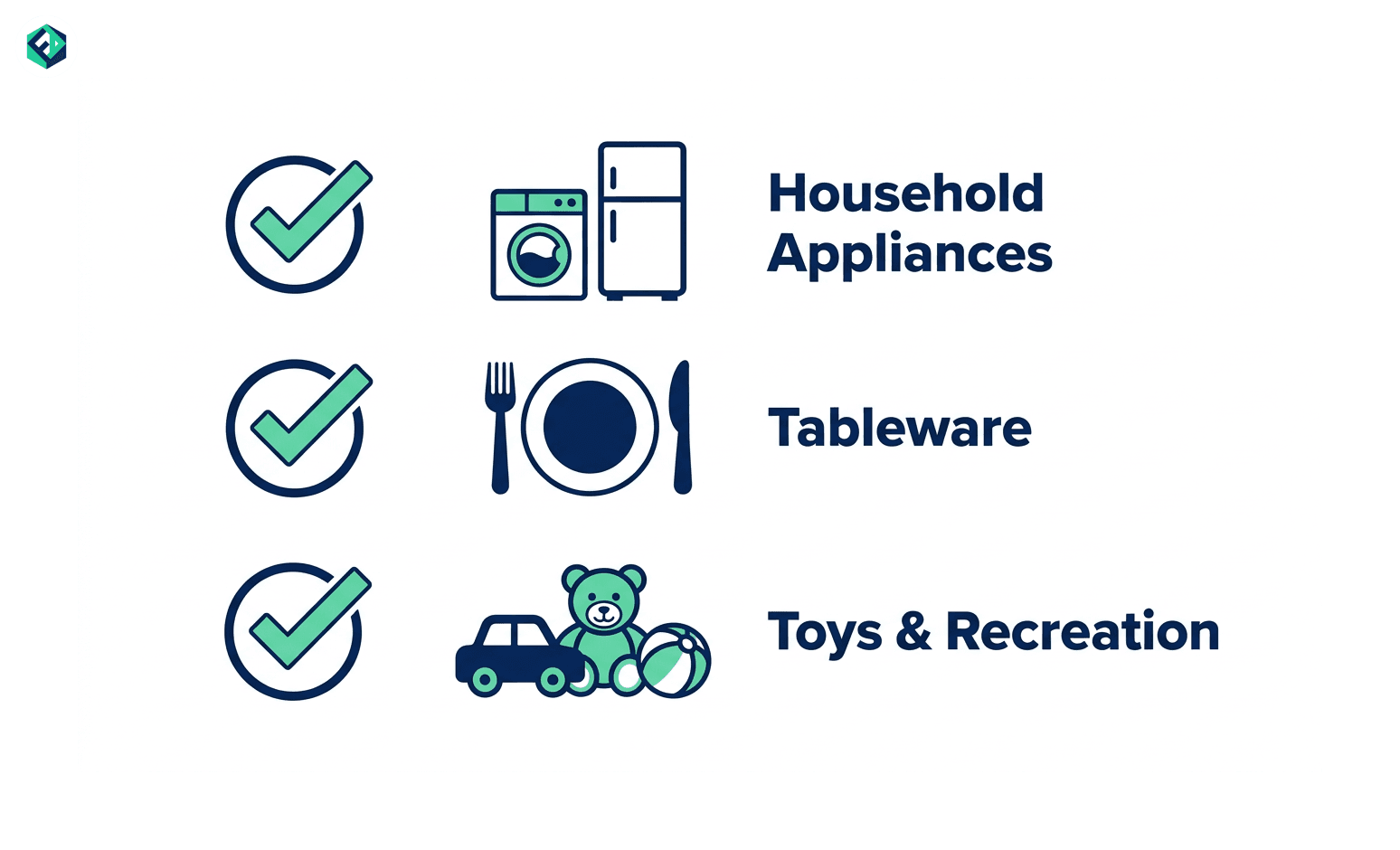
Product lists released under the deal identify Chinese-origin items eligible for lower US tariffs. The US side’s list contains 77 entries covering selected non-sensitive imports, as summarized in the White House release. Reporting on the package highlights consumer-facing categories such as toys, household appliances, and tableware among the goods expected to see relief.
- Household and consumer products, including appliances and tableware
- Toys and related recreational items
- Other non-sensitive finished goods identified in the 77-entry US list
Importers should map current purchase orders against the 77 entries rather than assume broad category coverage. Because the lists focus on non-sensitive goods, items tied to higher policy sensitivities remain outside the relief. Early classification reviews help avoid mis-declaring goods that do not qualify.
Goods Entering China from the US Eligible for Tariff Relief
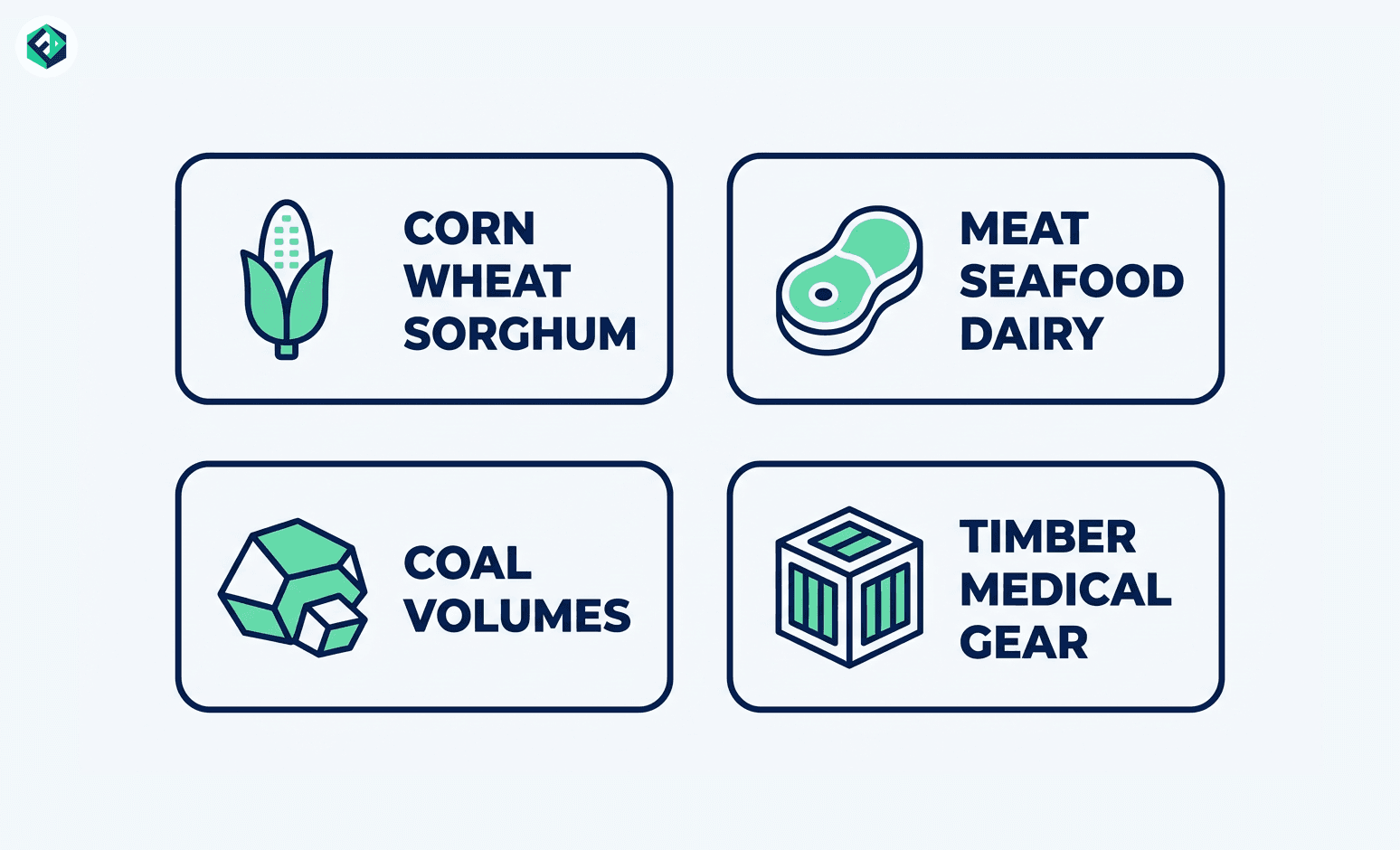
On the opposite flow, the Chinese list covers 1,619 entries of US-origin goods recommended for reduced tariff treatment. Categories reported to benefit include meat, seafood, dairy, grains such as corn, wheat, and sorghum, coal, timber, and medical equipment. Soybeans are excluded from the tariff-cut list itself.
Exporters of these products gain a clearer path to improved market access once China completes its domestic steps. Separate from the tariff lists, China has indicated purchase commitments for US coal. Companies shipping meat, seafood, dairy, grains, timber, or medical equipment should verify exact tariff-line matches and prepare updated commercial invoices and certificates that align with the new treatment.
Impact of the Tariff Deal on Bilateral Trade Volume
The package is framed as approximately $60 billion in reciprocal trade relief—$30 billion each way—anchored to the 30-for-30 lists. This scale is meaningful for the covered product sets yet remains a targeted slice of overall US-China goods exchange. The deal therefore supports selected bilateral trade corridors without rewriting the entire commercial relationship.
The largest near-term volume effects are likely to appear in listed consumer imports into the United States and listed agricultural, energy, and medical exports into China. Firms should update demand and sourcing forecasts for those lanes while keeping unlisted strategic goods on existing risk scenarios. The relief can lower duty costs and improve planning certainty inside the covered corridors, which may encourage modest restocking or contract renegotiation once rates take effect.
Tariff Cuts Supporting Agricultural Exports to China
Agricultural market access is a core element of the Chinese list. Tariff reductions are indicated for US corn, wheat, sorghum, meat, seafood, and dairy. Soybeans sit outside the tariff-cut list, so exporters of that commodity should not expect automatic duty relief from this package alone. In parallel, China has referenced commitments to import 10 million metric tons of US coal annually in 2027 and 2028.
- Grains: corn, wheat, sorghum
- Protein and dairy: meat, seafood, dairy products
- Energy adjunct: coal purchase volumes for 2027–2028
- Related: timber and medical equipment also appear among eligible US goods
Agricultural exporters can use the list to prioritize sales pipelines and logistics capacity toward the covered commodities. Coal suppliers should track the separate volume targets as distinct from the tariff schedule. Because soybeans are omitted, that trade lane continues under prior conditions until any future expansion of the lists.
Timeline for Implementing the US-China Tariff Reductions
Reductions are expected to occur simultaneously after each side completes its domestic legal procedures. No fixed calendar date has been published in the core announcements, so the operative trigger remains completion of those internal steps rather than an automatic clock. Companies should monitor official implementing notices from both governments rather than assume an immediate effective date.
Practical preparation includes:
- Confirming internal classification against the 77-entry and 1,619-entry lists
- Updating cost models with provisional duty rates once draft schedules appear
- Aligning contracts and Incoterms to the eventual simultaneous switch-over
- Coordinating with customs brokers on entry and declaration changes
Until domestic procedures finish, existing tariff treatment continues to apply. Staged inventory and booking decisions should therefore retain flexibility for a short implementation window once both sides signal readiness.
Tariff Relief for Non-Sensitive Goods at Most Favoured Nation Rates
The framework concentrates on non-sensitive goods, channeling relief toward consumer imports into the United States and agricultural plus selected industrial exports into China. The intent is improved market access and potential consumer price benefits on listed household and recreational items, alongside better competitive positioning for US farm and medical shipments. Relief is list-driven; it does not automatically extend most-favoured-nation treatment to every product outside the published entries.
Importers of Chinese household goods and toys can evaluate whether duty savings justify earlier replenishment or revised retail pricing once rates drop. US agricultural and medical exporters can revisit Chinese buyer negotiations with the improved tariff outlook for covered lines. In both directions, the commercial upside is real but bounded by the exact list scope and by the requirement that domestic procedures conclude first.
Future US-China Trade Meetings and Next Steps
Chinese statements indicate that an extension of the broader trade truce into January creates space to advance further talks. The current 30-for-30 exercise stays focused on non-sensitive trade, leaving export-control and other sensitive topics for separate channels. Follow-up meetings may test whether the list approach can expand or whether remaining disputes constrain additional packages.
Companies should treat the January horizon as a planning checkpoint: reconfirm list eligibility, lock in logistics capacity for covered lanes, and stress-test scenarios if talks stall. Actionable steps now include auditing open orders against the 77 and 1,619 entries, modeling duty deltas, and aligning freight and compliance workflows so shipments can move when simultaneous reductions take effect.
When those HS-line checks and duty deltas still need clearer cost visibility, FreightAmigo helps importers and exporters estimate tariff exposure on listed goods and organize digital documentation support that reduces manual errors ahead of cross-border clearance. Explore provisional landed-cost scenarios with our Import Duty Calculator while you position inventory and bookings for implementation.
FAQ
How much bilateral trade between the US and China is covered by the 2026 tariff cuts?
About $60 billion in combined reciprocal relief. The deal covers roughly $30 billion of goods each way through structured 30-for-30 product lists focused on non-sensitive items after the leaders’ summit.
Which household goods and other items qualify for US tariff relief under the product lists?
Selected non-sensitive consumer goods on a 77-entry US list. Categories include household appliances, tableware, toys, and related recreational items; importers should match exact list entries rather than assume broad coverage.
What agricultural and other products gain better access to China under the tariff framework?
Meat, seafood, dairy, grains, coal, timber, and medical equipment. China’s 1,619-entry list covers these US-origin goods for reduced tariffs, while soybeans are excluded from the cut list itself.
How does the tariff deal affect total US-China goods exchange and trade relations?
It provides targeted relief without rewriting the full relationship. The roughly $60 billion package can ease duty costs and planning in listed consumer-import and agricultural-export corridors while unlisted goods stay on prior terms.
What commitments on coal, grain, and other agricultural exports are included?
Tariff cuts for corn, wheat, sorghum, meat, seafood, and dairy, plus coal purchase targets. China has referenced 10 million metric tons of US coal annually in 2027 and 2028; soybeans remain outside the tariff-cut list.
When will the simultaneous tariff reductions take effect following domestic procedures?
After both sides finish required domestic legal steps, with no fixed calendar date yet. Existing rates continue until official implementing notices confirm readiness for the simultaneous switch-over.
What percentage of products will see tariffs reduced to most favoured nation rates?
Relief is list-driven for non-sensitive goods, not an automatic across-the-board MFN shift. The framework channels improved access and potential consumer benefits to published entries rather than every product outside those lists.
What are the next steps after the January trade truce extension?
Further talks may expand the list approach while sensitive issues stay separate. The current package stays on non-sensitive trade; companies should treat the January horizon as a checkpoint to reconfirm eligibility and logistics for covered lanes.








 Global Popular RoutesTop sea & air shipping lanes
 Special OfferLimited-time shipping promotions





 Express
 Document
 Parcel - Air/Sea
 Container
 Relocation