Why International Registered Post Tracking Matters in 2026
In 2026, reliable international registered post tracking remains essential for both personal senders and businesses shipping documents or low-value parcels across borders. Global e-commerce volume continues rising, and recipients expect clearer visibility even on economical postal services. Registered post provides signature confirmation and basic scan events that standard economy mail often lacks.
Many users still choose registered options for important papers because of the balance between cost and proof of handling. Tracking gaps can still cause anxiety, especially once items leave the origin country. Understanding how the system works helps set realistic expectations and reduces support queries.
Digital tools now fill many of the traditional blind spots. Pairing official postal tracking with multi-carrier platforms delivers better overall control.
What Is International Registered Post and How It Works
International registered post is a postal service that adds proof of posting, limited tracking scans, signature on delivery in many destinations, and modest compensation for loss or damage. In Australia, the service typically uses prepaid envelopes limited to 500 g and targets documents or small items. Delivery often takes 10–15+ business days depending on destination and customs.
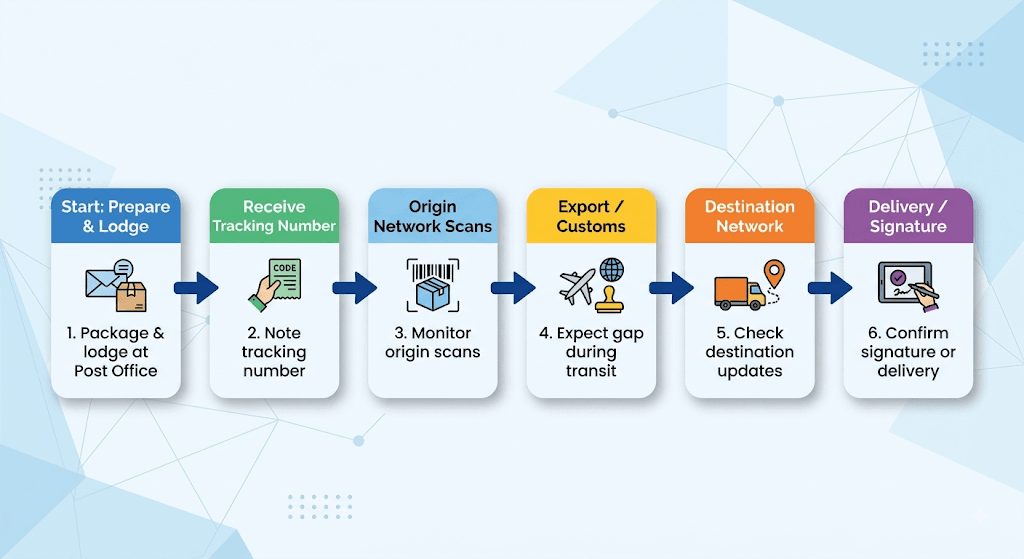
Customers prepare the item, lodge it at a post office or designated box, receive a tracking or reference number, and can request signature confirmation. Once accepted, the item moves through the national network before handing over to the destination postal operator under Universal Postal Union arrangements.
Compensation is usually capped (often around $100), and full end-to-end real-time tracking is not guaranteed on every route. The service remains popular for non-urgent, lower-value shipments where cost matters more than speed.
Key features commonly include:
Global reach via partner postal networks
Proof of posting when lodged over the counter
Signature on delivery where available
Basic milestone scans rather than continuous GPS-style updates
Lower pricing than express courier options
Step-by-Step: How to Track International Registered Post Shipments
Tracking an international registered post item starts with the number or reference provided at the time of posting. Always keep the receipt or confirmation email. Most postal operators offer a free online tool; third-party multi-carrier sites can sometimes surface additional scans from the destination network.
Follow these practical steps:
Locate your tracking or reference number on the receipt, label, or confirmation.
Go to the origin postal operator’s official tracking page (for example, Australia Post).
Enter the full number exactly as shown and submit.
Review available milestones such as acceptance, processing, departure, arrival in destination country, and delivery or signature capture.
If updates stop after export, check the destination country’s postal tracking site or a universal tracker.
Allow normal transit and customs windows before escalating (often 10–25 business days depending on service).
Updates may appear only at major hand-off points. Gaps of several days are common once the item is in international transit or customs.
Key Limitations of Registered Post Tracking Systems
Registered post tracking is intentionally lighter than premium courier systems and therefore has clear limitations users must understand. Update frequency is low. Many routes show only acceptance, export, import, and final delivery events. Once the item leaves the origin country, visibility often depends entirely on the destination postal operator’s systems and willingness to share data.
Customs holds, remote delivery areas, and peak-season congestion can create long silent periods that look like losses but are normal. Signature confirmation is not available in every country. Compensation remains limited compared with insured express services.
These constraints make registered post suitable for documents and low-value items but less ideal for time-sensitive or high-value goods. Users who need denser scan events or proactive alerts usually move to tracked courier or digital logistics platforms.
Registered Post vs Express Courier: Side-by-Side Comparison
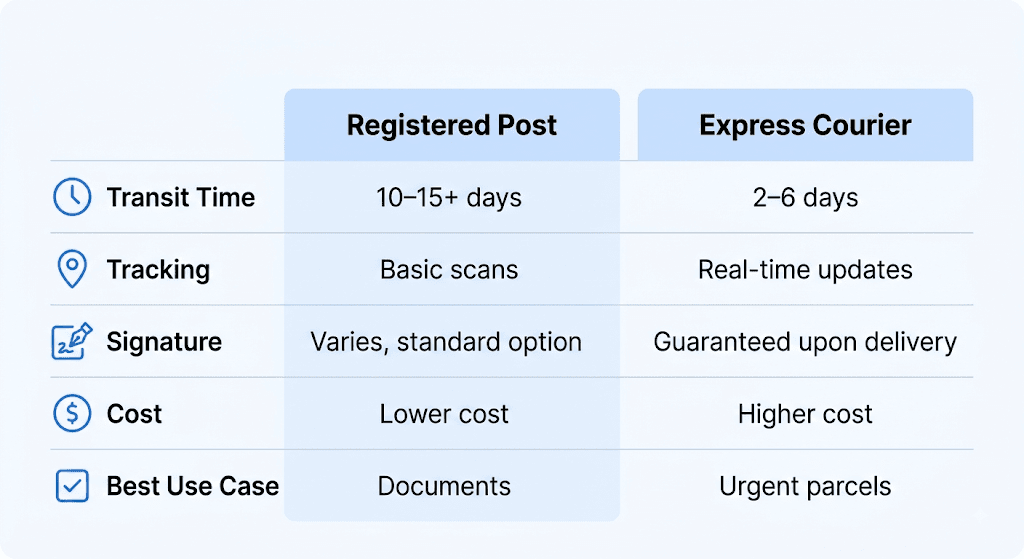
Choosing between international registered post and express courier depends on speed, visibility needs, and budget. The table below summarises typical differences for 2026 planning.
Feature
International Registered Post
Express Courier (e.g., International Express)
Typical transit time
10–15+ business days
2–6 business days
Tracking depth
Basic milestones
Frequent real-time scans
Signature on delivery
Often included or optional
Usually included
Compensation limit
Low (e.g., ~$100)
Higher / Extra Cover available
Weight / size limits
Often ≤500 g for letter-style
Higher limits with packaging options
Price level
Lower
Higher
Best for
Documents, non-urgent low-value items
Time-sensitive or higher-value shipments
Use registered post when cost and basic proof matter most. Switch to express when delivery date certainty and denser tracking are required.
Best Practices for Accurate Tracking in 2026
Following a few disciplined habits dramatically improves the usefulness of any registered post tracking number. Always photograph or save the receipt and label immediately after posting. Double-check the destination address and any required customs declarations before lodging.
Enter the number on both the origin postal site and a reputable multi-carrier tracker. Set calendar reminders for expected delivery windows rather than checking hourly. If an item shows no movement beyond the normal silent period, contact the origin operator first with proof of posting; only the sender can usually open a formal enquiry.
Additional tips that reduce problems:
Use prepaid registered envelopes when available to standardise the process
Request signature confirmation where the destination supports it
Avoid peak holiday periods if timing is critical
Keep records of value and contents for any compensation claim
Consider digital platforms for higher-value or repeated shipments
How Digital Platforms Improve Visibility Beyond Postal Tracking
Digital logistics platforms aggregate data from postal networks, airlines, and courier partners to reduce the blind spots inherent in pure registered post tracking. Users gain a single dashboard, more frequent status pulls, and the ability to compare alternative services before shipping. Document automation and customs support further cut delays that often appear as tracking gaps.
For businesses shipping regularly, the combination of quote comparison, real-time multi-carrier visibility, and expert support outperforms relying solely on a national postal tracking page. Individuals sending occasional important documents still benefit from the lower cost of registered post but can use platform tools for monitoring and escalation when needed.
Future Trends Shaping International Tracking in 2026 and Beyond
By 2026, artificial intelligence, improved data sharing between postal operators, and selective IoT adoption continue to close some traditional tracking gaps. Predictive ETAs based on historical lane performance and earlier anomaly detection are becoming more common. Blockchain pilots for chain-of-custody records appear on selected high-value corridors, though they remain limited for standard registered post.
Sustainability data and carbon reporting are increasingly attached to shipment records. Mobile-first tracking experiences with clearer status language reduce user frustration. Full real-time visibility for economical registered services is still constrained by cost, but hybrid solutions that layer digital platforms on top of postal networks deliver the best practical results today.
Frequently Asked Questions About International Registered Post Tracking
How do I track an international registered post package in 2026?
Enter the tracking or reference number provided at posting on the origin postal operator’s official website. Supplement with a multi-carrier tracker if updates stall after export. Most systems show only major milestones rather than continuous location data.
Does Australia Post Registered Post International include full tracking?
It provides limited scan events and signature confirmation where available, but updates are not as frequent or detailed as express courier services. International segments often depend on the destination postal network.
Why has my registered post tracking stopped updating?
Silent periods of several days are common during international transit, customs processing, or hand-over between operators. Check both origin and destination postal sites and allow the published delivery window before raising an enquiry.
How long does international registered post usually take?
Typical estimates range from 10 to 15+ business days between major cities, excluding customs delays. Remote destinations and peak seasons can extend this further.
Can I get a signature confirmation with registered post?
Yes, signature on delivery is often included or available as an option, but availability varies by destination country. Confirm at the time of posting.
What should I do if my registered post item is lost?
The sender should open an enquiry with the origin postal operator after the maximum published delivery window has passed, providing the tracking number and proof of posting. Compensation is usually limited.
Is registered post suitable for valuable items?
It is better suited to documents and low-value items because compensation is capped and tracking is basic. Higher-value goods generally need express services with extra cover.
Are there better alternatives to registered post tracking in 2026?
Digital logistics platforms that combine multiple carriers, denser scan data, and proactive support often provide superior visibility and options for the same shipment needs.
Conclusion: Choose Smarter Tracking for Global Shipments
International registered post tracking in 2026 still serves a clear purpose for cost-conscious document and small-parcel shipments, provided users understand its limits. Basic milestone visibility and signature options remain useful, yet gaps and slower transit make it less ideal when timing or high visibility matters. Combining official postal tools with modern digital platforms gives the most practical control.
Whether you ship occasionally or manage regular cross-border flows, matching the service level to the item’s importance and your need for updates produces better outcomes. Clear expectations, good records, and the right supporting technology keep international registered post a reliable part of the shipping mix.
For expert guidance, Book a Demo with FreightAmigo.
What is Australia Post Registered Post International?
It is a service for sending documents and small parcels internationally. The service balances security with affordability for both individuals and businesses.
What are the key features of Australia Post Registered Post International?
It offers global coverage, basic tracking, optional signature on delivery, and competitive pricing. These features make it suitable for non-urgent shipments to many countries.
How does Australia Post Registered Post International work?
Customers prepare the shipment, visit a post office, provide details, pay for a tracking number, and drop off the package. This process ensures the item meets requirements before processing.
How do you track an Australia Post Registered Post International shipment?
Visit the Australia Post website, enter the tracking number, and view available updates. The system shows major milestones in the shipment's journey.
What limitations exist for Australia Post Registered Post International tracking?
Updates are less frequent, may have gaps after leaving Australia, and provide only basic milestones. These depend on the destination country's postal service.
How can FreightAmigo enhance international shipping?
It provides comprehensive options, advanced real-time tracking, quote comparison, and extra services like customs clearance. Users gain better visibility and cost control through one platform.
What advancements are expected in international shipping and tracking?
AI, IoT integration, blockchain, and sustainable solutions are likely to improve routing, monitoring, and transparency. These technologies will enhance accuracy and reduce issues.
Why embrace digital solutions for international shipping?
They deliver greater visibility, control, and efficiency compared to basic postal services. Platforms like FreightAmigo support competitive operations in global trade.





















 Global Popular RoutesTop sea & air shipping lanes
 Special OfferLimited-time shipping promotions


 Express
 Document
 Parcel - Air/Sea
 Container
 Relocation