Ocean Freight Explained: A 2026 Guide to Transpacific Shipping, Rates, and Forwarding
Global Ocean Freight Market in 2026: Capacity, Rates, and Disruptions
The global ocean freight market in 2026 continues to navigate structural shifts driven by capacity constraints, geopolitical routing changes, and tariff volatility. Red Sea diversions remain a significant factor, forcing vessels to take longer routes around the Cape of Good Hope rather than through the Suez Canal. This extended voyage time reduces effective fleet capacity and increases operational costs, which in turn pressures spot rates and planning horizons for importers worldwide.
Capacity absorption remains uneven across transpacific trade lanes. New vessel deliveries have added tonnage, yet demand fluctuations and seasonal peaks still create bottlenecks at key gateways. Logistics managers should monitor carrier alliances and vessel deployment schedules, as space availability directly impacts booking windows and freight costs. Tariff policies—particularly in North America—add another layer of complexity, with importers timing shipments around duty changes and trade policy announcements.
For 2026, ocean freight rates remain elevated relative to pre-pandemic levels, with volatility tied to capacity utilization, fuel costs, and geopolitical events. Spot rates fluctuate weekly, making advance planning and relationship management with freight forwarders critical for cost control.
Sea Freight from China to USA: Current Rates, Costs, and Transit Timelines
Shipping from China to the United States is the largest transpacific trade lane. Importers typically choose between full container load (FCL) and less-than-container load (LCL) options based on volume and urgency. FCL shipments—typically 20-foot (TEU) or 40-foot (FEU) containers—offer economies of scale for larger volumes, while LCL consolidation suits smaller shipments but incurs longer transit times due to warehouse handling.
Port-to-port ocean transit from Shanghai to major US gateways varies by destination. West Coast ports (Los Angeles, Long Beach, Oakland) typically see shorter ocean transits than East Coast ports (New York, Savannah, Charleston). However, door-to-door delivery timelines extend significantly beyond ocean transit. Importers must account for origin handling, customs clearance at both ports, inland drayage, and potential terminal dwell delays—all of which can add 1–2 weeks or more to total delivery time.
Chassis shortages and inland rail congestion at key inland gateways remain persistent challenges, particularly during peak seasons. Shippers should build buffer time into inventory planning and coordinate with their freight forwarder on realistic door-to-door windows rather than relying solely on ocean transit estimates.
Sea Freight from China to Canada: Shipping Rates and Delivery Timelines
Canadian importers shipping from China face similar transpacific dynamics but with distinct gateway options and regulatory requirements. Vancouver and Montreal serve as primary entry points, with Vancouver offering West Coast speed and Montreal providing access to Eastern Canada and US inland markets via rail.
Multimodal routing—combining sea freight to a West Coast port with inland rail to Canadian distribution centers—can offer cost advantages over all-ocean routing to Montreal. However, rail gateway capacity and Canada Border Services Agency (CBSA) clearance timelines must be factored into total delivery schedules. Door-to-door timelines for Canadian destinations typically extend 3–5 weeks from Shanghai depending on final destination, customs processing, and inland transportation mode.
Canadian importers must ensure full CBSA compliance, including accurate HS codes, commercial invoices, and packing lists. Delays in customs clearance can compound transit time variability, making early coordination with a customs broker essential.
Ocean Freight Forwarding Process: Six Essential Steps from Origin to Destination
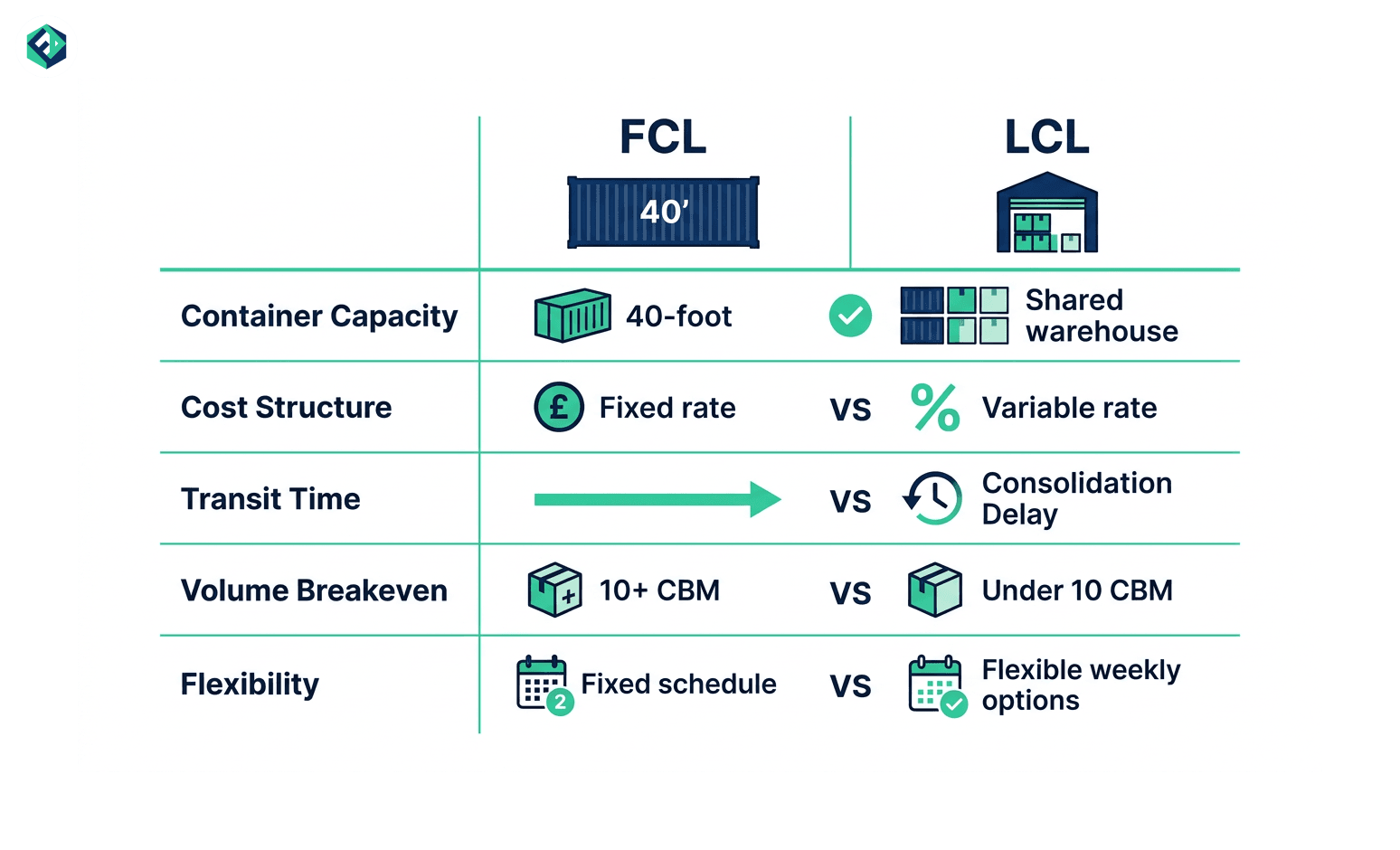
Understanding the ocean freight forwarding workflow helps shippers anticipate delays, manage documentation, and reduce compliance errors. The process unfolds across six key stages:
- Export haulage and origin handling: Cargo moves from the shipper's facility to the origin port terminal. Forwarders arrange pickup, consolidation (if LCL), and initial inspection.
- Export customs clearance: Shippers and forwarders prepare export documentation, including commercial invoices, packing lists, and export declarations. Origin customs authorities verify compliance before cargo can enter the port terminal.
- Ocean transit and vessel booking: Forwarders reserve space with ocean carriers or alliances, arrange bill of lading issuance, and coordinate loading onto the vessel. This stage involves managing carrier schedules and potential delays.
- Destination port operations: Upon arrival, cargo enters the destination port terminal. Port operators handle discharge, storage, and inventory management while awaiting customs processing.
- Import customs clearance: Destination customs brokers file import entries, verify HS codes and duty calculations, and coordinate inspection if required. This stage is often a major source of delay.
- Inland drayage and final delivery: Once cleared, cargo moves to the importer's warehouse or final destination via truck or rail. Drayage providers handle pickup from the port terminal and delivery to the specified address.
Each stage introduces potential delays. Terminal congestion, documentation errors, and customs backlogs can extend timelines unpredictably. Effective communication between shipper, forwarder, and customs broker minimizes disruptions.
FCL vs. LCL Ocean Shipping: Choosing the Right Freight Mode for Your Cargo
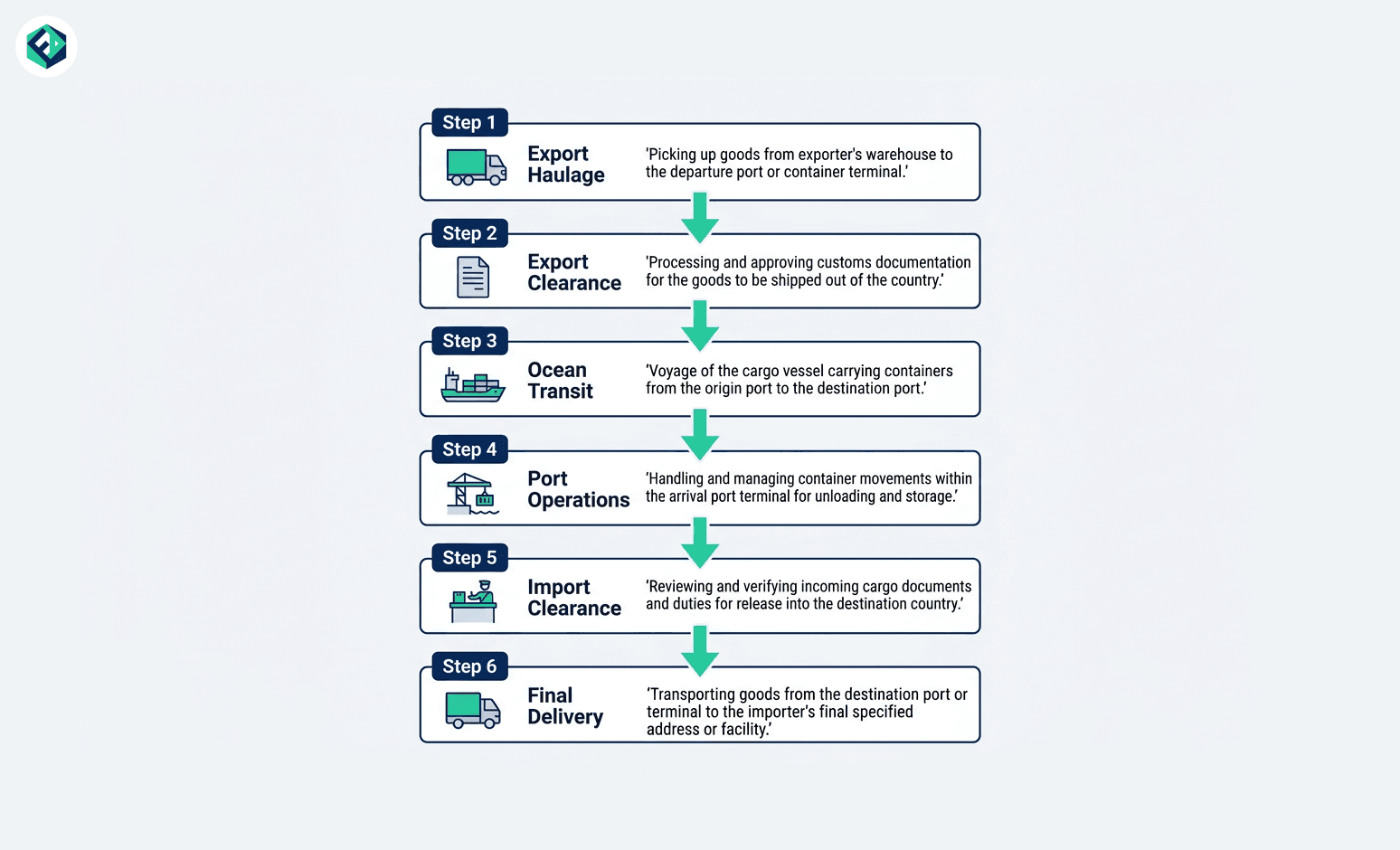
Full container load (FCL) and less-than-container load (LCL) represent fundamentally different service models, each suited to different shipper profiles.
| Factor | FCL | LCL |
|---|
| Container capacity | Entire 20ft or 40ft container dedicated to one shipper | Shared consolidation warehouse; charged by cubic meter (CBM) |
| Cost structure | Fixed per-container rate regardless of fill percentage | Variable rate per CBM plus consolidation and handling fees |
| Transit time | Direct ocean transit; faster overall | Consolidation delay (3–7 days); longer overall transit |
| Volume breakeven | Typically 10+ CBM; lower per-unit cost at scale | Typically under 10 CBM; cost-effective for small shipments |
| Flexibility | Fixed sailing schedule; less scheduling flexibility | Weekly consolidations; more flexible departure options |
FCL suits importers with consistent, higher-volume shipments. LCL consolidation works well for smaller, irregular shipments or when inventory flexibility matters more than absolute speed. Calculate your per-unit cost by dividing total freight cost by units shipped; this metric often reveals the true economics of each mode.
Cargo Insurance for Ocean Shipping: Why Protection Matters for Transpacific Trade
Ocean freight involves inherent risks—vessel delays, port congestion, weather, theft, and handling damage. Cargo insurance protects importers against financial loss and ensures business continuity when shipments are delayed or damaged. Marine cargo insurance typically offers two coverage models: all-risk policies (covering most perils except specific exclusions) and named-peril policies (covering only explicitly listed risks). All-risk coverage is generally preferable for high-value or sensitive cargo, though premiums are higher. Standard policies often exclude certain perils—war, strikes, government action—which may require additional riders. Premiums depend on cargo value, commodity type, route, and shipper claims history. High-value electronics, pharmaceuticals, and specialty goods command higher premiums. For transpacific shipments with long transit times or high duty costs, comprehensive protection ensures that unexpected delays or damage do not derail your margin or supply chain. Explore Cargo Insurance options that integrate seamlessly with your booking, so coverage begins the moment your shipment moves and you maintain centralized visibility across all your shipments and their protection status.
Transpacific Route Planning: Optimizing Shipping Decisions in a Volatile Market
Transpacific route selection involves balancing cost, speed, capacity, and tariff timing. Importers must evaluate multiple dimensions:
- Gateway choice: West Coast ports (Los Angeles, Long Beach) offer faster ocean transit and lower drayage costs for West Coast US distribution, while East Coast ports serve Atlantic regions but incur longer ocean transit. Inland rail gateways provide cost-effective access to central US and Canadian markets but add rail transit time.
- Tariff timing: When tariff rates are expected to increase, importers may frontload shipments to lock in lower duty costs, even if inventory carrying costs rise temporarily. Conversely, when tariffs are uncertain or declining, smaller, more frequent shipments reduce duty risk exposure.
- Multimodal combinations: Sea-rail routing to inland destinations often undercuts all-ocean routing to distant ports while maintaining reasonable delivery windows. Forwarders can model these options alongside all-ocean alternatives.
- Capacity planning: Peak seasons (August–October for holiday imports) experience space constraints and rate premiums. Off-peak seasons offer lower rates but require inventory buffers.
Effective route planning requires regular dialogue with your freight forwarder. Share demand forecasts, tariff expectations, and delivery windows; forwarders can then model scenarios and recommend optimal routing for your margin and service targets. Avoid reactive, last-minute shipping decisions, which typically incur premium rates and compressed delivery windows.
Customs Clearance and Import Compliance: Documentation and Regulatory Requirements
Customs clearance delays are among the costliest hidden factors in ocean freight. Accurate, timely documentation prevents penalties and keeps cargo moving. Export clearance begins with correct HS (Harmonized Tariff Schedule) classification of your commodity. HS codes determine tariff rates and regulatory requirements; misclassification invites audits and penalties. Commercial invoices must accurately reflect sale price, quantity, and commodity description. Packing lists must itemize contents by carton or pallet. Bill of lading details must match all supporting documents. For US imports, importers or customs brokers file entry documents with US Customs and Border Protection (CBP) within 15 days of vessel arrival. The entry must include the commercial invoice, packing list, bill of lading, and any required certifications (food, textiles, hazmat, etc.). CBP may request an exam if risk indicators are flagged; exams delay clearance by 1–3 days. For Canadian imports, CBSA enforces similar requirements. CBSA compliance demands accurate HS codes, proof of origin (for trade agreement eligibility), and compliance with Canadian safety and labeling standards. Importers should verify CBSA-specific rules for their commodity category well before shipment. Common documentation errors—incorrect HS codes, mismatched invoice and packing list quantities, missing certifications—are easily preventable. Work closely with your freight forwarder and customs broker to verify all documents before cargo ships. Early compliance prevents costly delays and keeps your supply chain predictable. Use a Tailored Solution that brings together freight booking, documentation management, and customs coordination so every step from origin to destination runs smoothly under one integrated platform.
FAQ
How do Red Sea diversions and new vessel capacity affect ocean freight rates and supply chain planning in 2026?
Red Sea diversions force longer routes around the Cape of Good Hope, reducing effective fleet capacity and increasing operational costs. This extended voyage time pressures spot rates and planning horizons. New vessel deliveries have added tonnage, but capacity absorption remains uneven, creating bottlenecks at key gateways. Logistics managers should monitor carrier alliances and vessel deployment schedules, as space availability directly impacts booking windows and freight costs.
What does it cost to ship from Shanghai to Los Angeles or New York, and how long should importers budget for full delivery?
Ocean transit varies by destination: West Coast ports typically see 14–22 days, East Coast ports 28–35 days. Door-to-door timelines extend significantly beyond ocean transit because importers must account for origin handling, customs clearance, inland drayage, and potential terminal dwell delays—adding 1–2 weeks or more. FCL shipments offer economies of scale for larger volumes, while LCL consolidation suits smaller shipments but incurs longer transit times due to warehouse handling.
What are current FCL and LCL rates from China to Vancouver and Montreal, and how long should importers expect for door-to-door delivery?
Door-to-door timelines for Canadian destinations typically extend 3–5 weeks from Shanghai depending on final destination, customs processing, and inland transportation. Vancouver offers West Coast speed, while Montreal provides access to Eastern Canada and US inland markets via rail. Multimodal routing—combining sea freight to a West Coast port with inland rail—can offer cost advantages, though CBSA clearance timelines must be factored into total delivery schedules.
What are the six main stages of ocean freight forwarding, and what happens at each step?
Ocean freight forwarding unfolds across export haulage, export customs clearance, ocean transit and vessel booking, destination port operations, import customs clearance, and inland drayage and final delivery. Each stage introduces potential delays from terminal congestion, documentation errors, and customs backlogs. Effective communication between shipper, forwarder, and customs broker minimizes disruptions and keeps cargo moving predictably.
When should importers choose FCL shipping over LCL consolidation?
FCL suits importers with consistent, higher-volume shipments, typically 10+ CBM where per-unit costs are lower. LCL consolidation works well for smaller, irregular shipments under 10 CBM or when inventory flexibility matters more than absolute speed. Calculate your per-unit cost by dividing total freight cost by units shipped; this metric reveals the true economics of each mode.
Why is cargo insurance critical for transpacific shipments, and what coverage should importers prioritize?
Cargo insurance protects against financial loss from vessel delays, port congestion, weather, theft, and handling damage, ensuring business continuity. All-risk policies covering most perils are generally preferable for high-value or sensitive cargo, though premiums are higher. Standard policies often exclude war, strikes, and government action, which may require additional riders. For transpacific shipments with long transit times or high duty costs, comprehensive protection ensures unexpected delays or damage do not derail your margin or supply chain.
How can importers optimize transpacific route selection given tariff volatility and capacity constraints?
Effective route planning requires balancing cost, speed, capacity, and tariff timing by evaluating gateway choice, tariff timing strategy, multimodal combinations, and capacity planning. West Coast ports offer faster ocean transit for West Coast distribution, while East Coast ports serve Atlantic regions but incur longer transit. Inland rail gateways provide cost-effective access to central US and Canadian markets. When tariff rates are expected to increase, importers may frontload shipments to lock in lower duty costs; multimodal sea-rail routing often undercuts all-ocean routing to distant ports.
What documentation and regulatory steps are required for ocean freight export and import compliance?
Accurate HS classification, commercial invoices, packing lists, and bills of lading must match across all documents to prevent customs delays and penalties. For US imports, importers or customs brokers file entry documents with US Customs and Border Protection within 15 days of vessel arrival and may face 1–3 day delays if CBP requests an exam. For Canadian imports, CBSA requires accurate HS codes, proof of origin, and compliance with Canadian safety and labeling standards. Work closely with your freight forwarder and customs broker to verify all documents before cargo ships to prevent costly delays.








 Global Popular RoutesTop sea & air shipping lanes
 Special OfferLimited-time shipping promotions





 Express
 Document
 Parcel - Air/Sea
 Container
 Relocation