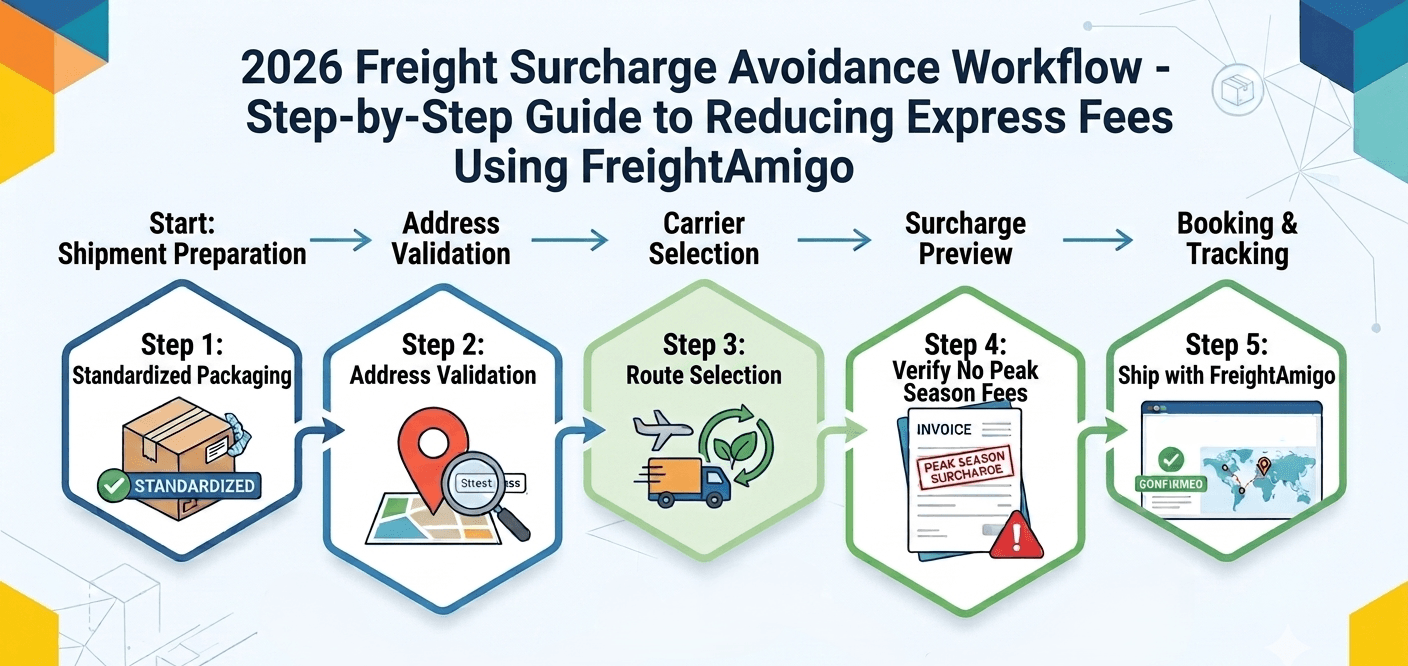
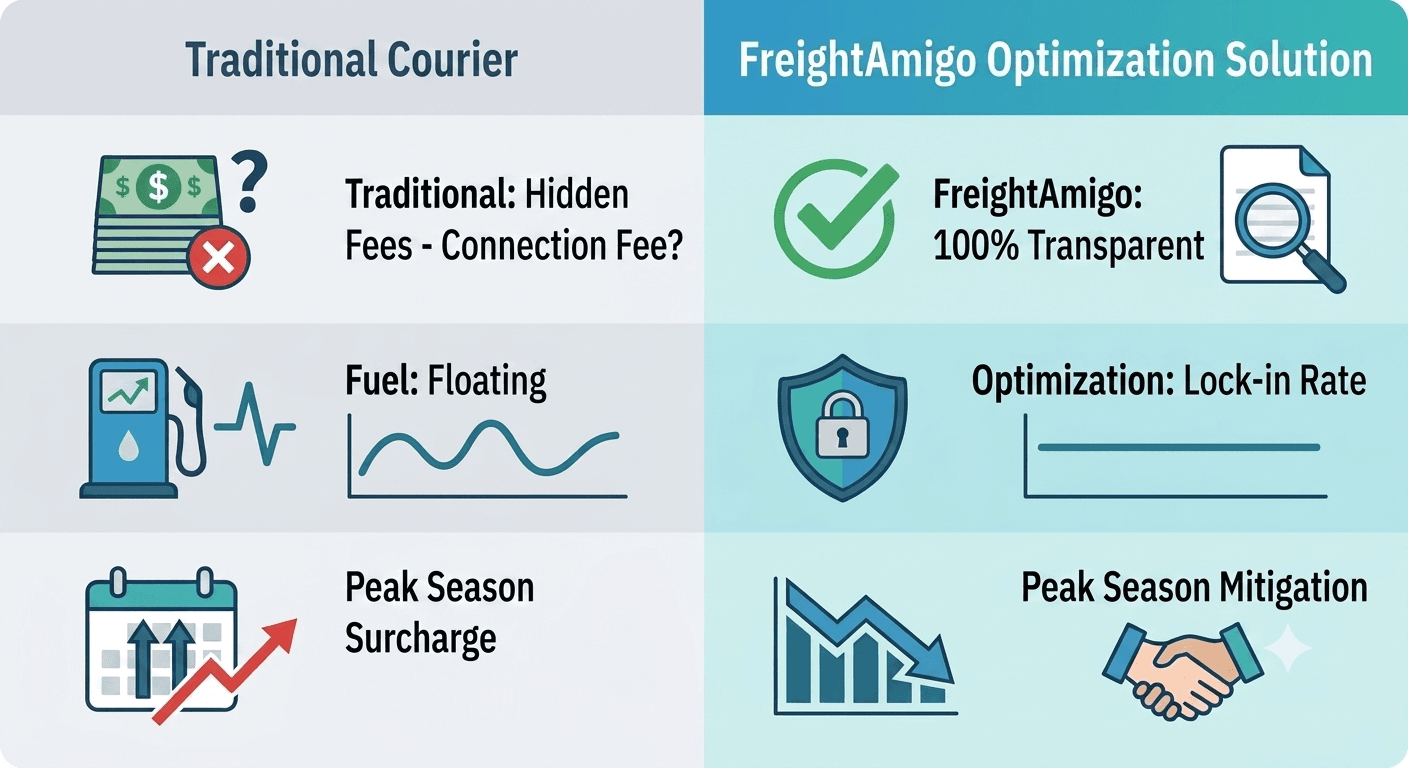
Shipping surcharges are extra fees added to base courier rates for non-standard services or conditions.
In 2026, with rising fuel volatility and eCommerce growth, these fees significantly affect total shipping costs. Understanding courier fee meaning helps businesses maintain profitability and customer satisfaction.
FreightAmigo simplifies this by offering transparent instant quotes.
Why Do Carriers Impose Courier Fees?
Carriers impose surcharges to cover variable operational costs that standard rates cannot absorb.
Factors like geopolitical tensions, inflation, and sustainability mandates drive these adjustments. In 2026, eco-friendly surcharges are becoming more common.
Businesses that plan ahead reduce unexpected expenses.
Common Types of Shipping Surcharges
Multiple surcharge categories exist depending on shipment specifics and routes.
Key types include fuel, residential, area, handling, and peak fees. Knowing them prevents budget overruns.
Fuel surcharges
Residential delivery fees
Remote area charges
Additional handling
Oversize/overweight penalties
Address correction
Signature requirements
Peak season add-ons
Fuel Surcharges Explained for 2026
Fuel surcharges adjust dynamically based on global oil prices and carrier efficiency metrics.
In 2026, expect averages between 25-35% for international routes due to green fuel transitions. Major carriers publish weekly updates.
Monitor indices regularly to forecast expenses accurately.
Residential and Delivery Area Fees
Residential surcharges apply when delivering to homes instead of commercial addresses.
2026 rates have increased 5-8% year-over-year. Remote rural deliveries carry extra area fees averaging $3-7.
Verify address type at checkout
Offer pickup points
Bundle with local partners
Use zone mapping tools
Oversize, Handling & Peak Season Charges
Oversize packages and special handling trigger substantial add-on fees.
Peak season (Q4 2026) sees the highest surcharges. Proper packaging avoids many of these.
Surcharge Type
2026 Typical Fee (USD)
Trigger Conditions
Avoidance Tip
Residential
$6.00 - $7.50
Home delivery
Use lockers
Oversize
$15 - $550
> certain dims
Standard boxes
Peak Season
$1 - $25
Oct-Jan
Early booking
Handling
$2 - $10
Irregular shape
Proper packing
Industries Most Impacted by Surcharges
Ecommerce, electronics, and pharmaceuticals face the highest exposure.
Fashion retailers during holidays
Heavy machinery exporters
Perishable goods shippers
Luxury item transporters
SMEs with irregular volumes
Proactive planning differentiates winners in 2026.
How to Calculate and Minimize Costs
Accurate calculation combines base rate plus applicable surcharges.
FreightAmigo’s AI calculator factors all 2026 variables automatically.
Input shipment details
Review real-time surcharges
Compare multiple carriers
Apply optimization rules
Book with one click
Future Trends in Courier Fees 2026
Sustainability-linked surcharges and AI predictive pricing dominate 2026.
Carbon adjustment fees and real-time dynamic pricing are standard. Early adopters gain competitive edges.
Stay ahead with smart platforms.
Frequently Asked Questions
What is the meaning of courier fee in 2026?
Courier fee encompasses base rate plus all applicable shipping surcharges. In 2026 it reflects fuel, handling, and sustainability costs for transparent total pricing.
How can I avoid residential delivery surcharges?
Use business addresses or locker networks where possible. FreightAmigo helps identify cost-saving delivery options automatically.
Are fuel surcharges expected to rise in late 2026?
Yes, volatility from green transitions may increase them 5-10%. Lock rates early through platforms like FreightAmigo.
What industries pay the most in shipping surcharges?
Ecommerce and electronics lead due to volume and size variability. Pharmaceuticals follow closely because of handling needs.
How does peak season affect courier fees?
Peak season adds $1-$25+ per shipment from October to January. Booking in advance minimizes impact significantly.
Can address correction fees be prevented?
Yes, by using automated validation tools at checkout. This eliminates the common $15+ penalties.
Is there a way to predict 2026 surcharges accurately?
AI-powered calculators on FreightAmigo provide real-time forecasts. They integrate carrier announcements instantly.
How do sustainability rules impact courier fees?
New carbon fees reward eco-friendly routes. Choosing green options through FreightAmigo can offset some costs.
Conclusion
Mastering courier fee meaning in 2026 empowers smarter shipping decisions.
By understanding surcharges and leveraging tools like FreightAmigo, businesses achieve cost control and customer delight. Start optimizing today for competitive advantage.
For expert guidance, Book a Demo with FreightAmigo.


























 Global Popular RoutesTop sea & air shipping lanes
 Special OfferLimited-time shipping promotions





 Express
 Document
 Parcel - Air/Sea
 Container
 Relocation