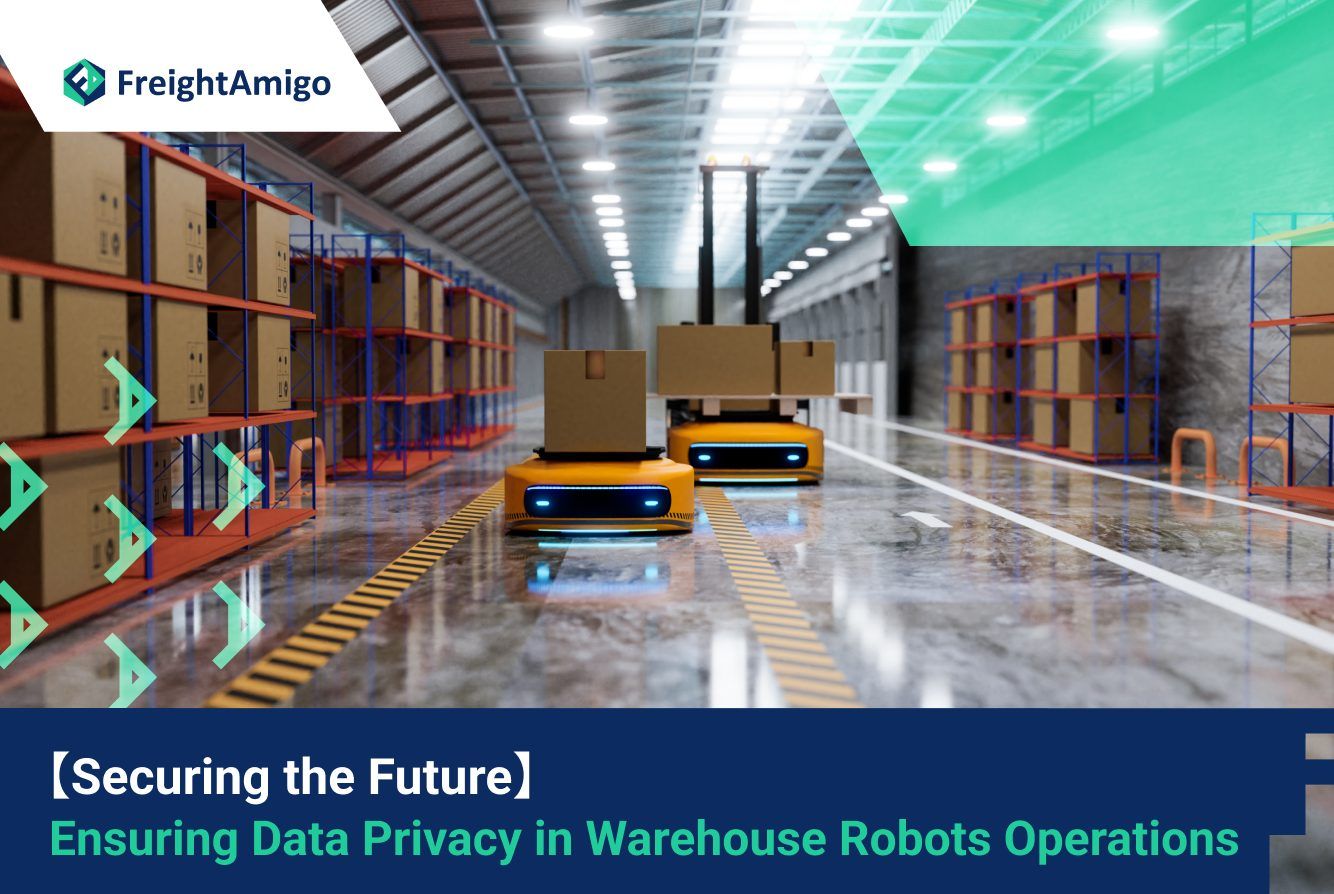
Securing the Future: Ensuring Data Privacy in Warehouse Robots Operations
TL;DR: Warehouse robots boost logistics efficiency in 2025, but data privacy risks demand encryption, access controls, and audits to prevent breaches amid rising IoT threats.
Why **Data Privacy in Warehouse Robots** Matters in 2025 Logistics
Warehouse robots revolutionize logistics
- Robots handle sensitive logistics data daily.
- IoT connectivity amplifies breach risks.
- 2025 regulations like EU AI Act enforce stricter compliance.
- Poor privacy leads to downtime and financial losses.
- Secure data ensures seamless warehouse operations.
With global trade surging, protecting this data prevents disruptions in warehouse robots operations.
Current Challenges: Security Gaps in Warehouse Robots Data Handling
Many logistics firms overlook cyber vulnerabilities in warehouse automation. **Warehouse robots operations face evolving threats from interconnected systems in 2025.** Physical security dominates, but digital risks loom larger.
- CCTV focuses on theft, ignoring data hacks.
- Legacy systems lack modern encryption.
- Supply chain attacks target robot fleets.
- Insider threats compromise access controls.
- Remote operations expose fleets to DDoS.
Recent 2025 reports highlight a 30% rise in logistics cyber incidents.
Key Risks: Understanding Data Privacy Threats in Warehouse Robots
Internet-enabled robots collect movement patterns and inventory data. **Data privacy concerns in warehouse robots include hacking, theft, and manipulation.** Cybercriminals exploit these for sabotage.
| Risk Type | Impact on Logistics | 2025 Examples |
|---|
| Un | Operational shutdown | Remote hijacking of AGVs |
| Data Theft | Inventory leaks | Stolen SKU databases |
| Sabotage | Physical damage | Robot collisions induced |
| Ransomware | Full halt | Encrypted control systems |
These threats disrupt warehouse robots operations, costing millions.
How to Implement Encryption for Warehouse Robots Data Privacy
Encryption safeguards data in transit and at rest. **Start with end-to-end encryption in warehouse robots operations for 2025 compliance.** Use AES-256 standards.
- Encrypt robot-to-server communications.
- Secure cloud-stored inventory logs.
- Implement key rotation protocols.
- Test against quantum threats.
- Integrate with blockchain for audits.
This shields sensitive logistics data effectively.
Access Controls: Best Practices for Secure Warehouse Robots
Limit who controls robot fleets. **Robust access controls prevent breaches in warehouse robots operations.** Role-based systems are essential in 2025.
- Use multi-factor authentication (MFA).
- Segment networks for robots.
- Monitor logs in real-time.
- Revoke access instantly.
- Train staff on phishing.
These steps minimize insider and external risks.
Regular Audits and Compliance in 2025 Warehouse Robotics
Annual audits uncover vulnerabilities. **Conduct penetration testing for data privacy in warehouse robots operations yearly.** Align with GDPR and NIST frameworks.
- Scan for firmware flaws.
- Simulate cyber attacks.
- Update patches promptly.
- Certify with ISO 27001.
- Report to regulators.
2025 national changes demand proactive compliance.
2025 Case Study: Securing Data in Real Warehouse Robots Deployments
A major Asian logistics hub faced a robot data breach in early 2025. **trust architecture, they restored data privacy in warehouse robots operations within 48 hours.** Key lessons:
- Switched to air-gapped backups.
- Deployed AI anomaly detection.
- Reduced breach impact by 70%.
- Achieved full recovery without ransom.
This underscores timely security upgrades.
Future Trends: AI and IoT Impact on Data Privacy
AI-driven robots predict demand but generate more data. **In 2025, warehouse robots operations must balance innovation with privacy.** Expect federated learning to minimize central data risks.
- Edge computing reduces transmission.
- Privacy-preserving ML rises.
- 5G boosts but exposes more.
- Quantum encryption emerges.
- Regulations tighten globally.
FAQ: Data Privacy in Warehouse Robots Operations
Q: What is the biggest data privacy risk in warehouse robots? A: Un
Q: How does encryption help warehouse robots? A: It protects data in transit and rest from interception.
Q: Are 2025 regulations affecting logistics robots? A: Yes, EU AI Act mandates high-risk AI privacy assessments.
Q: What is zero-trust in warehouse operations? A: A model verifying every access request regardless of origin.
Q: How often should audits occur? A: Quarterly for high-risk environments.
Q: Can AI improve robot data privacy? A: Yes, through anomaly detection and predictive threat blocking.
Q: What's the cost of a robot data breach? A: Average $4.5M in logistics per IBM 2025 report.
Q: Do all robots need IoT security? A: Essential for any connected device.
Q: How to train staff on privacy? A: Annual simulations and policy updates.
Conclusion: Secure Your Warehouse Robots Today
Prioritizing **data privacy in warehouse robots operations** ensures resilient logistics in 2025. Implement these strategies for long-term success. For expert guidance, Book a Demo with FreightAmigo.
Contact: enquiry@freightamigo.com | HK: +852 24671689 | CHN: +86 4008751689 | USA: +1 337 361 2833








 Global Popular RoutesTop sea & air shipping lanes
 Special OfferLimited-time shipping promotions





 Express
 Document
 Parcel - Air/Sea
 Container
 Relocation