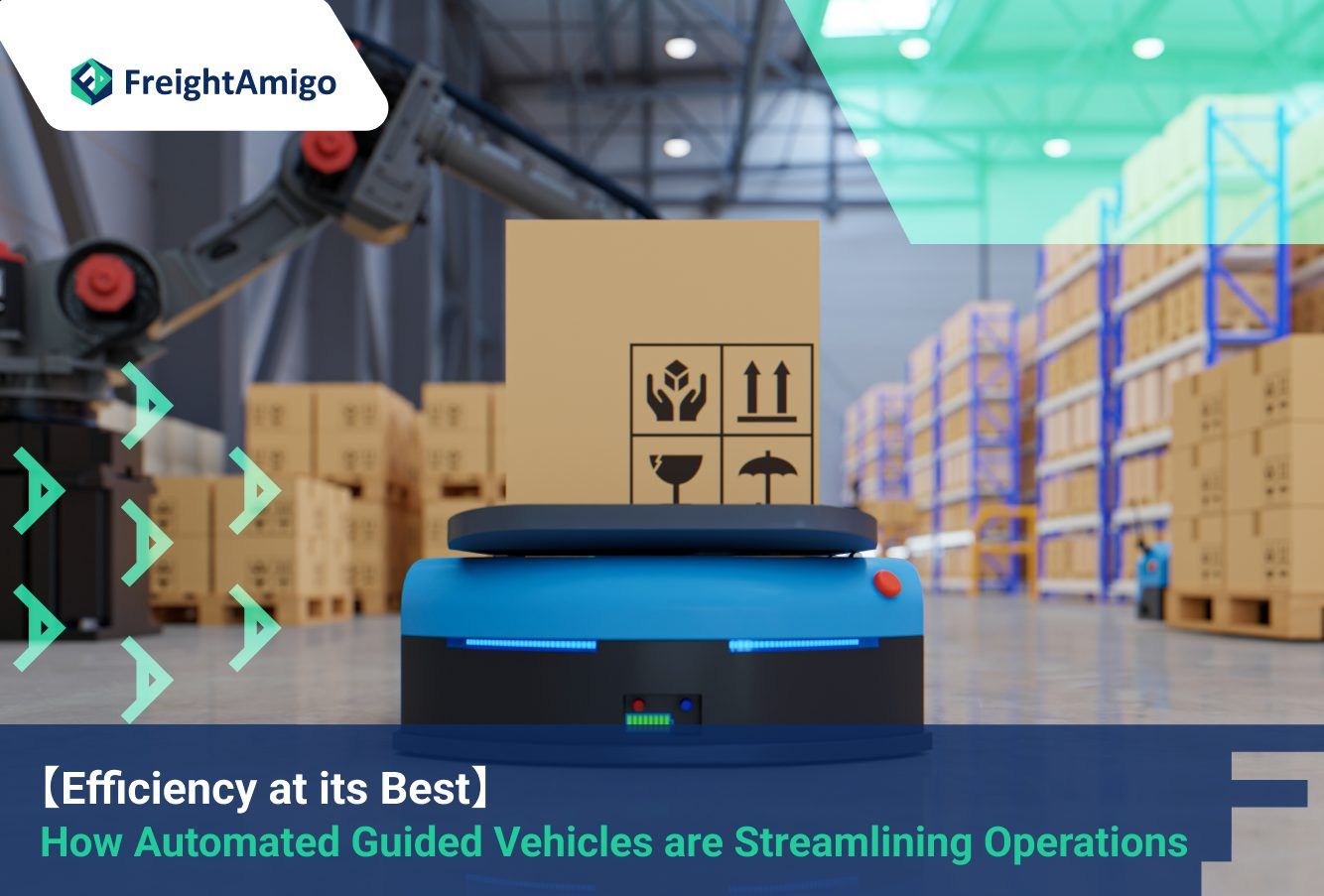
Efficiency at its Best: Automated Guided Vehicles in 2025 Logistics
TL;DR: Automated Guided Vehicles (AGVs) boost warehouse efficiency 50% in 2025 through automation, reducing costs and errors. Discover types, benefits, implementation tips, and future trends in this comprehensive guide.
Introduction to Automated Guided Vehicles (AGVs) in Modern Warehouses
Automated Guided Vehicles (AGVs) are transforming logistics operations in 2025 by automating material handling without human intervention. These battery-powered, sensor-driven robots navigate warehouses using magnetic tapes, lasers, or vision systems, handling pallets and carts efficiently. In fast-paced logistics, AGVs address labor shortages and rising demands, with global adoption surging 25% year-over-year per industry reports.
- AGVs reduce operational costs by up to 40%.
- They operate 24/7, minimizing downtime.
- Advanced navigation ensures precision in tight spaces.
Key Benefits of Automated Guided Vehicles in Warehouse Operations
AGVs deliver unmatched efficiency in warehouse operations, slashing labor needs and boosting throughput.
- Cost Savings: Eliminate manual handling, cutting labor expenses 50%.
- Error Reduction: Precision navigation prevents 90% of picking errors.
- Space Optimization: Navigate narrow aisles, maximizing storage by 20%.
- 24/7 Operations: No breaks mean continuous productivity.
- Safety Enhancements: Collision avoidance systems reduce accidents by 70%.
| Benefit | Impact in 2025 | ROI Timeline |
|---|
| Labor Reduction | 40% cost cut | 12-18 months |
| Productivity Boost | 50% throughput increase | 6-12 months |
| Safety | 70% fewer incidents | Immediate |
Types of Automated Guided Vehicles for Logistics Efficiency
Warehouse AGVs vary by design to match specific logistics needs in 2025. Choosing the right type ensures seamless integration into operations.
- Forklift AGVs: Lift pallets up to 3 tons for loading/unloading.
- Tugger AGVs: Tow carts for batch transport in assembly lines.
- Conveyor AGVs: Move goods via belts for high-volume flow.
- Unit Load AGVs: Handle totes or boxes in e-commerce fulfillment.
- Custom AGVs: Tailored for specialized logistics tasks.
How Automated Guided Vehicles Streamline Warehouse Operations
AGVs streamline operations Integrated with Warehouse Management Systems (WMS), they optimize paths and reduce cycle times by 35%.
- Autonomous pallet movement from receiving to storage.
- Dynamic routing avoids congestion.
- Sensor fusion for accurate inventory tracking.
Step-by-Step Guide: Implementing AGVs in Your Logistics Warehouse
Successful AGV implementation starts with a structured how-to approach for 2025 warehouses.
- Assess Needs: Map warehouse layout and task volumes.
- Select Type: Match AGV to load capacity and paths.
- Integrate Systems: Link with WMS and ERP software.
- Test Pilot: Run 4-week trial in one zone.
- Scale Up: Expand fleet based on data analytics.
- Train Staff: Focus on oversight, not operation.
Key Considerations When Selecting AGVs for 2025 Operations
Selecting AGVs requires evaluating compatibility, scalability, and ROI for logistics success. Prioritize navigation tech like LiDAR for dynamic environments.
- Payload capacity: 500kg to 5 tons.
- Battery life: 8-12 hours per charge.
- Software integration: API-ready for WMS.
- Vendor support: 24/7 maintenance SLAs.
2025 Case Study: AGV Success in Logistics Warehouses
A mid-sized logistics firm in Asia implemented 20 AGVs in 2025, achieving 45% efficiency gains. Facing labor shortages, they deployed tugger AGVs, reducing order fulfillment time from 45 to 22 minutes.
- Investment: $500K initial setup.
- ROI: Recouped in 14 months.
- Key Win: 25% inventory accuracy improvement.
Future Trends in AGV Technology for Logistics in 2025 and Beyond
AGV trends in 2025 include AI-driven autonomy and 5G connectivity for swarm operations. Expect hybrid AGV-AMR fleets blending fixed paths with free navigation.
- AI/ML for predictive maintenance.
- Swarm intelligence for fleet coordination.
- Edge computing for real-time decisions.
- Green batteries for sustainability.
FAQ: Automated Guided Vehicles in Warehouse Logistics
Quick answers to top questions on AGVs for 2025 logistics efficiency.
What are Automated Guided Vehicles (AGVs)? Battery-powered robots that autonomously transport goods in warehouses using sensors and predefined paths.
How do AGVs improve warehouse efficiency? They automate repetitive tasks, cutting costs 50% and boosting throughput 24/7.
What types of AGVs are best for logistics? Forklift and tugger AGVs suit most warehouses for pallet and batch handling.
Are AGVs safe in busy warehouses? Yes, advanced sensors and collision avoidance reduce accidents by up to 70%.
How much do AGVs cost in 2025? Entry-level units start at $50K, with fleets offering ROI in 12-24 months.
Can AGVs integrate with existing WMS? Most modern AGVs support seamless API integration with popular systems.
What navigation methods do 2025 AGVs use? LiDAR, QR codes, and magnetic tapes for precise, adaptable routing.
Will AGVs replace human workers? No, they handle mundane tasks, allowing staff to focus on high-value activities.
How to start with AGVs in logistics? Conduct a site audit and pilot test one zone before full rollout.
What are 2025 AGV trends? AI autonomy, swarm robotics, and sustainable power sources dominate advancements.
Conclusion: Unlock Efficiency with AGVs in 2025
Automated Guided Vehicles represent peak efficiency in 2025 logistics, driving cost savings and productivity. For tailored advice on integrating AGVs or optimizing your supply chain, Book a Demo with experts. Contact: HKG: +852 24671689 | CHN: +86 4008751689 | USA: +1 337 361 2833 | Email: enquiry@freightamigo.com.








 Global Popular RoutesTop sea & air shipping lanes
 Special OfferLimited-time shipping promotions





 Express
 Document
 Parcel - Air/Sea
 Container
 Relocation