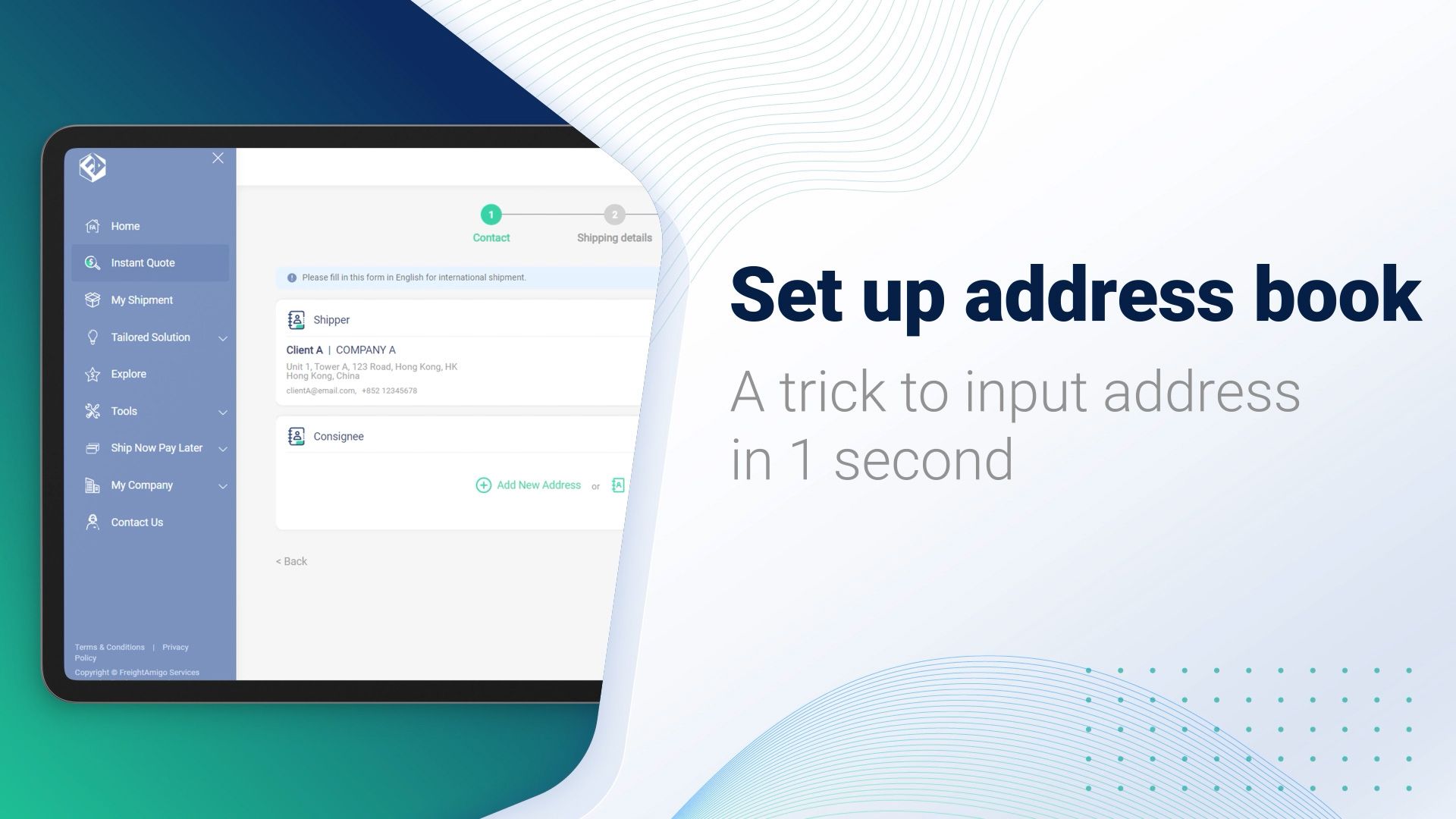
TL;DR: Learn how to set up an address book in logistics platforms to save time on shipping bookings, with step-by-step guides, best practices, and 2025 updates for faster freight management.
Set Up Address Book for Logistics Efficiency in 2025
Why **Set Up Address Book** in Logistics Platforms?
Setting up an address book streamlines logistics operations by automating address entry for shippers and consignees.
In 2025, with rising e-commerce volumes, quick address input reduces booking time by up to 70%.
- Eliminates manual re-entry errors.
- Speeds up repeat shipments.
- Supports international logistics compliance.
- Integrates with freight quoting systems.
- Enhances supply chain visibility.
How to **Set Up Address Book** Step-by-Step Guide
Follow this simple process to set up your address book in modern logistics software.
- Select a freight quote on the platform.
- Enter shipper and consignee details accurately.
- Click "Save to Address Book" to store.
- Verify details, especially for cross-border shipments.
- Reuse via "Address Book" dropdown next time.
Addresses auto-fill in seconds, boosting efficiency.
Best Practices for **Logistics Address Book** Management
Maintain an organized address book to avoid costly shipping delays.
- Use standardized formats: Street, City, Postal Code, Country.
- Include contact names and phone numbers.
- Update addresses quarterly for accuracy.
- Tag entries by region (e.g., Asia, Europe).
- Backup via export features.
In 2025, national address standards in China and EU require precise formatting.
Common **Address Book** Mistakes in Freight Shipping
Avoid these pitfalls to ensure smooth logistics flows.
| Mistake | Impact | Solution |
|---|
| Incomplete fields | Delivery delays | Double-check all details |
| Wrong language | Customs issues | Use English for international |
| No updates | Failed shipments | Review annually |
| Duplicate entries | Confusion | Merge similar addresses |
| Missing contacts | Poor tracking | Add phone/email |
2025 Updates: **Address Book** for International Logistics
New 2025 regulations emphasize verified addresses in logistics platforms.
- China's updated postal codes effective Q1 2025.
- EU digital address standards for freight.
- WCO guidelines cite accurate consignee data.
- Integration with API for real-time validation.
- AI-powered address suggestions.
These changes prevent 2025 compliance fines.
Benefits of **Logistics Address Book** Integration
Address books transform freight management workflows.
- Cuts booking time from minutes to seconds.
- Reduces errors by 90%.
- Supports multi-warehouse operations.
- Enables bulk uploads for enterprises.
- Tracks address history for audits.
How **Set Up Address Book** Boosts Supply Chain Speed
In high-volume logistics, address books are key to agility.
Case study: A 2025 Hong Kong exporter saved 40% time using address book features amid peak seasons.
FAQ: **Set Up Address Book** in Logistics
Quick answers to common questions.
Q1: What is a logistics address book? A: A digital storage for shipper/consignee details to auto-fill shipping forms.
Q2: How do I set up address book for international freight? A: Enter English details and save during booking.
Q3: Can I edit saved addresses? A: Yes, access via profile and update as needed.
Q4: Does address book work for air/sea freight? A: Yes, compatible across all modes.
Q5: What's new in 2025 for address books? A: Enhanced validation for national changes.
Q6: How secure is logistics address data? A: Encrypted with SSL standards.
Q7: Can teams share address books? A: Enterprise plans allow multi-user access.
Q8: Free to set up address book? A: Yes, in most platforms including FreightAmigo.
Q9: Bulk import possible? A: CSV uploads supported for large lists.
Q10: Impact on shipping costs? A: Faster bookings lead to better rates.
Resources & Next Steps
For hands-on setup, Book a Demo with FreightAmigo.
Contact: HKG +852 24671689 | CHN +86 4008751689 | USA +1 337 361 2833 | GBR +44 808 189 0136 | AUS +61 180002752 | Email: enquiry@freightamigo.com








 Global Popular RoutesTop sea & air shipping lanes
 Special OfferLimited-time shipping promotions





 Express
 Document
 Parcel - Air/Sea
 Container
 Relocation