




















 Express
 Document
 Parcel - Air/Sea
 Container
 Relocation


Panama Canal 2026: How an Engineering Marvel Continues to Shape Global Trade and Modern Logistics
Table of Contents (Click to expand)
- Introduction: Why the Panama Canal Still Matters in 2026
- Early History and Strategic Vision of the Canal
- The Rise of the American Canal Project
- Engineering Marvels and Construction Challenges
- The Panama Canal's Revolutionary Impact on Global Trade Routes
- Expansion and Modernization: From Panamax to Neo-Panamax
- The Panama Canal in 2026: Its Critical Role Today
- Environmental Sustainability and Climate Adaptation Strategies
- Shipping Cost Comparison: Panama Canal vs. Alternative Routes
- Future Challenges and Opportunities for the Panama Canal
- Frequently Asked Questions (FAQ)
- Conclusion: Canal Wisdom in the Age of Digital Logistics
Introduction: Why the Panama Canal Still Matters in 2026
The Panama Canal is one of the most consequential engineering achievements in human history, and more than a century after its completion, it remains the central artery of the global supply chain. This 77-kilometer artificial waterway connects the Atlantic and Pacific Oceans, saving over 14,000 vessels each year from the long voyage around the southern tip of South America.
In 2026, as global trade patterns accelerate their restructuring, climate change threatens water resources, and competition from emerging alternative routes intensifies, understanding the Panama Canal's history, current status, and future is essential for every professional in international logistics.
As a leading digital freight platform, FreightAmigo helps businesses every day optimize their routing decisions across the Panama Canal. This article provides a comprehensive, up-to-date analysis covering history, engineering, economics, and environmental dimensions.
Key Facts About the Panama Canal (Updated 2026):
- Official opening date: August 15, 1914, after 10 years of construction
- Total length: 77 kilometers (approximately 50 miles)
- Average annual vessel transits: over 14,000
- Average annual cargo volume: over 300 million metric tons
- Annual revenue: over USD 2.5 billion
- Service routes: over 140 shipping lanes connecting 160 countries
- Most recent major expansion completed: 2016 (at a cost of USD 5.25 billion)
Early History and Strategic Vision of the Canal
The idea of building a canal across the Isthmus of Panama dates back to the 16th century during the Spanish colonial era. In 1534, King Charles V of Spain ordered a survey of potential canal routes, but the treacherous jungle terrain and the prevalence of tropical diseases made such an undertaking impossible with the technology of the time.
The situation began to change in the 19th century. The California Gold Rush of 1848 to 1855 made the world acutely aware of the urgent need for a faster shipping route between the Atlantic and Pacific Oceans. In 1869, President Ulysses S. Grant ordered systematic surveys of potential routes through both Panama and Nicaragua.
France's First Attempt (1881–1894):
French engineer Ferdinand de Lesseps, riding high on the prestige of his success with the Suez Canal, ambitiously launched construction of the Panama Canal. However, he dramatically underestimated the extreme hostility of the Panamanian jungle environment.
- Yellow fever and malaria claimed the lives of over 20,000 workers
- Geological challenges far exceeded those of the Suez Canal
- Severe financial corruption and management chaos plagued the project
- The French company declared bankruptcy in 1889, forcing the project to a halt
France's failure paved the way for a second attempt led by the United States, and provided future engineers with invaluable lessons learned the hard way.
The Rise of the American Canal Project
In the early 20th century, the United States took over this century-defining project abandoned by France, driven by powerful strategic motivations. The Spanish-American War of 1898 was the decisive turning point — U.S. Navy warships were forced to sail around South America to move between the two oceans, a painful lesson that made the canal's strategic necessity undeniable.
Four Key Milestones That Drove U.S. Involvement:
- 1898 — The Spanish-American War exposed the canal's urgent strategic importance to the U.S. Navy
- 1901 — President Theodore Roosevelt took office and became the canal project's most powerful political champion
- 1903 — The United States supported Panama's independence from Colombia, establishing a new political framework
- November 1903 — The Hay–Bunau-Varilla Treaty was signed, granting the United States the right to build the canal and exercise permanent control over the surrounding Canal Zone
The American construction project officially began in 1904. Chief Engineer John Frank Stevens pioneered critical sanitation reforms that dramatically reduced yellow fever mortality rates, laying the groundwork for construction success. His successor, George Washington Goethals, led the project to completion with outstanding executive discipline.
Engineering Marvels and Construction Challenges
Building the Panama Canal was one of the most complex civil engineering challenges ever undertaken by humanity, requiring unprecedented technical breakthroughs at every stage. Engineers faced not only formidable natural and geographical obstacles, but also the monumental task of managing a massive multinational workforce in a tropical rainforest.
Four Core Engineering Challenges:
- The Culebra Cut: Excavating through the continental divide at its highest point while battling relentless landslides
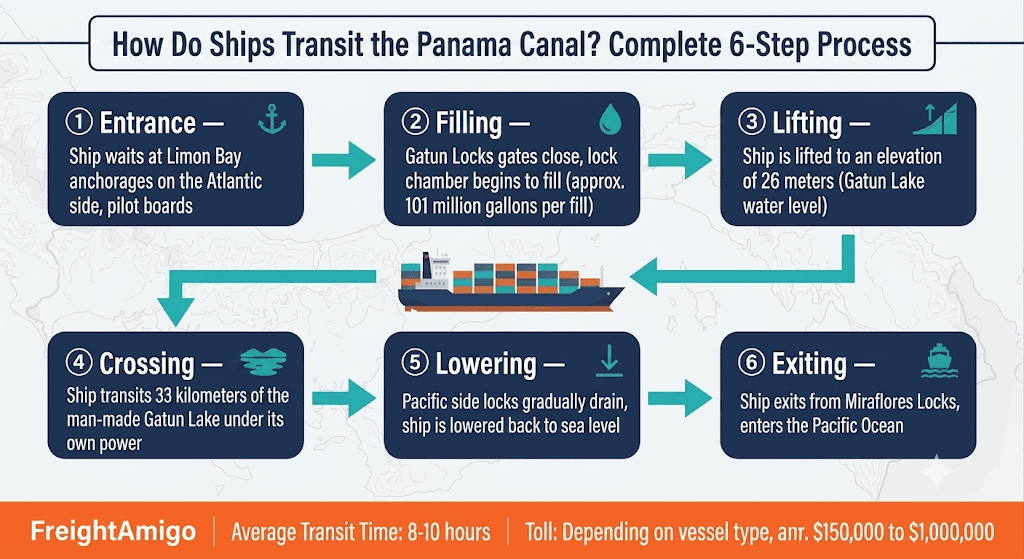
- The Gatun Lock System: Constructing massive three-stage locks that use a hydraulic "elevator" principle to raise and lower vessels
- Gatun Lake: Creating what was then the world's largest artificial lake to provide hydraulic power for the locks
- Controlling the Chagres River: Taming this unpredictable tropical river that had been the nightmare of French engineers
The lock system operates on an elegantly simple principle: after a vessel enters a lock chamber, water levels gradually rise or fall, lifting or lowering the ship to a different elevation without any pump-driven mechanisms — powered entirely by gravity and water pressure.
Key Construction Statistics:
| Metric | Data |
|---|---|
| Peak workforce | Over 75,000 workers |
| Total excavation volume | Approximately 240 million cubic yards |
| Total construction cost | Approx. USD 375 million (over USD 10 billion in today's value) |
| Official completion date | August 15, 1914 |
| Worker deaths during French phase | Over 20,000 |
| Worker deaths during American phase | Approximately 5,600 |
The Panama Canal's Revolutionary Impact on Global Trade Routes
The opening of the Panama Canal in 1914 was the most profound routing revolution in modern shipping history, fundamentally redrawing the map of global maritime trade. It allowed vessels to bypass the long and dangerous voyage around Cape Horn at the southern tip of South America, shortening multiple major shipping lanes by thousands of miles.
Key Shipping Route Distance Savings:
| Route | Old Route (via Cape Horn) | New Route (via Canal) | Distance Saved |
|---|---|---|---|
| New York → San Francisco | 13,000 miles | 5,200 miles | 7,800 miles |
| London → San Francisco | 14,000 miles | 7,900 miles | 6,100 miles |
| New York → Australia | 13,700 miles | 10,000 miles | 3,700 miles |
| Shanghai → New York | 16,000 miles | 10,500 miles | 5,500 miles |
These dramatic reductions in distance translated directly into fuel cost savings, shorter voyage times, and improved vessel turnaround rates. These benefits drove exponential growth in global trade volumes throughout the 20th century and established the framework for major commercial shipping lanes between the Pacific and Atlantic.
For today's shippers, the canal's routing advantage remains the top priority when calculating transoceanic shipping costs. FreightAmigo's digital platform enables real-time comparison of costs and transit times between routes via the Panama Canal and other alternatives, helping clients make optimal decisions.
Expansion and Modernization: From Panamax to Neo-Panamax
The history of the Panama Canal's expansion is, at its core, a history of continuously breaking through global vessel design specifications. Each upgrade to the canal directly responded to the shipping industry's pressing demand for greater carrying capacity.
Three Major Expansion Phases:
- 1930s–40s: Plans to add a third set of locks were drawn up, but construction was halted by the outbreak of World War II
- 1950s–60s: The Gaillard Cut widening project allowed larger vessels to transit in both directions simultaneously
- 2007–2016: A landmark USD 5.25 billion expansion added a third, wider, and deeper set of locks
Core Achievements of the 2016 Expansion:
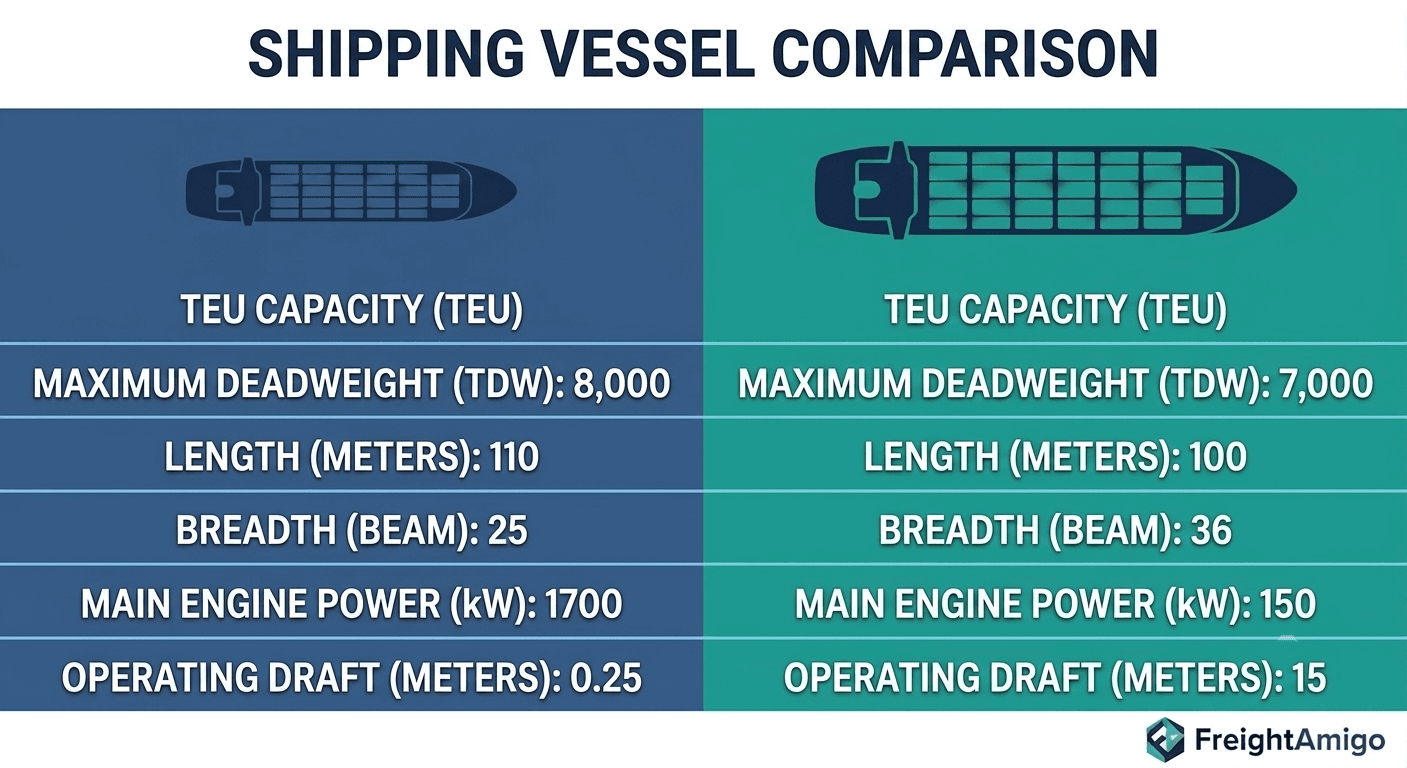
- New lock chamber length: 427 meters (vs. 304 meters previously)
- New lock chamber width: 55 meters (vs. 33.5 meters previously)
- Capability to accommodate Neo-Panamax vessels with a maximum capacity of 14,000 TEU
- Canal-wide annual transit capacity nearly doubled
- New direct transpacific–transatlantic routing possibilities opened for the world's largest container ships
This expansion had a far-reaching impact on the global shipping landscape. U.S. East Coast ports — including New York, Savannah, and Baltimore — immediately launched deep-water port expansion projects to accommodate the super-large vessels that could not pass through the old locks.
The Panama Canal in 2026: Its Critical Role Today
Entering 2026, the Panama Canal has not been marginalized by modern technology — on the contrary, it has become increasingly indispensable as global trade volumes continue to grow. It handles approximately 5% of the world's maritime trade annually and serves as the core corridor connecting Asian manufacturing with North American markets.
Key Panama Canal Operating Data for 2026:
- Average annual vessel transits: over 14,000
- Service routes: over 140 maritime lanes connecting 160 countries
- Annual revenue: over USD 2.5 billion
- Top transit user nations: United States, China, Japan, Chile, South Korea
- Primary cargo types: containers, liquefied petroleum gas (LPG), vehicles, grain, chemicals
For Asia–U.S. East Coast trade, the Panama Canal is virtually the only direct option. Regional trade between Central America, South America, and Asia also relies heavily on the canal. Its strategic importance extends well beyond purely commercial considerations into the realm of geopolitics and global security.
As a digital freight platform deeply integrated with global shipping data, FreightAmigo processes a large volume of freight inquiries and bookings transiting the Panama Canal daily. Our data shows that between 2025 and 2026, demand for LPG and grain cargo through the canal has been growing at the fastest rate.
Environmental Sustainability and Climate Adaptation Strategies
The most severe long-term challenge facing the Panama Canal does not come from competitors — it comes from climate change. The canal's lock system depends on freshwater from Gatun Lake, and shifting rainfall patterns driven by climate change are now threatening this vital resource.
The 2023–2024 drought crisis served as a stark warning: canal authorities were forced to restrict vessel draft depths, requiring some large ships to offload part of their cargo before transiting, causing serious congestion and driving up costs.
Sustainability Initiatives Implemented by the Panama Canal Authority (ACP):
- Water conservation technology: New lock chambers are equipped with water-saving basins that recover approximately 60% of the water used in each lock operation
- Reforestation programs: Large-scale tree-planting initiatives in the canal watershed to maintain the water-retention capacity of the catchment area
- Clean fuel incentives: Toll discounts offered to vessels using clean fuels such as LNG (liquefied natural gas)
- Wildlife conservation: Establishment of ecological reserves in areas adjacent to the canal to protect Panama's biodiversity
- Climate adaptation research: Collaboration with international institutions to study water resource management strategies beyond 2050
These environmental initiatives are closely aligned with FreightAmigo's core commitment to promoting sustainable supply chains. Our platform has begun integrating carbon emission calculation tools, helping clients factor environmental costs alongside traditional metrics such as price and transit time when making shipping decisions.
Shipping Cost Comparison: Panama Canal vs. Alternative Routes
Choosing the right shipping route is one of the most critical decisions for controlling international logistics costs. The comparison table below analyzes the differences in cost, transit time, and applicable scenarios between the Panama Canal and major alternative routes, for reference in 2026 logistics planning.
| Comparison Dimension | Panama Canal | Suez Canal | Arctic Route | Cape Horn Route |
|---|---|---|---|---|
| Primary Service Lanes | Asia–U.S. East Coast | Intra-Americas | Asia–Europe–U.S. East Coast | Asia–Europe (Northern) | Asia/Europe–South America/North America |
| Average Transit Toll (Large Vessel) | USD 150K–USD 1M | USD 500K–USD 700K | No fixed rate established | No toll |
| Additional Time Saved | Up to 21 days (vs. Cape Horn) | Up to 14 days (vs. Cape of Good Hope) | Up to 15 days (vs. Suez) | N/A (baseline route) |
| Large Vessel Suitability | Neo-Panamax compatible | Ultra-large vessels compatible | Seasonal restrictions apply | No size restrictions |
| 2026 Security Status | Stable | Affected by Red Sea tensions | Ice navigation risk | Stable |
| Environmental Impact | Moderate | Moderate | High (icebreaking damages ecosystems) | High (longest voyage distance) |
| Climate Dependency Risk | Drought-season draft restrictions | Low | High (unpredictable glacier melt) | Low |
| FreightAmigo Recommendation | 5 Stars | 4 Stars | 2 Stars | 3 Stars |
2026 Special Advisory: The 2023–2024 Red Sea crisis caused a large number of Asia–Europe vessels to reroute around the Cape of Good Hope, which in the short term has also increased the attractiveness of the Panama Canal for Asia–Americas trade lanes. Please use the FreightAmigo platform to access the latest real-time quotes.
Future Challenges and Opportunities for the Panama Canal
Looking ahead to 2030 and beyond, the Panama Canal will continue to evolve in a complex environment defined by both significant opportunities and formidable challenges. Geopolitics, climate change, technological innovation, and the restructuring of global trade patterns will all profoundly shape the canal's role.
Key Future Challenges:
- Climate and water resource crisis: If global warming continues, increasing drought frequency will threaten normal operations
- Rising competition from alternative routes: The Suez Canal, Arctic routes, and a proposed alternative canal through Nicaragua
- Adaptation pressure from ultra-large vessels: The latest generation of Ultra Large Container Vessels (ULCVs) already exceed Neo-Panamax limits
- Geopolitical risk: Regional political stability and the delicate evolution of U.S.–China–Panama trilateral relations
Core Future Opportunities:
- Continued growth in Asia–Latin America trade: China–Latin America trade volumes are expected to continue expanding rapidly through 2030
- LPG and LNG energy trade: Growing demand for North American shale gas exports to Asia is driving rapid growth in relevant vessel types
- Digitalization and smart operations: AI-assisted scheduling and digital transit pass systems are already improving transit efficiency
- Possibility of a fourth lock set: Research is already underway exploring whether a fourth set of ultra-large locks could be added in the future
FreightAmigo continuously monitors these trends and integrates the latest routing information in real time into our digital platform, ensuring clients can always make the best routing decisions no matter the circumstances.
Frequently Asked Questions (FAQ)
The following are the most frequently asked high-intent questions about the Panama Canal in 2026 from logistics professionals and importers/exporters, covering tolls, vessel restrictions, alternative routes, and more.
How are Panama Canal tolls calculated?
Panama Canal tolls are calculated based on vessel type, tonnage, cargo volume, and which set of locks is used. Container ships are typically charged per TEU, with tolls for large vessels ranging from USD 150,000 to USD 1 million per transit. Rates are reviewed and adjusted annually by the Panama Canal Authority (ACP).
Which vessels can transit the Panama Canal in 2026?
The canal currently accommodates three size categories: original Panamax vessels (maximum beam 32.3 m), Neo-Panamax vessels (maximum beam 49 m, using the new locks), and certain bulk carriers. Ultra Large Container Vessels (ULCVs) exceeding 49 meters in beam or 427 meters in length cannot transit.
How long does it take to transit the Panama Canal on average?
A vessel transiting from one end to the other takes an average of 8 to 10 hours. However, factoring in waiting time at anchorage, total time at the canal can extend to 24 to 48 hours, and potentially longer during peak seasons or special circumstances.
How did the 2023–2024 drought affect Panama Canal operations?
The severe drought in late 2023 drove Gatun Lake water levels to historic lows, forcing authorities to restrict maximum vessel draft depths and reduce the daily number of transits. This caused serious backlogs, with transit delays exceeding three weeks and shipping costs on some lanes rising by over 30%.
Which is better for Asia to U.S. East Coast freight — the Panama Canal or the Suez Canal?
For freight from Asia to U.S. East Coast ports such as New York and Savannah, the Panama Canal is typically the preferred choice due to its shorter voyage distance and the absence of regional political security risks. The Suez Canal is better suited for Asia–Europe or Mediterranean routes.
Who owns and operates the Panama Canal?
Since December 31, 1999, the Panama Canal has been fully owned and operated by the Republic of Panama, managed day-to-day by the Panama Canal Authority (Autoridad del Canal de Panamá, ACP). It is no longer controlled by any foreign government.
Will the Arctic Route replace the Panama Canal?
Not in the near term. The Arctic route is currently only navigable for a few summer months and requires icebreaker escort, resulting in high operating costs and significant environmental controversy. Although climate warming is gradually extending its navigable season, the Arctic route will not pose a substantive competitive threat to the Panama Canal in 2026.
How does FreightAmigo help businesses optimize Panama Canal shipping routes?
FreightAmigo's digital platform offers real-time quote comparisons across multiple carriers transiting the Panama Canal, end-to-end shipment tracking, digital customs documentation management, and carbon emission calculations — helping businesses achieve the optimal balance between cost, transit time, and sustainability.
Conclusion: Canal Wisdom in the Age of Digital Logistics
More than a century after its completion, the Panama Canal remains the most powerful symbol of human engineering creativity and global commercial will. From the 16th-century dreams of Spanish explorers, to the tragic failure of French engineers, to the historic completion under American leadership, this 77-kilometer waterway rewrote the map of global trade.
Entering 2026, the canal stands at a new crossroads. The water resource threat from climate change, the complex chess game of geopolitics, and the relentless challenge of ever-larger vessels all demand that canal operators face the future with greater courage to innovate.
For FreightAmigo, the Panama Canal is not merely a geographical node — it is a microcosm of global supply chain resilience. The greatest lesson we draw from the canal's century of history is this: truly excellent logistics solutions must simultaneously possess technological innovation, strategic foresight, and the capacity to continuously adapt to change.
This is the core commitment of the FreightAmigo digital freight platform: connecting the world through technology, driving decisions through data, and powering efficiency through innovation — helping every client find the optimal route through the complex seas of global trade.
If you would like to immediately compare international courier, air freight, ocean freight, rail, and trucking logistics options transiting the Panama Canal, visit the FreightAmigo digital freight platform to obtain the most competitive quotes in real time and take control of your shipping costs.
Last updated: 2026 | Author: FreightAmigo Logistics Research Team | Sources: Panama Canal Authority (ACP), UNCTAD Shipping Reports, World Bank Trade Data