A General Rate Increase (GRI) is the amount ocean carriers add to base freight rates on specific trade lanes to offset rising costs or stronger demand. In 2026, GRIs remain a core pricing tool used by major lines such as COSCO, Hapag-Lloyd, CMA CGM and others. They apply mainly to containerized cargo and sit separately from fuel or peak-season surcharges.
GRIs can be announced quarterly or more often when market conditions shift. The size varies by route, container type and equipment. Understanding the term helps importers and exporters protect margins in a still-volatile post-pandemic freight market.
Carriers file most U.S.-bound GRIs with the Federal Maritime Commission at least 30 days ahead. The final implemented amount often ends lower than the filed maximum after market feedback.
How GRI Charges Work: The Mechanism Explained
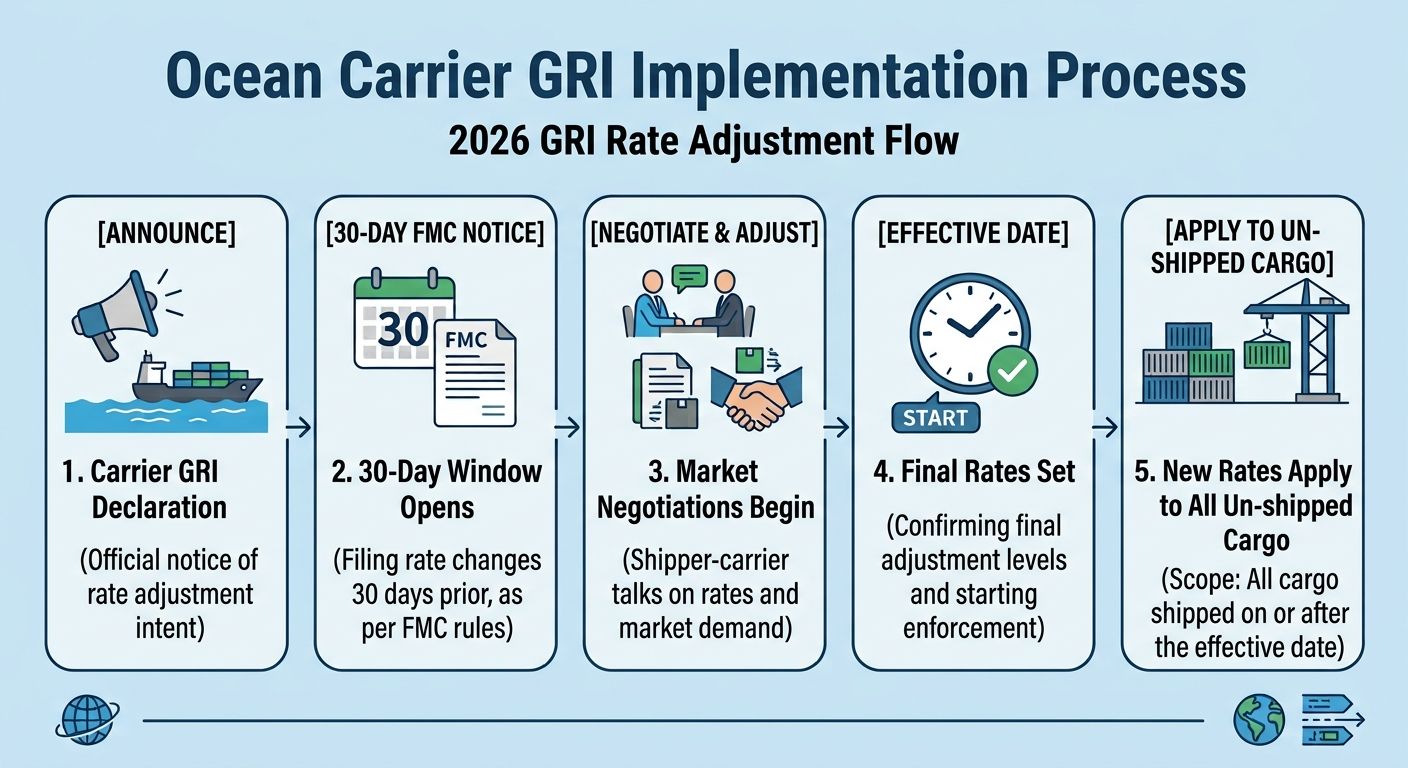
Carriers announce a GRI, file it if required, then apply the increase to cargo that has not yet been loaded. The process follows a clear sequence that shippers must track carefully.
Carrier publishes the planned increase and effective date.
For U.S. trades, a 30-day notice goes to the FMC.
During the notice window, carriers may reduce (but not raise) the amount.
Once active, the new rate applies on a “vessel at time of sailing” or gate-in basis.
All cargo still ashore on the effective date pays the higher rate, even if booked earlier.
This “VATOS” rule makes timing critical. A booking made on 28 August that loads on 2 September will carry a 1 September GRI.
Key Factors Driving GRI Announcements in 2026
Demand spikes, capacity discipline, fuel volatility and geopolitical tension remain the main triggers for GRIs this year. Carriers watch several indicators before filing.
Strong Asia–North America or Asia–Europe volumes
Blank sailings that tighten effective capacity
Rising bunker prices or longer routings around conflict zones
Port congestion or labor shortages
Need to restore margins after soft periods
In mid-2026, carriers such as COSCO filed multi-thousand-dollar GRIs on Far East–U.S. trades while Hapag-Lloyd targeted Indian Subcontinent and Middle East lanes. Market conditions ultimately decide how much of each filing sticks.
Impact of GRI on Your Freight Costs and Business
A single GRI can raise the all-in cost of a 40-foot container by several hundred to several thousand dollars, directly hitting landed cost and cash flow. The effects ripple across the supply chain.
Businesses face:
Sudden jumps in per-container spend
Harder budgeting and forecasting
Pressure to raise product prices
Possible renegotiation of customer contracts
Cash-flow strain when increases arrive mid-cycle
Frequent GRIs also push companies to review sourcing locations, inventory buffers and modal mix. Those who ignore the announcements often absorb the full impact.
GRI vs Other Surcharges: Critical Differences
GRI adjusts the base ocean rate itself, while most other charges sit on top as temporary or cost-recovery fees. Knowing the distinction prevents double-counting and improves negotiation.
Charge Type
What It Adjusts
Typical Duration
2026 Example Trigger
GRI
Base freight rate
Until next adjustment
Demand or cost recovery
Bunker / Fuel Surcharge
Fuel cost recovery
Monthly or floating
Oil price swings
Peak Season Surcharge
Capacity premium
Seasonal (Q3–Q4)
Holiday demand
Emergency / Congestion
Temporary disruption
Short-term
Port strikes or canal issues
War Risk / Security
Specific risk premium
Event-driven
Regional conflicts
GRIs are permanent until the next filing. Surcharges can appear and disappear faster.
Strategies to Mitigate GRI Effects on Shipping Budgets
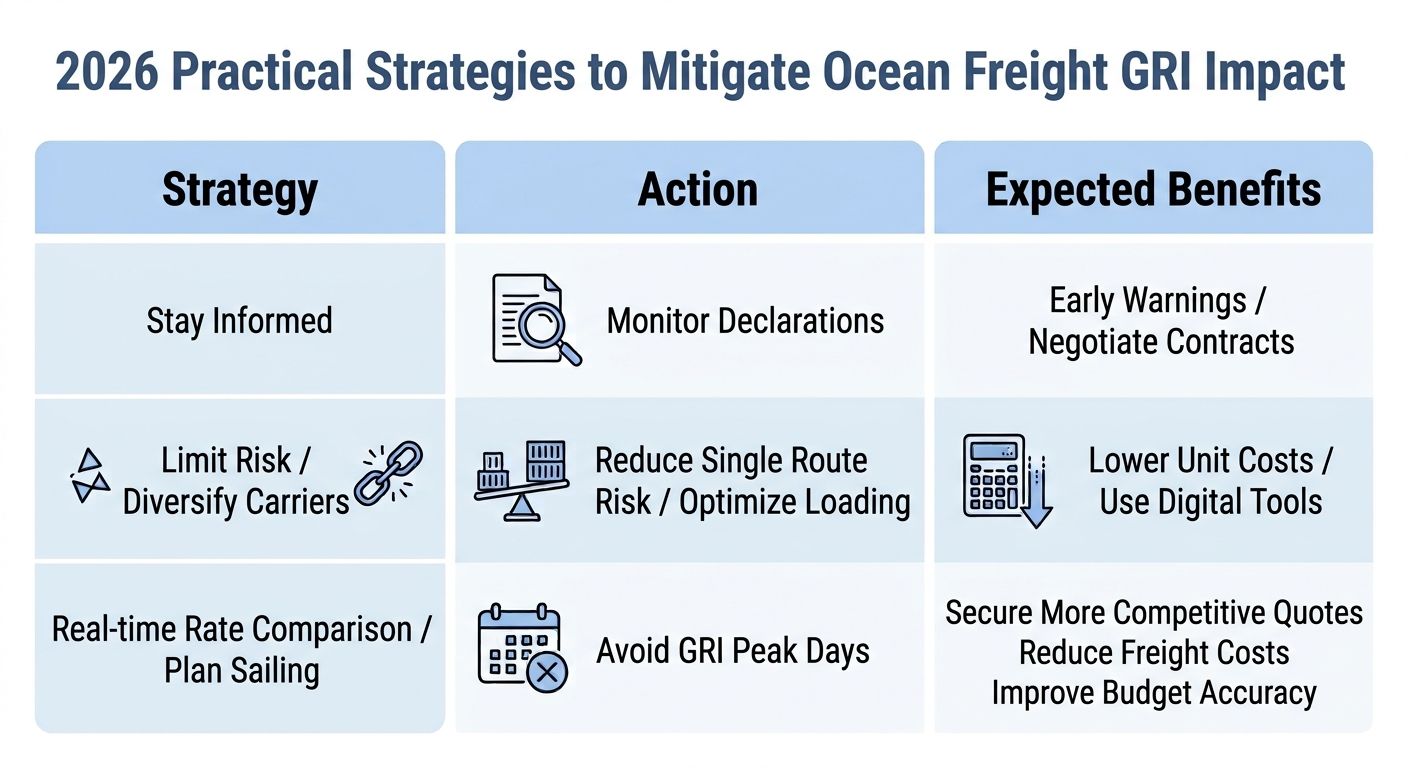
Proactive shippers treat GRIs as a planning input rather than a surprise cost. Several practical steps reduce exposure.
Monitor carrier filings and industry indexes weekly.
Negotiate multi-month or annual service contracts that cap or share GRI risk.
Diversify across carriers and trade lanes.
Accelerate or delay sailings around known effective dates when possible.
Maximize container utilization and consolidate shipments.
Compare ocean, air and rail options on a total-cost basis.
Use digital platforms for real-time rate visibility.
Build modest contingency into freight budgets.
Long-term relationships with forwarders often yield earlier warnings and better leverage during the 30-day notice window.
Real-World 2026 GRI Examples from Major Carriers
Carriers continued active GRI filings throughout 2026 on key eastbound trades. Representative examples illustrate the scale shippers face.
COSCO filed a July 2026 GRI on Far East–U.S./Canada trades reaching up to USD 3,000–3,798 per container depending on size.
Hapag-Lloyd applied a USD 1,000 per container GRI/GRA from Indian Subcontinent and Middle East origins to North America, effective mid-August 2026 on a gate-in basis.
Multiple lines filed successive Transpacific increases earlier in the year, some in the USD 1,000–3,000 range per 40-foot unit.
Final implemented levels frequently settle below the maximum filed amounts once market reaction is clear. Always verify the live tariff for your specific shipment.
How FreightAmigo Helps You Navigate GRI Challenges
FreightAmigo’s digital freight platform gives shippers real-time visibility and options that blunt the impact of successive GRIs. The tools address the exact pain points created by rate volatility.
Key advantages include:
Instant door-to-door rate comparisons across ocean, air, rail and express
Transparent breakdowns that surface potential GRI exposure
Access to a broad carrier network so alternatives remain available
Automated documentation that lowers admin cost
24/7 expert support for negotiation timing and routing advice
Data insights that highlight lower-cost sailing windows
By centralizing quotes and bookings, teams respond faster when a new GRI is announced and protect more of their margin.
Frequently Asked Questions About GRI in Shipping 2026
What does GRI stand for in ocean freight?
GRI stands for General Rate Increase. It is the amount carriers add to base ocean freight rates on specific trade lanes, usually to recover higher operating costs or to respond to stronger demand.
How much notice do carriers give before a GRI takes effect?
In the United States, carriers must file most GRIs with the Federal Maritime Commission at least 30 days before the effective date. Elsewhere the notice period varies, but major lines typically give several weeks of advance warning.
Does a GRI apply to cargo already booked?
Yes, if the cargo has not yet been loaded or gated in by the effective date. The industry standard is “vessel at time of sailing” or gate-in, so earlier bookings can still incur the new rate.
Is a GRI the same as a peak season surcharge?
No. A GRI permanently raises the base rate until the next adjustment, while a peak season surcharge is a temporary add-on applied only during high-demand periods.
Can shippers negotiate the GRI amount down?
Large volume shippers and forwarders frequently negotiate reductions during the notice window. Smaller shippers have less leverage but can still benefit by consolidating volumes or switching carriers.
How often do GRIs occur in 2026?
Frequency depends on the trade lane and market conditions. Busy eastbound routes from Asia have seen multiple filings in a single year, while quieter lanes may see only one or two.
What container types are affected by a typical GRI?
Most GRIs cover dry, reefer and special equipment in 20-foot, 40-foot and high-cube sizes. The exact amount often differs by equipment type and is stated in the carrier’s filing.
How can digital platforms help manage GRI risk?
Platforms such as FreightAmigo surface live rates from multiple carriers, highlight upcoming effective dates and enable quick comparison of alternative routes or modes, helping teams act before the higher rate locks in.
Take Control of Your 2026 Freight Costs Today
GRIs will continue to shape ocean freight pricing throughout 2026. Shippers who track announcements, diversify options and use real-time digital tools consistently protect more of their budget than those who react after the fact.
FreightAmigo combines transparent rate comparison, broad carrier access and expert support so you can respond to every new GRI with confidence. Stay ahead of the next increase and keep your supply chain competitive.
For expert guidance, Book a Demo with FreightAmigo.
GRI refers to a base rate increase applied by ocean carriers. It responds to demand or cost factors and applies to containerized cargo separately from other surcharges.
How are GRI charges implemented in shipping?
Carriers announce increases 30 days in advance to the FMC. They may implement or reduce the amount but cannot exceed the announced figure, and the new rate applies to cargo not yet loaded.
What effects does GRI have on businesses?
GRIs cause sudden cost increases and budgeting difficulties. They can pressure pricing, cash flow, and long-term contracts while prompting supply chain reviews.
What strategies help businesses manage GRI impacts?
Businesses should monitor announcements, negotiate contracts, and diversify carriers. Additional steps include optimizing shipments, exploring alternatives, and using technology for rate comparisons.
How can FreightAmigo assist with GRI challenges?
FreightAmigo provides real-time rate comparisons across modes. It offers transparent pricing, a broad carrier network, and expert support to identify cost-effective options.
What future trends are predicted for GRI?
Continued rate volatility and greater transparency are expected. Technology platforms and long-term contracts will likely play larger roles in managing changes.
Why should businesses stay informed about GRIs?
Awareness allows timely preparation and negotiation. It supports better budgeting and strategic adjustments in response to fluctuating freight costs.





















 Global Popular RoutesTop sea & air shipping lanes
 Special OfferLimited-time shipping promotions


 Express
 Document
 Parcel - Air/Sea
 Container
 Relocation