EU Safeguard Tariffs and 2027 Import Curbs
The shifting landscape of international commerce is placing pressure on European importers. As global dynamics evolve, the European Union is preparing to adjust its trade defense mechanisms to shield its internal market. Businesses operating across the continent must analyze these changes to ensure regulatory compliance and maintain supply chain continuity. Understanding the upcoming regulatory changes, particularly those scheduled for early 2027, is essential for maintaining a competitive edge.
How Safeguard Tariffs Protect European Industries and Markets
To shield domestic markets from sudden, disruptive shifts in global trade, the European Commission employs safeguard tariffs as primary trade-defense instruments. These safeguard measures are designed to protect domestic manufacturers from sudden, massive surges in imports that threaten local industries. According to trade policy developments reported by Bloomberg in their analysis of the EU plans to introduce import curbs in early 2027, these trade safeguards are structured to comply with World Trade Organization (WTO) rules. This ensures that while the European Union tariff policy remains defensive, it operates within established multilateral frameworks.
Unlike targeted anti-dumping actions, safeguard tariffs apply globally to all countries outside the European Economic Area (EEA). These measures allow the EU to manage trade volumes through quantitative import quotas or tariff-rate quotas. Under these EU tariff rules, imports exceeding specified thresholds face additional duties, allowing the EU to implement unilateral restrictions without the explicit consent of exporting nations. This strategic application of EU trade protectionism aims to prevent a potential "China Shock 2.0" driven by subsidized, low-cost goods, thereby stabilizing the domestic marketplace and preserving the competitiveness of European manufacturers.
The Direct Impact of Proposed EU Import Curbs in 2027
The introduction of proposed EU import curbs in early 2027 represents a significant escalation in regional trade restrictions. These upcoming import restrictions and import caps will restrict access to key industrial inputs and consumer goods, disrupting established supply chains and impacting product availability across multiple sectors. Importers must prepare for restricted volumes and increased operational complexity as these import curbs are phased in.
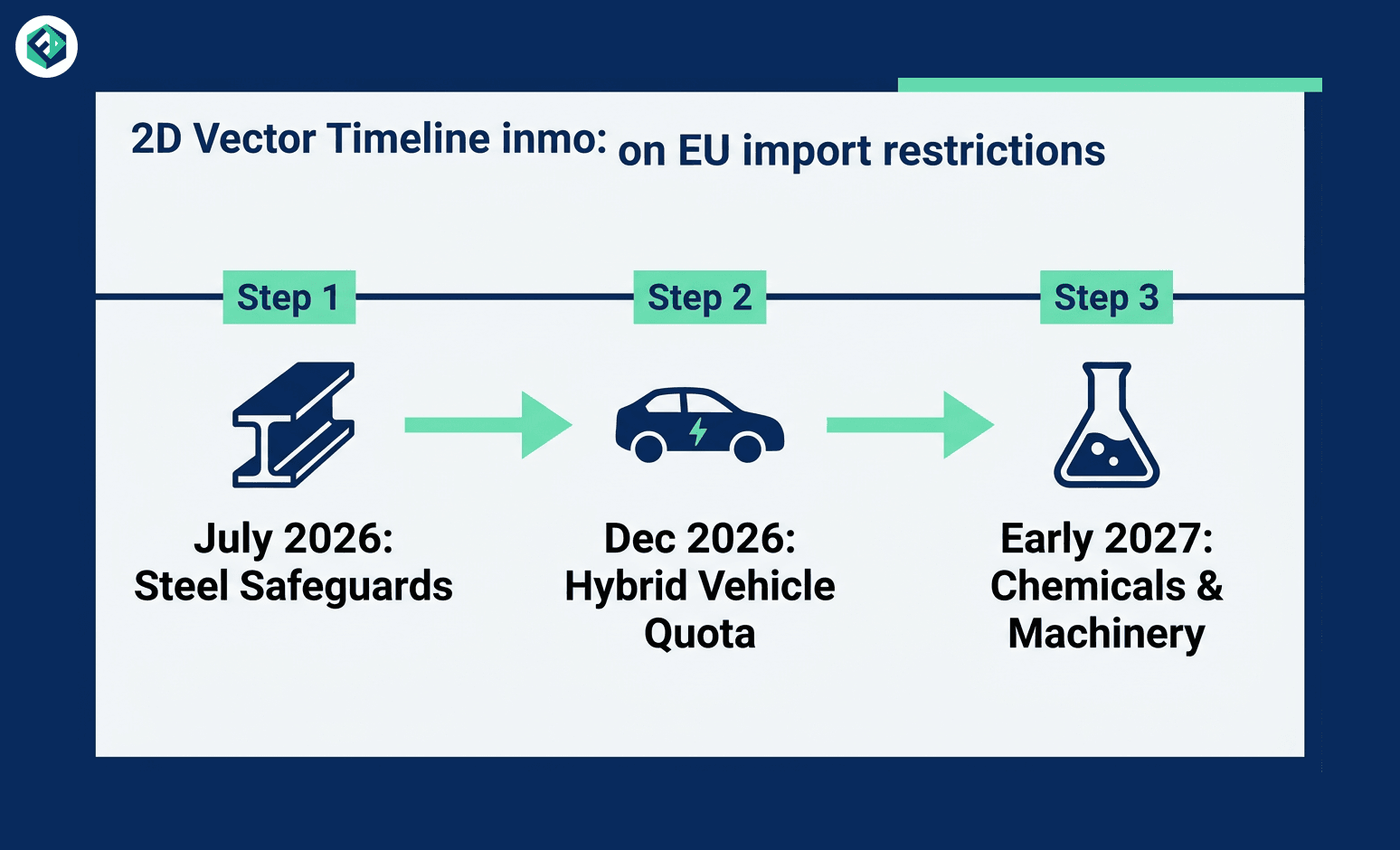
The timeline of these interventions indicates a progressive tightening of market access. To illustrate the scope of these measures, the following table outlines the current and upcoming European import restrictions:
| Product Category | Measure Type | Implementation Date | Key Details / Out-of-Quota Rates |
|---|
| Steel Products | Steel Safeguard Regime | July 1, 2026 | Out-of-quota duties set at 50% to protect local steel manufacturers. |
| Hybrid Vehicles | Provisional Quota Agreement | December 1, 2026 | Strict quota cap set at 350,000 units for imported Chinese hybrid cars. |
| Chemicals & Machinery | Proposed Safeguard Tariffs | Early 2027 | Expanded import caps and additional tariffs targeting critical industrial sectors. |
As these policies take effect, businesses will face immediate challenges. The provisional quota agreement on hybrid vehicles, limiting imports to 350,000 units starting December 1, 2026, serves as a clear precedent for how the EU intends to deploy quantitative restrictions to manage market share. Supply chain managers must closely monitor import volumes to avoid the severe cost penalties associated with out-of-quota shipments.
Strategies for Managing Rising EU-China Trade Tensions
Navigating the complexities of EU-China trade requires a deep understanding of the structural imbalances defining the relationship between these two economic powerhouses. The EU-China bilateral trade gap has widened significantly over recent years, prompting European policymakers to seek corrective measures. The trade deficit with China, which exceeded 360 billion euros in 2025 and is projected to approach or exceed 400 billion euros in 2026, has become a central driver of political and economic friction.
To manage rising EU-China trade tensions, businesses must move beyond relying on the hope of successful bilateral negotiations. While diplomatic efforts continue, the reality of China-EU trade relations suggests that trade barriers are likely to persist or intensify. Importers must integrate geopolitical risk assessments into their long-term strategic planning. This involves evaluating the vulnerability of their product portfolios to potential retaliatory measures and establishing contingency plans that account for sudden shifts in tariff structures. By actively managing these risks, enterprises can protect their operations from the volatility inherent in the current EU trade deficit with China.
Addressing Key Challenges Facing the Chemicals Import Sector
The chemicals import sector is facing some of the most stringent regulatory hurdles under the newly proposed trade frameworks. Sourcing chemical product imports from external markets will require compliance with rigorous European environmental and safety standards, alongside new tariff burdens. For companies engaged in importing chemicals, these challenges extend beyond simple duty increases to encompass complex administrative compliance.
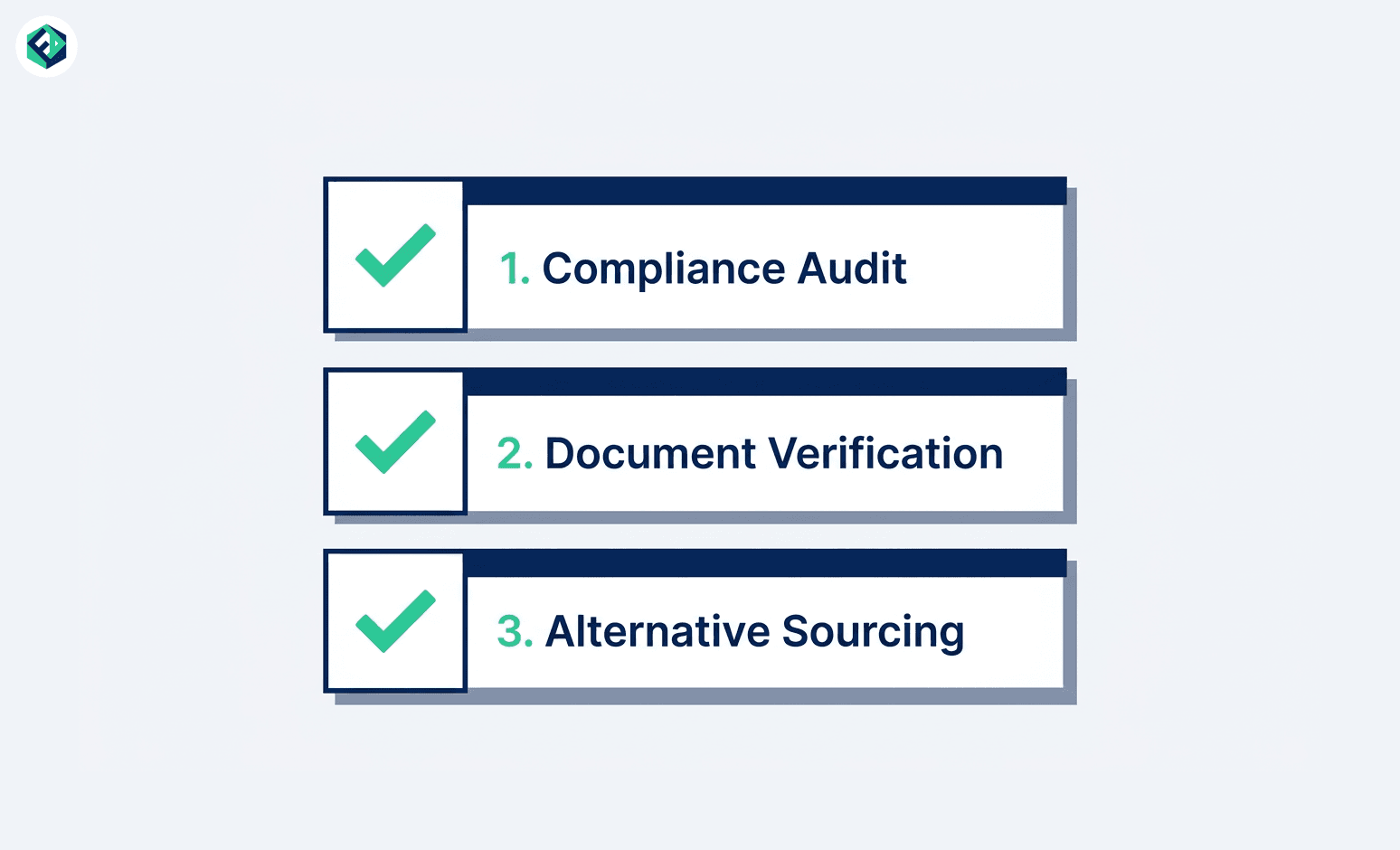
These new trade restrictions are expected to drive up the cost of critical raw materials, directly impacting downstream European manufacturers who rely on imported chemical components. To navigate these challenges, businesses must focus on optimizing their supply chain workflows. This includes performing detailed compliance audits, ensuring all documentation is immaculate to avoid customs delays, and identifying alternative chemical suppliers in non-impacted jurisdictions. Sourcing raw materials from alternative regions can help mitigate the risks of supply disruptions and stabilize procurement costs in a volatile regulatory environment.
Navigating New Machinery Import Regulations in Europe
The European industrial sector is also preparing for new machinery import regulations in Europe, which will introduce stricter compliance standards for global manufacturers. Importing machinery from China has historically been a cost-effective solution for European factories looking to upgrade their production capabilities. However, upcoming machinery import regulations will require thorough verification of technical specifications and origin documentation to ensure compliance with updated EU safety and environmental directives.
In addition to machinery import challenges, the consumer goods sector must navigate furniture import restrictions. Sourcing furniture imports from China will face increased scrutiny, with new compliance measures designed to protect domestic wood and manufacturing industries. For businesses importing furniture to EU markets, this means adapting to more complex customs declarations and potential tariff increases. Global manufacturers must proactively audit their production processes and supply chains to ensure their products meet these evolving European standards, preventing costly delays at the border and maintaining steady equipment supply lines.
How to Effectively Manage and Calculate Total Landed Cost
With the introduction of new tariffs and quantitative restrictions, maintaining profitability requires a rigorous approach to managing and calculating total landed cost. Importers can no longer rely on simple freight rate estimates; they must understand every cost component associated with moving goods from the factory floor to the final destination. This comprehensive view of landed cost includes the original purchase price, international freight charges, insurance, local handling fees, and, crucially, customs duties and taxes.
Accurate import duty calculation is essential for budgeting and financial planning, especially as new trade tariffs take effect in 2027. To manage these shifting expenses, our digital logistics platform provides the tools needed to obtain instant duty, tariff, and HS insights. By automating complex import tax calculations, businesses can minimize manual errors, verify compliance, and secure smoother cross-border clearance. To accurately project your total landed costs, you can plan ahead by using our Import Duty Calculator.
Reducing Supply Chain Risks in Trade with Digital Logistics
Building resilience in international trade requires a proactive shift toward supply chain diversification. Relying on a single sourcing destination exposes businesses to severe disruptions when trade policies shift. By diversifying supply chains and exploring alternative sourcing strategies, particularly in rapidly growing manufacturing hubs in Southeast Asia, importers can insulate their operations from localized geopolitical shocks and tariff increases.
- Conduct a comprehensive vulnerability assessment of current sourcing channels to identify high-risk dependencies.
- Identify and pre-qualify alternative suppliers in regions not subject to the upcoming EU safeguard tariffs, such as Vietnam, Malaysia, or India.
- Utilize digital freight platforms to obtain real-time freight quotes and secure cargo capacity across diverse shipping routes.
- Implement continuous monitoring of trade policy updates to anticipate regulatory changes and adjust logistics strategies proactively.
Navigating these complex diversification strategies requires professional oversight and flexible logistics coordination. Our digital platform simplifies the transition by pairing advanced tech tools with dedicated freight booking and logistics consultation. Whether you need to compare multimodal options, establish door-to-door routes, or plan shipments under strict Incoterms, our experts are ready to assist. To receive custom support for your supply chain diversification, connect with us to secure a Tailored Solution today.
FAQ
How will the upcoming safeguard tariffs impact domestic manufacturing competitiveness in Europe?
They are designed to stabilize the domestic marketplace and protect local manufacturers from sudden import surges. By implementing quantitative import quotas or tariff-rate quotas, the EU aims to prevent market disruption from subsidized, low-cost goods.
What do the proposed EU import curbs mean for Chinese hybrid vehicles and consumer products?
They will result in strict volume caps and potential cost penalties for out-of-quota shipments. For example, a provisional quota agreement starting December 1, 2026, limits Chinese hybrid vehicle imports to 350,000 units, requiring supply chain managers to monitor volumes closely.
Can businesses survive rising EU-China trade tensions without relying solely on bilateral negotiations?
Yes, businesses can navigate these tensions by integrating geopolitical risk assessments into long-term strategic planning. Importers should evaluate product portfolio vulnerabilities to potential retaliatory measures and establish proactive contingency plans.
What specific challenges is the chemicals import sector facing under the new trade restrictions?
The sector faces increased raw material costs and complex administrative compliance requirements. Companies must perform detailed audits to meet rigorous European safety and environmental standards while exploring alternative sourcing in non-impacted areas.
How will the new machinery import regulations in Europe affect global manufacturers and sourcing?
They will require stricter compliance verification and origin documentation for imported equipment and furniture. Global manufacturers must audit their production processes to satisfy updated EU safety and environmental directives to avoid border delays.
What are the most effective strategies for mitigating total landed cost increases caused by new tariffs?
The most effective strategy is to perform accurate import duty calculations using automated digital tools and proper product classification. Understanding every cost component, from freight to customs duties, allows businesses to budget accurately and optimize duty expenses.
How can importers reduce supply chain risks in trade by leveraging digital logistics platforms?
Importers can diversify sourcing channels and access real-time freight monitoring through digital platforms. Platforms like FreightAmigo help businesses find alternative suppliers in regions like Southeast Asia and secure cargo capacity across diverse shipping routes.


























 Global Popular RoutesTop sea & air shipping lanes
 Special OfferLimited-time shipping promotions





 Express
 Document
 Parcel - Air/Sea
 Container
 Relocation