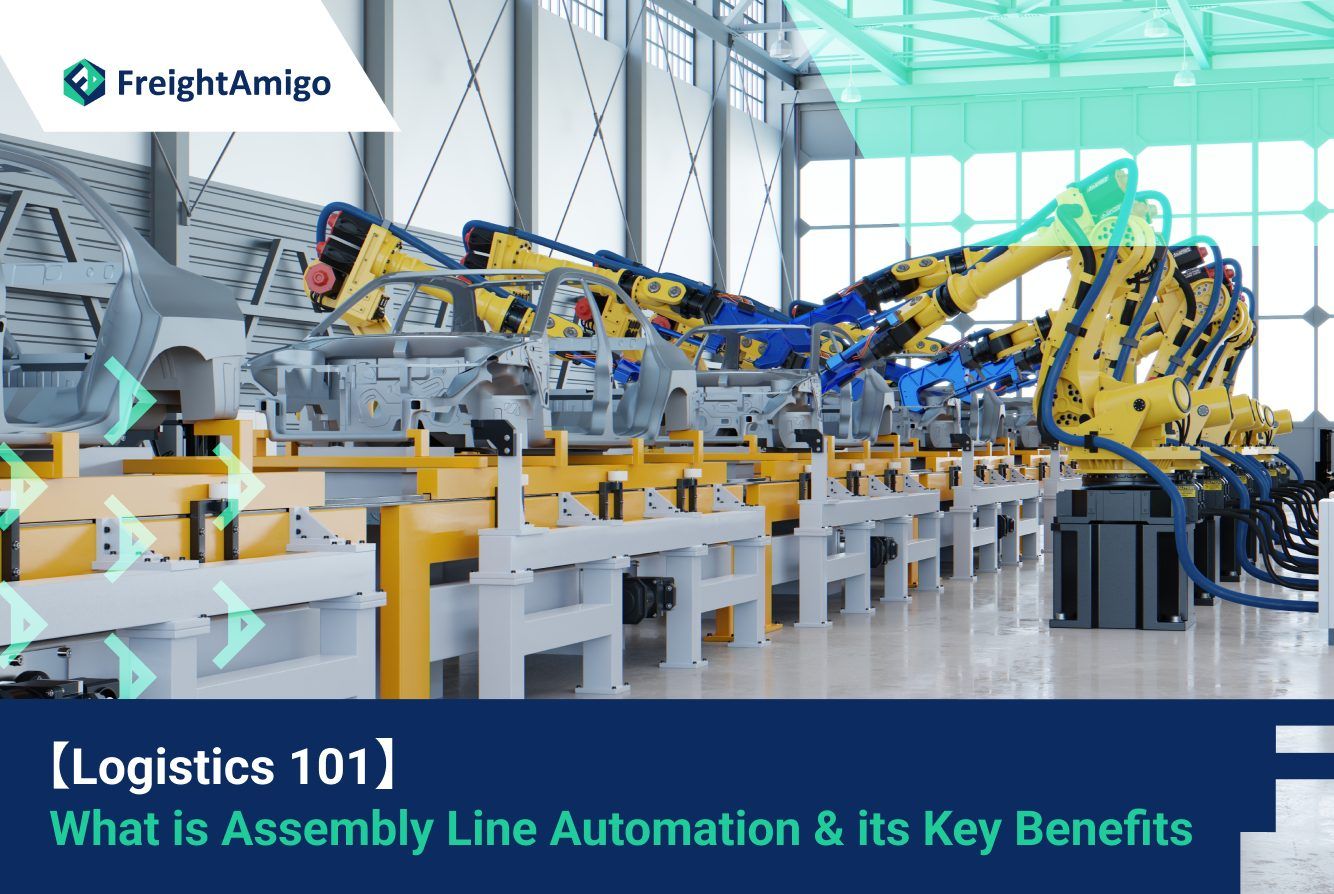
【Logistics 101】What is Assembly Line Automation & its Key Benefits
Assembly line automation has transformed the manufacturing process, revolutionizing production lines and enhancing efficiency. This critical technology has become an integral part of industrial automation, enabling manufacturers to meet the growing demand for cost-effective and high-quality products. In this article, we will explore the concept of assembly line automation, its working principles, benefits, and applications in various industries.
What is Assembly Line Automation?
Assembly line automation involves the use of advanced automated systems to streamline the assembly process. These systems leverage cutting-edge automation technology, including control systems, interfaces, modules, feeders, AGVs (Automated Guided Vehicles), and collaborative robots, to optimize production and ensure maximum efficiency.
The Working Principles of Assembly Line Automation
Automated assembly lines typically consist of a series of interconnected workstations, facilitated by conveyor belts or pallets. Raw materials or components are fed into the production line at one end, while finished products are delivered at the other. Each workstation is specifically designed to perform a particular task, such as assembly, inspection, testing, or packaging.
At the heart of the automated assembly line is the control system, which acts as the brain, overseeing the sequence of operations and monitoring the production process. Collaborative robots, commonly known as “cobots,” work alongside human workers to carry out dangerous, repetitive, or highly precise tasks. Machine vision technology plays a crucial role in defect detection, ensuring the final product meets stringent quality standards.
Key Benefits of Assembly Line Automation
Assembly line automation offers a multitude of benefits that contribute to improved efficiency and increased profitability for manufacturers. Let’s explore some of these advantages:
1. Enhanced Efficiency
Automated production lines can operate at high speeds, significantly reducing cycle time and increasing throughput. This results in heightened productivity, reduced downtime, and lower production costs.
2. Superior Quality Control
Automated assembly systems employ state-of-the-art technology, such as machine vision, to detect defects and ensure consistent product quality.
3. Unmatched Flexibility
Automated production lines can be easily programmed to handle a wide range of products, enabling manufacturers to swiftly respond to shifting customer demands and introduce new products with minimal disruption. This flexibility offers a competitive advantage in fast-paced markets.
4. Cost-Effectiveness
Automated assembly lines significantly reduce labor costs and increase overall operational efficiency. intensive tasks, manufacturers can optimize their production processes and optimize resource allocation. This leads to lower production costs, improved profitability, and a competitive edge in the market.
Applications of Assembly Line Automation
The implementation of assembly line automation extends across various industries, revolutionizing manufacturing operations. Let’s delve into some of the prominent applications:
1. Automotive Industry
In the automotive industry, automated production lines are extensively used to assemble cars and trucks.
2. Medical Device Manufacturing
Robotic assembly systems are widely employed in the medical device industry to produce intricate devices with exceptional precision. Automation ensures sterile and accurate assembly, meeting the stringent quality requirements of medical device manufacturers.
3. Consumer Electronics
Assembly line automation plays a crucial role in the manufacturing of consumer electronics. From smartphones to televisions, automated production lines enable manufacturers to streamline assembly, reduce costs, and maintain product consistency. The integration of automation technology ensures efficient production, enabling manufacturers to meet the growing demand for consumer electronics.
FreightAmigo: Enabling Seamless Collaboration with Assembly Line Automation
In the context of assembly line automation, FreightAmigo offers comprehensive solutions to enhance manufacturing efficiency and streamline logistics processes. in-time delivery, integrating with production systems, and providing real-time supply chain visibility, FreightAmigo facilitates the seamless flow of materials to automated assembly lines.
FreightAmigo optimizes transportation routes and provides scalable logistics solutions, supporting the flexibility and efficiency required by assembly line automation. This collaboration between FreightAmigo and assembly line automation empowers manufacturers to maximize productivity, minimize downtime, and achieve seamless coordination between logistics and production operations.
Conclusion
Assembly line automation has revolutionized the manufacturing industry, enabling manufacturers to streamline production processes, enhance efficiency, and deliver high-quality products.











 Express
 Document
 Parcel - Air/Sea
 Container
 Relocation