Understanding Chargeable Weight in Logistics: A Guide for Air Freight and Sea Freight
In the intricate world of international shipping, unexpected costs can quickly erode profit margins. Imagine preparing a shipment of lightweight electronics from Hong Kong to Europe, only to receive an invoice based not on the actual scale reading but on the space your cargo occupies in the aircraft hold. This is the reality of chargeable weight, a fundamental concept that determines what carriers ultimately bill for transporting goods across air, sea, and land. At FreightAmigo, we have supported hundreds of businesses in navigating these nuances, ensuring they avoid the pitfalls of miscalculated freight expenses.
If you have ever wondered why your shipment invoice exceeds the initial quote or how carriers decide pricing for voluminous but light cargo, you are not alone. Many logistics managers overlook the distinction between gross weight and volumetric calculations until it impacts their bottom line. This comprehensive guide explains what is chargeable weight, details its calculation across transport modes, and provides actionable strategies to manage it effectively. We draw from our extensive experience in Hong Kong, Asia's premier logistics hub, to deliver insights that empower shippers and freight forwarders alike.
What You Will Gain From This Guide
- Clarity on the core differences between actual weight, volumetric weight, and chargeable weight to prevent billing surprises.
- Mode-specific formulas and real-world examples for air freight, sea freight, and other logistics options.
- Practical optimization techniques that can reduce costs while maintaining compliance and efficiency.
| Transport Mode |
Calculation Basis |
Standard Divisor |
Typical Chargeable Scenario |
| Air Freight |
Volume (cm³) / Divisor |
6000 |
Volumetric often exceeds gross for low-density cargo |
| Sea Freight (LCL) |
Weight or Measure (W/M) |
1000 kg = 1 CBM |
Higher of actual tons or cubic meters |
| Courier/Express |
Volume (cm³) / Divisor |
5000 |
Common for parcels where space is premium |
| Trucking |
Weight or Volume |
Varies by carrier |
Focus on truck capacity utilization |
This table illustrates typical industry standards we observe in 2026. Accurate application of these principles helps our clients achieve more predictable logistics budgeting. The primary keyword, chargeable weight, represents the greater of actual gross weight or its volumetric equivalent, forming the basis for carrier invoicing.
What is Chargeable Weight?
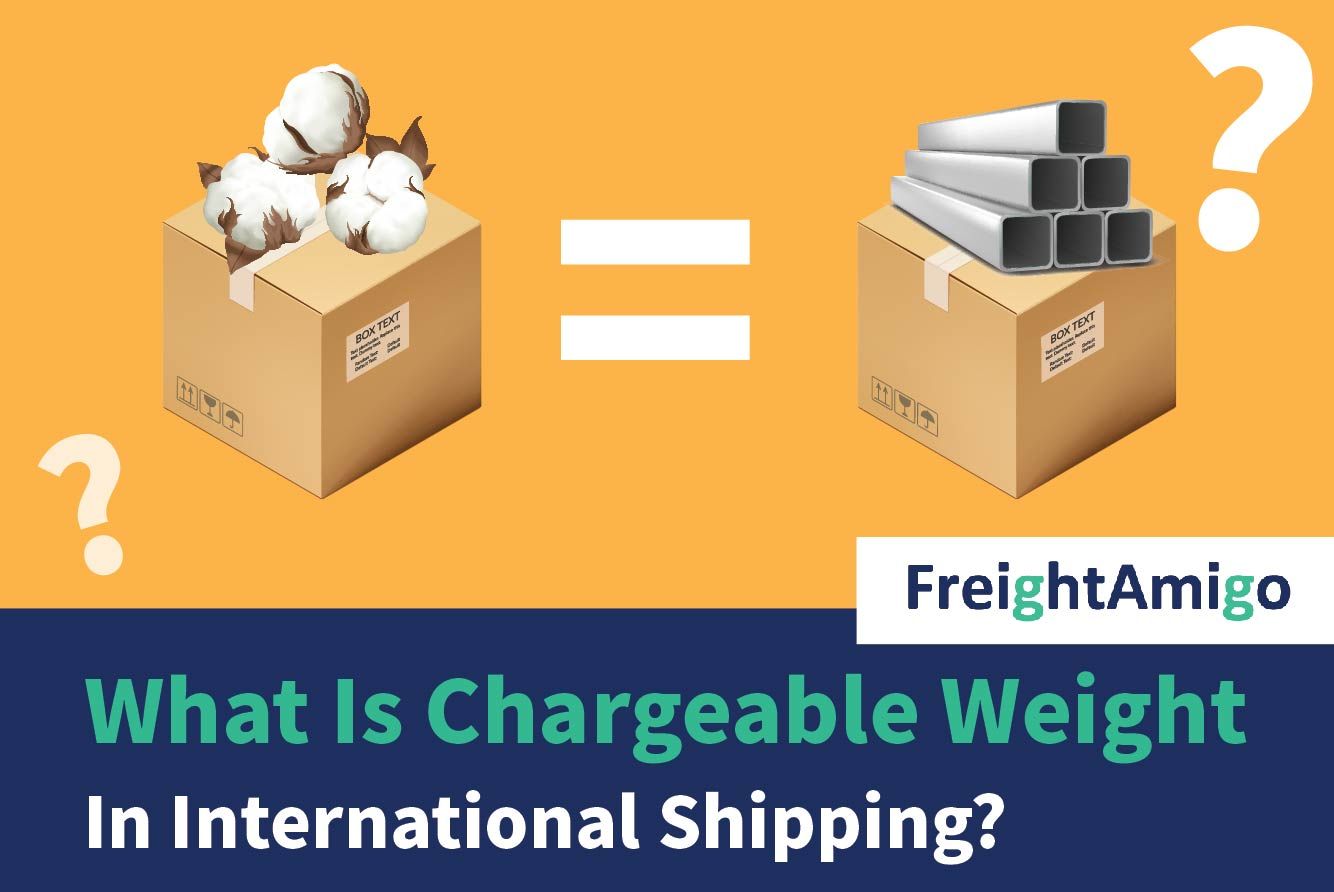
Chargeable weight is the metric carriers use to determine transportation costs, reflecting the greater of a shipment's actual gross weight or its volumetric weight. Every conveyance—whether an airplane, ocean vessel, or truck—has dual constraints of weight and space. Heavy cargo may reach maximum payload before filling the vessel, while light but bulky items consume volume long before hitting weight limits. Consequently, carriers convert volume into a weight equivalent to ensure fair compensation for the resources utilized.
In practice, this means shipping 200 kilograms of compact machinery might be charged on actual weight, whereas 200 kilograms of expanded polystyrene packaging could incur charges based on the space it occupies, potentially doubling or tripling the bill. We frequently encounter this in our work with Hong Kong exporters, where diverse product ranges from electronics to fashion require precise planning.
The term weight charge often appears in documentation as the rate applied to this chargeable figure. Understanding what is chargeable weight enables better forecasting. Our team has seen businesses improve cost accuracy by 25 percent simply by incorporating volumetric estimates early in the quoting process.
Actual Weight Versus Volumetric Weight: Key Differences
Actual weight, also called gross weight, includes the product, packaging, pallets, and any other materials. It is the straightforward measurement obtained from a scale. When submitting initial requests, we advise clients to provide this data accurately, yet our experience shows discrepancies often arise during pickup due to unexpected palletization or additional protective materials.
Volumetric weight, sometimes referred to as dimensional weight, simulates the density of cargo by dividing its volume by a carrier-specific factor. For instance, if a carton measures 100cm x 100cm x 100cm, its volume is 1,000,000 cubic centimeters. Applying the common air freight divisor of 6,000 yields approximately 167 kilograms of volumetric weight. Should this exceed the actual 100 kilograms, the chargeable weight becomes 167 kilograms.
This mechanism explains why feathers cost more to ship than steel per kilogram when space is the limiting factor. In our operations, we emphasize measuring multiple cartons and averaging for consolidated shipments to mitigate variances. By integrating these considerations, businesses can align expectations with reality.
How to Calculate Volumetric Weight Across Modes
Calculation methods vary significantly. For air freight, the International Air Transport Association (IATA) standard typically uses length × width × height in centimeters divided by 6,000. However, certain trade lanes or carriers may apply 5,000 or 7,000, affecting the outcome. We recommend verifying with specific airlines for high-value or time-sensitive shipments.
Sea freight operates on a weight-or-measurement (W/M) basis. Here, one cubic meter is generally equated to 1,000 kilograms. Thus, a 10 CBM shipment weighing 4,000 kilograms would be charged on the volumetric 10,000 kilogram equivalent. This is particularly relevant for less-than-container-load (LCL) shipments where space utilization directly influences rates. Full container load (FCL) moves may have different dynamics based on container weight limits.
Courier services often use a divisor of 5,000 or 4,000 for parcels, making them sensitive to bulky items. Trucking calculations consider vehicle cubic capacity alongside axle weight restrictions. From our boots-on-the-ground perspective managing shipments across Asia and beyond, these variations demand tailored approaches rather than one-size-fits-all assumptions.
Chargeable Weight in Air Freight Operations
Air freight represents the fastest global reach option but comes at a premium, making chargeable weight critical. Airlines prioritize both safety and efficiency, often combining dense and light cargo on the same flight. In 2026, with capacity constraints persisting post-pandemic recovery, accurate chargeable weight declarations prevent costly re-weighing or re-routing at terminals.
We have observed that lightweight consumer electronics from Hong Kong frequently trigger volumetric charges. Using our Air Freight services, clients receive pre-calculated estimates that incorporate these factors, reducing surprises. Documentation such as the Air Waybill prominently displays both actual and chargeable weights, providing transparency.
Furthermore, unit load devices (ULDs) used in aircraft have specific volume and weight profiles. Optimizing how cargo fits within these containers can significantly impact the final chargeable weight. Our expertise helps clients select appropriate ULDs and stacking configurations to maximize efficiency.
Navigating Chargeable Weight for Sea Freight
While sea freight offers an economical solution for high-volume shipments, chargeable weight remains equally important, especially for LCL consolidations. Ocean carriers publish tariffs based on revenue tons, defined as the maximum of weight tons or measurement tons. A single pallet of apparel might measure 2 CBM but weigh only 300 kilograms, resulting in a chargeable weight of 2,000 kilograms under the 1:1,000 ratio.
Our Sea Freight solutions incorporate these calculations into the booking process, allowing forwarders and shippers to compare scenarios instantly. We also advise on container optimization—utilizing every centimeter to lower the effective rate per unit. In our experience, proper dunnage and bracing not only protects goods but can influence how volume is assessed.
With increasing focus on sustainability, reducing unnecessary volume aligns with lower emissions. This is where our AmiGo Green program provides additional value by recommending packaging innovations that decrease both chargeable weight and carbon footprint, supporting ESG objectives without sacrificing protection.
Practical Strategies to Minimize Chargeable Weight
Optimization begins with accurate data. We urge clients to obtain precise measurements from suppliers before quoting, including pallet heights often overlooked in initial communications. Nested packaging, compressed materials, and eliminating air gaps can dramatically reduce volumetric weight.
Consider a real-world example from our Hong Kong operations: A client shipping furniture components reduced their chargeable weight by 18 percent through redesigned collapsible packaging, translating to substantial annual savings across multiple weekly sailings. Another case involved switching from wooden to lightweight plastic pallets, affecting both weight and measurement favorably.
Technology plays a pivotal role. Our platform enables seamless input of dimensions to forecast chargeable weight before commitment. Combining this with Instant Quote functionality delivers competitive pricing across carriers while highlighting potential volumetric surcharges upfront.
Additional tips include consolidating shipments to achieve better density, negotiating with carriers for density-based discounts, and regular audits of historical invoices to identify patterns. For businesses engaged in eCommerce fulfillment, aligning packaging standards with carrier expectations prevents margin erosion at scale.
The Impact of Chargeable Weight on Total Logistics Costs
Beyond the freight rate itself, chargeable weight influences ancillary fees, including fuel surcharges, overweight charges, and terminal handling. In air freight, it may trigger overweight surcharges when exceeding specific thresholds per piece. For sea, demurrage and detention can compound if documentation mismatches arise from weight discrepancies.
We integrate these considerations into our broader supply chain visibility tools, ensuring clients understand the full landed cost. Moreover, accurate chargeable weight supports better customs declarations, reducing delays at borders. Our customs clearance services leverage this data for AI-driven HS code validation and duty optimization, creating a cohesive ecosystem.
Looking toward 2026 and beyond, we anticipate greater automation in weight and dimension capture through computer vision at warehouses. Early adopters among our partners already report improved accuracy and reduced disputes with carriers.
Common Mistakes and How FreightAmigo Helps Avoid Them
One frequent error is assuming actual weight always prevails. Another involves using outdated divisors or failing to account for pallet height. We mitigate these through educational resources and our intuitive platform that flags potential volumetric issues during quote generation.
Our commitment to transparency means every quote details the methodology behind the chargeable weight calculation. Freight forwarders partnering with us gain access to tools that streamline operations, while direct shippers benefit from end-to-end support from purchase order to proof of delivery.
By choosing FreightAmigo, businesses access not merely transportation but a comprehensive logistics partner that addresses challenges like chargeable weight with expertise developed in one of the world's busiest ports.
FAQ
What is chargeable weight in logistics?
Chargeable weight is the basis for freight billing and equals the greater of a shipment's actual gross weight or its calculated volumetric weight. Carriers use this to account for both mass and space utilization in their networks.
How do you calculate volumetric weight for air freight?
For most air shipments, multiply length by width by height in centimeters and divide by 6,000. The resulting figure is compared to actual weight, with the higher value becoming the chargeable weight. Always confirm the exact divisor with your carrier.
What is the difference between gross weight and chargeable weight?
Gross weight is the measured scale weight of the entire shipment including packaging. Chargeable weight is the commercial weight used for pricing, which may be the gross weight or the volumetric equivalent, whichever is higher.
Does chargeable weight apply to sea freight shipments?
Yes. Sea freight typically uses a weight or measurement approach where one cubic meter is treated as equivalent to 1,000 kilograms. The carrier charges based on the higher revenue ton, making volume critical for lightweight cargo.
How can businesses reduce their chargeable weight costs?
Optimize packaging to minimize empty space, use lightweight materials, provide accurate dimensions early, and consolidate shipments for better density. Tools like our Instant Quote calculator help model different scenarios before booking.
How does FreightAmigo support accurate chargeable weight management?
We provide an intuitive freight rate calculator that factors in volumetric calculations, expert guidance on packaging, and integrated services across air freight, sea freight, and green logistics solutions to ensure cost efficiency and sustainability.
Conclusion
Mastering chargeable weight is essential for controlling logistics expenses in both air freight and sea freight operations. From understanding the basic definitions to implementing advanced optimization techniques, the knowledge shared here equips you to make informed decisions that protect profitability. At FreightAmigo, we continually refine our approaches based on real-world shipments through Hong Kong and global trade lanes, helping clients and forwarders achieve greater predictability and efficiency.
Whether you manage occasional exports or operate complex supply chains, recognizing the interplay between weight, volume, and cost remains a competitive advantage. We encourage you to explore our tools and services to transform this understanding into tangible savings. Start by using our Instant Quote feature to instantly assess chargeable weight implications for your next shipment and experience the difference transparent, technology-driven logistics can make.








 Global Popular RoutesTop sea & air shipping lanes
 Special OfferLimited-time shipping promotions





 Express
 Document
 Parcel - Air/Sea
 Container
 Relocation